Introduction
[00:00:29]
RICK WEISS: Hello, everyone, and welcome to this SciLine media briefing on resisting misinformation in your election reporting. I’m Rick Weiss, the director of SciLine. And for those of you not familiar with SciLine, we are a philanthropically supported, editorially independent, and entirely free service for journalists and scientists. We’re based at the nonprofit American Association for the Advancement of Science. And our mission is fairly straightforward. It’s just to make it as easy as possible for you, as reporters, to include scientist sources and scientifically validated information in your news stories. And that means whether those news stories are about a science topic, or a topic that you think of as a science topic, or are about things going on in your local community, like homelessness, like transportation issues, immigration issues, lots of topics where you might not think about it at first, but as we like to say at SciLine, “You name it, somebody studies it.” And if you include some help, some context from one of those scientists who studies those issues, we think your story is going to be more interesting, and better, and more credible. Among other things, we offer a free expert matching service where you can just click on a button on the SciLine.org website, let us know what your story is about, what kind of expertise you’re looking for, and we will find you a scientist who studies that, and who can communicate well about it, and get you connected to them on deadline.
Couple of quick logistical details before we get started today. We’ve got three panelists who are going to make short presentations of up to about seven minutes each before we get into a live Q&A. To enter a question, either during your presentations or afterwards, just go to that Q&A icon at the bottom of your Zoom screen, put in your name, your news outlet, and the question you have. And if you’d like to direct that to one of our experts, you can say so there. A full video of this briefing will be available on our website pretty immediately after the briefing itself and a transcript will get added in the next day or two. If you need anything sooner from us, just get in touch via the Q&A box or by email afterwards.
I’m not going to take the time now to do full bios and introductions of our three speakers. Let me just tell you briefly who they are and what they’re going to cover. We will hear first from Dr. Kate Starbird, who’s a professor in Human Centered Design and Engineering at the University of Washington and she’s also the co-founder and faculty director of the UW Center for an Informed Public. And she’s going to discuss some of the underlying cognitive constructions that lead to belief in misinformation, some research-based context that can help you understand why false information is so successful at getting internalized and propagated. Second, we’re going to hear from Dr. Cuihua Shen, who goes by Cindy, and who is a professor of Communication at the University of California, Davis and co-founder of the Computational Communication Research Lab there. And she’s going to give an overview of the various forms that misinformation and disinformation can take, such as text, audio, visual, multimodal, and what research says about how these modalities diffuse through the media ecosystem, along with some practical words of advice for you, as reporters. And third, we’ll hear from Dr. Briony Swire-Thompson, who’s a cognitive psychologist, director of the Psychology of Misinformation Lab at Northeastern University. And she’s going to share some myths and facts about the most effective ways for reporters to present true and false information, things you should know as you work to leave your audiences better informed and not worse informed after they’ve read your stories. Okay. Let’s get started and over to you, Dr. Starbird.
Facts, Frames, and (Mis)Interpretations: A Collective Sensemaking Framework for Online Rumors
[00:04:16]
KATE STARBIRD: All right. One second, just got to get the slides ready. Okay, slideshow. All right. Thank you all for inviting me today, and I’m really excited to share a short presentation, and then talk to you all. As I get—let me just start by getting some definitions out there acknowledging that these terms and definitions are dynamic, contested, and strategically politicized but words mean things and we need a common vocabulary to be able to talk about and discuss hard problems. So, misinformation is information that’s false, but not necessarily intentionally so, whereas disinformation is false or misleading information that’s purposefully seeded and/or spread for a specific objective, whether financial, political, or reputational.
Think back to the afternoon of July 13, in the minutes and hours after the attempted assassination of former President Trump, and think about your own evolving understanding of what happened, and how you made sense of it. And I want to I want to say just up front, we’re all vulnerable to misinformation, and we’re especially vulnerable during crises and breaking news events. People on the left initially converged upon a conspiracy theory that the event was staged. And after the dust settled and it became difficult to assign a left wing ideology to the perpetrator, people on the right converged on the idea that the assassination attempt was somehow an inside job perpetrated by the Biden administration. As a researcher of online rumors during crisis events, I wasn’t surprised by this. I remember encouraging people at a social gathering that afternoon not to fall for the comfortable conspiracy theories on the left and in some cases on the right.
So, crises and elections are often characterized by ambiguity and uncertainty. Official voices and professional journalists may be slow to get information out, or that information may be incomplete. During these times, people tend to try to converge, to come together, to collectively make sense of the event, to share imperfect information, to speculate about impacts, causes, and future events, and actions. This convergence is increasingly happening online, where people can come together from anywhere and everywhere. And the sense making process is now digitally enabled, but it’s a natural in terms of human process, and it produces what we call rumors. So, rumors are unofficial stories spreading through informal channels that contain uncertain or contested information. There’s a long history into rumoring, going back to World War II and earlier, where rumors often arise during times of crisis or information ambiguity, as people attempt to cope with uncertain information under anxiety. Rumors, in this view, serve informational, emotional, and social purposes during crisis events. They can also turn out to be false, and many of them do, but they can sometimes be true.
The term rumor, I think, and we’ve been finding, is especially useful for journalists and others working in real time when you want to begin working on a viral claim or story before you can determine veracity or intent. And rumors, even when untrue, can be good signals about real confusions and real fears within a population. Talking about things as rumor can start a conversation in the dialog, whereas labeling things as misinformation will often shut down the conversation. So, our research has been playing with this collective sense making approach to understanding rumors and disinformation during crisis events, breaking news events, and elections. In this view, collective sense making takes place through interactions between facts, frames, and interpretations and rumors are a natural byproduct of the collective sense making process, whereas disinformation is the intentional manipulation of this sense making process. And it often takes place online through selectively creating and amplifying evidence to fit strategic political frames. And let me show you example. So, in 2020 there were hundreds of false, misleading and unsubstantiated claims about election processes, procedures, and results. And these were shared by elites and partisan media and politics, online influencers, and everyday people. And the claims created, reflected, and reinforced a predominant frame, especially among members of one political party of a rigged election. And many people use this distorted frame, leading to misinterpretations and mischaracterizations of voting experiences and other events during the election.
So, a prime example of this was what we call SharpieGate. And this narrative began with a number of people posting stories on election day from different parts of the country describing how they or someone they knew or heard about had been given Sharpie pens to vote, and the pens had bled through the ballots, and they were worried that their votes may not have been counted. These claims were especially salient in Arizona, a swing state, and officials there attempted to correct these concerns on election day. They explained that the ballots were designed to be used with Sharpie pens and that the bleed through wouldn’t affect the vote counting, but these official statements did little to alleviate the concerns, which grew as more people shared their fears. Initially, the tone of many Sharpie tweets was one of concern, worries that the votes wouldn’t count, directives to bring your own pen. But as time went on, the content took on a more suspicious tone as social media users began to interpret the evidence through the frame of voter fraud. Eventually, the discourse shifted to the explicit accusation that this was an intentional effort to disenfranchise, specifically Trump voters, an allegation that we still hear today, even though we know that it’s not true. This example shows how faulty frames can lead to misinterpretations. Many conservative and pro-Trump voters, from everyday voters, to political operatives focused in on certain pieces of information and ignored other pieces of information.
And they viewed this selective evidence through a frame of a rigged election. And consequently misinterpreted, and in some cases intentionally mischaracterized, their own experiences and experiences of others at the polls. Had they applied a different frame, for example, one of election integrity, these folks may have seen that the bleed through was not affecting the vote count and not indicative of fraud. We’ve been talking about the dynamics of what we call participatory disinformation online, and we’re increasingly seeing it as a manipulation of the sense-making process that takes advantage of the participatory dynamics of social media, where elites, and politics, and media set these strategic frames, the audiences echo those frames, content creators produce evidence to fit those frames, and influencers work by finding and amplifying evidence that fits these politically prevailing frames. So, turns out, we’re all vulnerable to getting caught up in these dynamics, and these are for a couple of different reasons. We tend to search for and share evidence and interpretations that align with our preferred frames of how we want to see the world or how we just do see the world. Content producers are incentivized to produce evidence to fit these frames. That’s how they go viral. They get the right piece of evidence that fits the current political moment, whether that’s weird and creepy on the left, or rigged election on the right, that’s going to get them clicks and views. And so, people are incentivized to design this content.
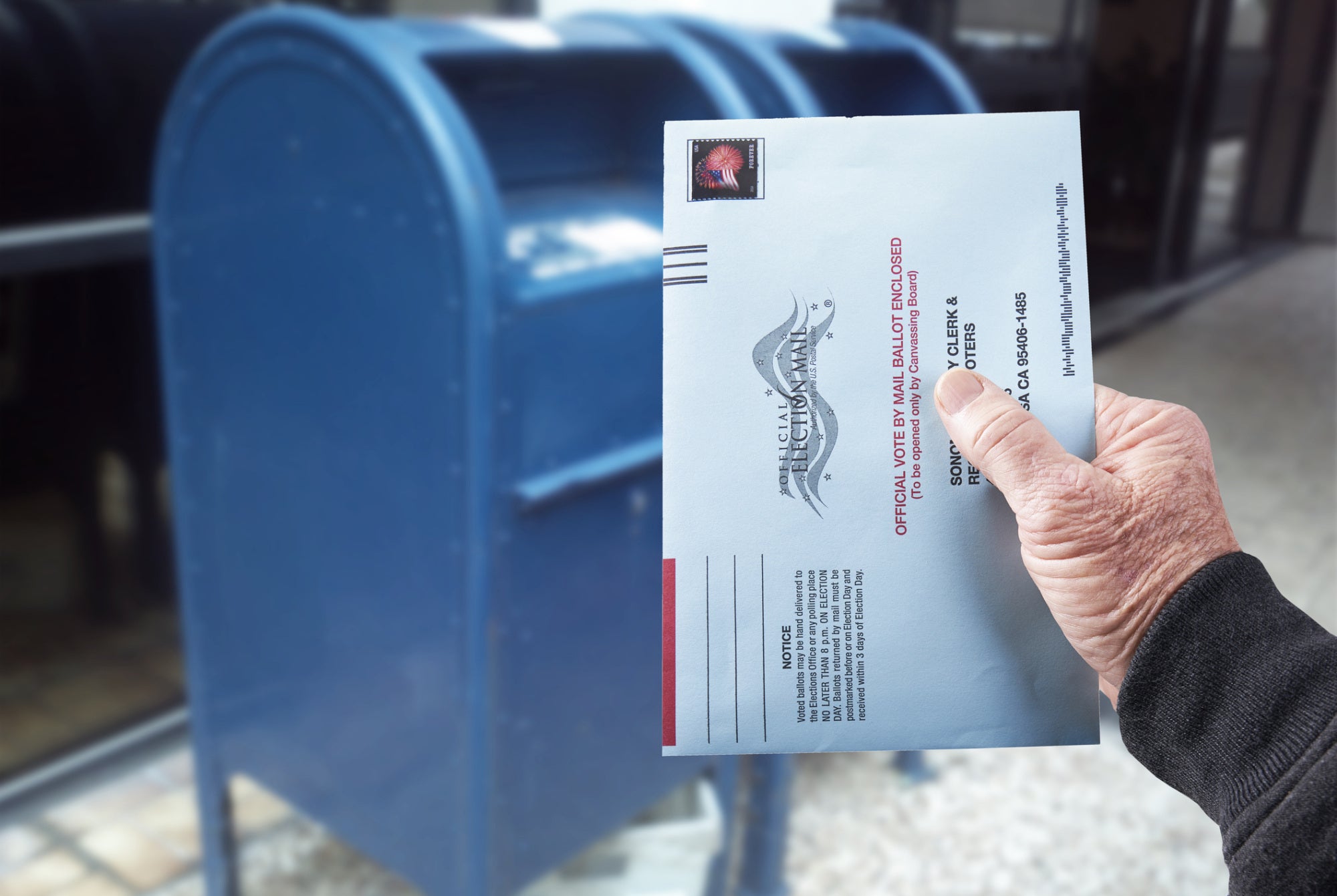
And news brokering influencers play the role of selecting and amplifying this content that fits the frames. These dynamics also apply to journalists. You get rewarded with clicks for producing and surfacing content that fits the frames of the day. Think of all the stories in 2020 about mail-in ballots not making it to those destinations, and how those gathering clicks fed the untrustworthy election framing. So, how can we be better information participants and again, maybe think back to those first moments after the attempted assassination of Donald Trump. What could you have done differently or what did you do right? The first thing I always tell people is slow down and just be a little bit more, just wait for things to settle. A little bit approach unverified stories among sincere believers, not as misinformation or disinformation, but as rumors. And just in part because that’s a more productive way of seeing things, and in part because sometimes these things turn out to be true. Turn into the frames your own and others that are shaping these rumors. Be careful when you’re creating or amplifying stories that resonate with political frames. It’s a way to get clicks, but that’s also a way that you can become an unwinning participant in disinformation. Tune into your own emotional responses. We know that outrage, anger, and other kinds of emotions activate us to share things, and that’s where we can get caught up in sharing things that turn out to be false. Learn to recognize the science of manipulating synthetic media, I hope others will cover that today, and understand and learn to recognize the influence dynamics online and in the news media that are driving some of these information cycles. Thank you all very much.
[00:13:02]
RICK WEISS: That was a fascinating and great introduction. Thank you, Dr. Starbird. We’re going to move now to Dr. Cindy Shen. And I just want to mention to folks before Dr. Shen gets started, part of this presentation from Dr. Shen is going to involve some images that we cannot actually show on the webcast here because of copyright concerns, but we have a workaround so that you can look at them while she’s talking. And that involves you opening your chat window and watching for links that we’ll be putting up. And as she talks, if you would like to click on each sequential link so you can see the image that she’s referring to, we’ll just move through the presentation that way. So, with that, over to you, Dr. Shen.
Multimodal Misinformation
[00:13:44]
CINDY SHEN: Thank you so much, Rick. I’m so incredibly excited to be here and talk to you all about multimodal misinformation. So, what exactly is multimodal misinformation? It is misinformation that has more than the text modality. So, in terms of formats, we see images, or audio, or videos that can be multimodal misinformation. And within the image category, we often see photorealistic images, memes, and data visualizations becoming misinformation. So, why is studying multimodal misinformation important? That’s because peoples’ information diet, as we know, is increasingly multimodal. I’ll give you two set of statistics. First in a 2024 Reuters Institute Digital News Report, which relies on a 47-country study of news diet which shows that 66% of the online population consumes news videos regularly, either from social media sites or news websites. And, in particular, in the U.S., the Pew Richards Research Center 2024 report shows that about half of TikTok users under thirty say they use TikTok to keep up with politics and news.
So, people’s information diet is increasingly multimodal. My colleagues and I have categorized visual misinformation according to how it is created, and we think this framework applies to images as well as audio and video as well. So, the first type of how visual misinformation can be created is through what we call a composition job. That is putting two or more photos together, for example, pasting one person’s head onto another person’s shoulder. And a well-known example of this is an old photo of John Kerry and Jane Fonda photographed at the same event in the 1970s and you can click through the link share in the Zoom chat window to see the actual photo. Now, this photo surfaced online during the 2004 U.S. Presidential election in which Kerry was a candidate. However, this image was a composition of two separate images and they are at completely different events. So, a Bush supporter forged this image in order to damage Kerry’s campaign, and this photo made it all the way to the New York Times.
A second type of creating multimodal misinformation is through retouching. That is changing specific elements in the existing image. And a recent, very well-known example is this family picture posted by Princess Wales earlier this year, shared to the official Prince and Princess Wales Instagram account. However, less than 12 hours after this photo was posted, various photo and news agencies, including the AP Getty Images and Reuters, they begin removing this photo from their press libraries, citing concerns about manipulation. And there are as many as over a dozen irregularities in this photo. Now, if you really zoom in, for example, Kate’s right hand, for some reason, is out of focus and blurry where it shouldn’t be, and Princess Charlotte’s sweater, there is a chunk of it missing, et cetera. In the end, Princess of Wales did have to acknowledge on Instagram that this photo was indeed photoshopped.
A stereotype is called elimination. That is cropping out certain parts of this image. And a prominent example of elimination happened in 2010 when this very prominent magazine, “The Economist,” run the cover of President Obama, which shows him standing alone on a Louisiana Beach, head down, looking at the ground. And this was during the BP oil spill. And the problem was Obama was not actually alone. There were two other people photographed, but they were edited out to make it look that way. And this incident sparked a lot of controversy about what journalists should or should not do in terms of photo editing.
The next type of creating multimodal misinformation actually does not require any technical knowledge or skill at all. So, this is called misattribution. It is to put an image, audio, or video in a wrong context. It’s a nontechnical way to create visual misinformation. And this type of visual misinformation is especially common during natural disasters or crises. One such example is a photo of huge waves pounding the Statue of Liberty during Hurricane Sandy. And again, you can click through the link shared to take a look at the photo. In fact, this picture was actually a screenshot from a disaster movie called “The Day After Tomorrow.” So, in this case, the image was not a forgery. The image was unedited, but the image was put in a wrong context. So, this constitutes misinformation as well. In other words, image veracity is contextual and has to be understood within the context.
Now, the previous four categories I mentioned were common ways to generate visual misinformation before generative AI tools such as GPT and Midjourney became available. Now, AI generated images are not based on editing any existing authentic visual materials at all. They’re completely synthetic. And because the technical barrier is so low and the quality can be very high, I think they pose a great danger to our information ecosystem. Earlier this year, several images of Trump surrounded by smiling black voters appeared online, but it turned out they were all generated using AI. Even though they’re not connected to the Trump campaign, clearly, these photos surfaced as Trump seeks to win over black voters. So, how do people perceive multimodal misinformation? By default, humans think images, audios, and videos are trustworthy, and we call this truth default. And for this reason, consistent research has shown that humans are generally really very bad. They’re incapable at detecting forged images and multimodal misinformation.
So, my colleagues then, we conducted a series of studies showing people fake images and mock social media posts, and they were almost always rated as very credible. And people’s credibility evaluation is usually a very hasty process. That means they don’t really pay attention to a lot of details. Now, two things stood out. One is that people’s digital media literacy seems to matter. The more knowledgeable they are in terms of all things digital, they are more likely to be skeptical of the visual materials presented to them. The second and also similar to what Kate mentioned, is that people’s prior issue attitude does matter. So, if someone already in agreement with whatever issue that’s depicted on the image, they’re more likely to think that image is authentic and vice versa. And how does misinformation spread online? In 2018, a very well-publicized study, researchers used a data set of true and verified false news stories on Twitter and they found that falsehood traveled significantly farther, faster, deeper, and more broadly than the truth. So, in terms of diffusion, truth is already lagging behind.
And additionally, compared to text, visuals are more easily recalled, shared, and often more persuasive. For example, in this 2020 study, researchers found that as long as you include some visual content on your tweet, it garners significantly more likes and retweets. Therefore, it’s not surprising to find visual misinformation is quite prevalent on social media. A large-scale study on image-based political post on Facebook between August and October 2020 estimated that about 1 in 5 contained misinformation. I’m going to conclude by talking briefly about what can we do to build resilience against multimodal misinformation. From the user side, our research has found two approaches somewhat useful. The first is to teach users to be skeptical. So again, similar to what Kate says, slow down, don’t take everything at face value. The second is to teach users about using provenance tools. Those are the tools that uncover the origin and history of images and videos. For example, reverse search is such a tool, right? So, it allows you to reverse search an image so you can find out when and where the image appeared. Metadata refers to information about image or video artifact and it can be useful for making credibility judgment as well. So, thank you very much.
[00:22:31]
RICK WEISS: Thank you, Dr. Shen, more great information for the mix here. And let’s wrap up our presentations first with moving over to Dr. Briony Swire-Thompson.
The psychology of misinformation
[00:22:49]
BRIONY SWIRE-THOMPSON: Okay. Yes, hello. Thanks for having me. I thought today I’d present a number of, I guess, tips, let’s see to maximize a corrections impact. So, the first would be presenting what we call providing factual alternatives. So, this is when, instead of just saying, “Here’s the misconception, it is false.” You say, “Here’s the misconception it is false but this is the other thing that is true or accurate about that situation.” So, this actually stems from work done in the 80s where scientists would present to participants a little scenario about a warehouse, and they’d say, “Well, there’s a warehouse. There are gas cylinders in the warehouse and this is the reason that there is this warehouse fire.” If you simply retract and say, “Well, there are never any old paints ever stored in the warehouse,” participants heavily rely on that old piece of misinformation still, but if you switch out the oil paints, sorry, gas cylinders in the cupboard and say, instead, “It’s arson,” people are much more happy to rely on this new kind of alternative information. We think that this occurs because when people initially encounter information, a situational model is built cognitively and people are really uncomfortable with this incomplete model. They’ll just revert to relying on this inaccurate kind of mental model if you don’t give them something to kind of to switch out. That being said, some pieces of misinformation simply don’t have an alternative explanation, and that’s really difficult. Don’t worry too much, it’s still effective if you don’t have one.
Another kind of caveat to this is that it’s preferable if the alternative explanation is as simple or simpler. But that’s also not often in the realm of reality. Often the misinformation is just, it’s made up. Like the truth is often more complicated. So, even though there are these several caveats, if you can find this alternative explanation, great. Use it. Next, is providing detail as to why the misinformation is false. This is always a good idea to say like, “Well, why is it inaccurate? Why is it commonly believed? Why is it spread online?” One thing that’s important to keep in mind in kind of the realm of science, it’s often the difference between what we call short format and detail. It isn’t that much so this is an example of like what we would call a short format. You have a claim, you say it’s false. That’s about it. The detailed version is, I’m not going to read this out for kind of time, but use essentially just, it’s four sentences long. Often when journalists think of detail, they think they have to like write pages, and pages, and a thousand words. But this is actually really short, and this is kind of where you get the big boost of efficacy from. Okay. Number three is repeating corrections is always good. It really helps kind of either reframe them within the same article or say them again within a different article. I think sometimes journalists are hesitant to do this, but it’s really fantastic, because repetition essentially just enhances memory.
There’s this phenomenon called belief regression, where people seem to rebelieve in the original piece of misinformation over time. So, here’s a kind of example of some data from one of our papers. And so, here you have a belief so the higher the data point, the more likely people are to believe in misinformation. You can see that people, they, before the correction, that they’re kind of believing in any line that is green means that it is actually reducing and each line is an individual. There were 600 people in a study. So, you can see how robust the phenomenon is. Like you give a correction, everyone updates. They’re like, “Cool, this is false.” But then, over time, over about a month, that the blue lines represent people increasing and corrections don’t last. And one of the main reasons we found why they don’t last is memory. I think often in misinformation research, we’re so focused on like climate change, vaccines, these beliefs that people hold strongly, you forget there’s a whole range of information that I’m sure as journalists are trying to correct that people don’t care about that much. And essentially, they’ll be like, “You said this was true.” And you’re like, “No, no, this was false.” So, it’s always good to repeat these things. And my final tip on the recommendation side is about highlighting source credibility. Think to yourself, “Well, what will my audience find? Who has trust within this group, and who has expertise, who has the skill sets to be able to give good information.” And I thought I’d end with my kind of three extra minutes on what not to worry about as well. For example, there’s been a lot of research done on the order of, where do you present the misinformation and the fact? And often, I find it really doesn’t matter that much. One particular kind of recommendation I see floating around a lot is the truth sandwich.
So, this is where you’re meant to present the true information. You follow it up with the false information and then you repeat something about the true information. What we find is we’ve—this is a paper currently under review. It really doesn’t matter. You can just have the false information, say it’s false, follow it up with true information. There’s no kind of extra boost from this truth sandwich format. Why I would, I mean, it doesn’t matter which you use, but often, if you try to use the truth sandwich, you end up with this really contorted, weird kind of version of a correction that can like read really strangely. So, just go for clarity is, I guess, my main recommendation here. And then finally, don’t worry about corrections backfiring. This was also a big deal a couple of years ago. The backfire effect is where correction leads to an individual increasing their belief and the very misconception it’s trying to correct. But since we had big problems with replication, we found a lot of it’s due to measurement error. So, I think just on the whole, it’s never a good idea to simply present the piece of misinformation without a correction. I don’t put it in the headline without saying this is false equally or saliently. However, please feel free to correct stuff without worrying that you’re going to make the problem worse. And with that, thanks very much. And I’ve added some citations should anyone wish after this, when you find the slides you want to follow up on any of these topics. Thanks very much.
Q&A
What worries you about the media and misinformation, and what reassures you?
[00:29:26]
RICK WEISS: Fantastic. Some great advice, and of course, at SciLine, we really appreciate the advice you gave, Briony, about going to credible sources. That’s what we’re all about. Scientists are often a good, credible source. Surveys, certainly by Pew Research Center, and other places suggest that while public trust in a lot of kinds of people and institutions has been going down gradually over time, scientists are hanging in there with a pretty high ranking. So, if you’re looking for a credible source, you can hardly do better than that, unless you can find someone in the military or in small business who can do that for you. They tend to score a little bit higher. Okay. So, with that, we’re going to move into the Q&A and I want to remind reporters that you can click on that Q&A icon at the bottom of your screen to start putting your questions in. We do like to start these briefings with one question from the moderator and I’m going to do that first just to get us started. And I want to ask each of the three of you this question, which is basically thinking of yourselves, not just as scientists, but as news consumers who are watching the news go by that is either trying to be corrected or maybe is right or wrong. I wonder if you could tell, on sort of a personal level, what either worries you most about what you see going on in media with regard to misinformation, or is there something that reassures you that maybe we will come out the other side of this without horrible damage along the way? Or perhaps there’s some worry and reassurance that you want to share together. And Kate, why don’t I start with you?
[00:30:58]
KATE STARBIRD: I don’t want to be a doom and gloom person. So, I’m going to avoid the first part of that question. There are a lot of things that worry me, but I’m always hopeful. And I think there are signs out there of hopefulness, and one of them is, I do think journalists and the population more broadly are getting savvier about how, especially in online environments, about how we’re vulnerable to manipulation. And I think there are signs of that, and this part of us having this conversation is a recognition that people know there’s a problem there and that people are thinking about how to solve it. I do think that journalists are going to be more savvy about some of the dynamics we saw about them amplifying content that was feeding into misinformation in 2020. The other thing that is, and I’ve only said it once before on camera, but let me say it again. I’ve always had this hope that eventually people will just get bored with some of the conspiracy theories and misinformation that have been proliferating over the last few years. And I think there are some signs out there that people—I don’t have the research for it. It’s this gut feeling that conspiracy theory was interesting, it was curious, and it’s going to get, kind of like not cool at some point. And I’m hopeful that we’re starting to see that as well. I don’t know that science can do much and the corrections are going to do much, but there’s something about the vibes around it that may be changing. So, I’m not confident in that, but I’m hopeful that that is a direction we’re going and that we can continue to contribute to helping make that uncool. I’m not going to help make it uncool, but folks out there can make some of this stuff uncool, would probably be useful.
[00:32:33]
RICK WEISS: That’s super interesting. I certainly see myself getting turned off to a lot of the hyperbolic language you see on social media now and you just ignore it because it’s so obviously baloney. But Cindy, go ahead. How about you?
[00:32:46]
CINDY SHEN: I have a slightly more depressing outlook on this, because, as a researcher of visuals, audios, and such, I’m reminded again and again that humans are just incapable of detecting visual and multimodal misinformation. Because our first instinct is always to believe image, and audio, and video is true, and for good reason. Just think about it. When you’re driving, if every second you see what comes out through your windshield, you have to second guess whether that is true, that will be a huge safety hazard, right? So, our truth default has served us really well in the thousands of years predates artificial intelligence or deep fakes. But, however, we are in trouble right now. As I said, visual and multimodal misinformation, they travel faster, they garner more engagement from humans than text, and I see this as really very dangerous combination that we’re not very well prepared for. And I see that our information ecosystem as sort of a pipeline. At the very upstream, we have the content generation system, which includes those entities that create information, such as government, media outlets, that are represented here, and so on. And in the middle section, we have the information propagation system, which again includes media, and online platforms, and influencers. And then, at the very downstream, we have the consumers like you and me. But right now, the conversation about building resilience is actually mostly focused on the downstream, on the news consumers. But I feel that we do not pay enough attention on content generation, or information propagation systems, or haven’t designed incentive system for them to act responsibly. And I feel this focus on the users is a bit worrisome, because it implies that users like you and me, we should shoulder all the burden of making credibility, evaluation judgments ourselves. And that’s incredibly difficult and we’re not equipped to do well in that while the other entities, the upstream entity, they’re somewhat off the hook. So, while I always feel, I believe that educating the users is definitely useful and we should continue doing that. I feel that there’s only so much we can do there. I mean, perhaps a more systemic effort at the upstream needs to be made so that we can neutralize multimodal misinformation before they have opportunity to reach the end users. And this is a call to action, and feel like as a society, maybe it is time for us to invest more time, more resources, to look at the problem from a different angle.
[00:35:29]
RICK WEISS: That’s very interesting and sounds like an argument for a change in the legal protections that some of the platforms enjoy right now, not having to be responsible for what they’re propagating. Maybe we’ll get into that later. Briony, how about you?
[00:35:42]
BRIONY SWIRE-THOMPSON: Yeah, I’m, yeah, it’s tough. I think I am also a bit more hopeful. I think if I’m worried about anything, it’s just that people aren’t going to know where to place their trust, and they’re just going to like lose trust in everything, and not know how to discern between true and false information well, or go to the good sources, and they’re just going to not believe anything. That being said, like people have never had enough time, motivation, cognitive resources to sort through the huge amount of information like it certainly is now in the online world. But often, when people ask us, “Is it getting worse?” It’s like, “Well, it’s so hard to measure how bad it is now that we just can’t tell.” And I do think that just given the amount of discussions that happen about misinformation, that it’s certainly a positive element. And, I mean, there’s training systems, often in schools now in various countries of the world. I think even when I started my PhD, people would ask me what I studied, and I’d say, “Memory,” for a shortcut. I mean, it was kind of true. Like I’m studying memory for corrective information. But now, you say to anyone like, “Misinformation.” “Ah, it’s great,” because everyone has a different idea of what misinformation is. So like, doesn’t matter where people stand on falsehoods, or conspiracies, or on the political spectrum, everyone thinks that misinformation is a problem. And I think that’s, at least, that’s a good thing. And there’s, yeah, I have hope.
How can reporters cover rumors being spread locally that are based on real information and concerns, but which expand into the realm of conspiracy—without amplifying the rumors?
[00:37:14]
RICK WEISS: Certainly on the radar, that’s great. Thank you all for those introductory remarks. Let’s get to some questions. So, I have one here from Megan Buffington, who’s at KAXE Public Radio in Grand Rapids, Minnesota. This is a question directed to you initially, Dr. Starbird. “In smaller communities, it is often the same group of people sharing rumors or misinformation about local government that are based on events worth reporting, but expand into the land of conspiracy. For example, the local school district had to cut millions from its budget. This group latched onto high administrative pay as the cause. Do you have any tips for reporting stories sparked by these types of groups without accidentally giving their conspiracy spreading ways credibility? So, it’s news, but you don’t really want to amplify their conspiracy theories.”
[00:38:08]
KATE STARBIRD: I think this is a real challenge, and we’ve seen that a lot in election context as well, where there’s these little things that are happening. Like there was there are ballots that are stolen from a mailbox or something as an example. But they don’t mean what the conspiracy theorists think that they mean. They actually this wasn’t intentional. It wasn’t part of any kind of politically motivated action, and people have remedies for getting those ballots back. So, how do you tell that story? Because if you don’t tell the story, you get accused for of not covering it. How do you tell the story but layer it with the context so people can’t take away that piece and use it for what they want to use it for? One of that is, you’ve got to talk to those editors about getting it out of the headline, because a lot of times it’s that headline that’s going to propagate with it, and you want to get the context and the correction into the headline so that that can’t just kind of live on without it. And again, just kind of making sure that context is in there that that the article is really giving, saying, yes, they’re saying this, I think that’s worth reporting, but then just this, doing that correction within it and recognizing that we have heard that corrections backfire, but we don’t think that’s true anymore. And so, as Briony said, and so just use it as an opportunity to correct the rumor. Don’t worry about, necessarily about amplifying it, but make sure that the headline doesn’t feature the rumor.
[00:39:28]
RICK WEISS: Anyone else want to weigh in on that?
[00:39:30]
BRIONY SWIRE-THOMPSON: I would just like to stress how important Kate’s point is about making sure that headline doesn’t either amplify or even just sensationalize. I think often, I know it can be a battle in terms of who kind of decides on the headline, but it is like best practices to avoid that. And you can have your corrective information either in with like sufficient context and you’re able to elaborate on it further down. No, great point.
[00:40:06]
KATE STARBIRD: But if the headline includes it, that’s what’s going to get you clicks. So, it’s the editor says, “I want clicks, I want people to look at it.” And we know that the ones that are going to get leverage for the ones that align with the conspiracy theory, because the internet loves conspiracy theories. So, it’s really, you got to work against the like click-based measurement of your impact, and you’ve got to work for like the education based or actually informing, which doesn’t necessarily look like more views or more clicks. Or at the very least, as I said, add the, here’s the, you know, if you really, really, really can’t find a way out saying this is the conspiracy, this, you know, it’s false the minimum, bare minimum, bare bones.
How can reporters cover instances where political candidates spread misinformation without sharing misinformation irresponsibly?
[00:40:45]
RICK WEISS: I do think the sentence that starts there is no evidence that dot, dot, dot pops up a lot more in news these days adjacent to those kinds of claims, which is a sign that media is trying to overcome its profit motive, clickability that you mentioned, Kate. Here’s a question from Susan Tebben from the Ohio Capital Journal. “Something I struggle with is not wanting to repeat disinformation or misinformation for fear it increases the exposure to this information, but also because I feel it’s against journalistic ethics to distribute information that is deliberately out there to distract and create headlines. What’s your advice on giving readers, viewers the information they need to know, and possibly giving people perspective on a certain candidate through that disinformation, misinformation they use, while also not sharing information irresponsibly? This is a bit of overlap with the previous question. I don’t know if any of you want to add anything here too.
[00:41:44]
KATE STARBIRD: I think there’s actually, we have a postdoctoral scholar, Maddie Jalbert, working with us at the at the University of Washington. And there is some concern that by covering a piece of false content, you’re actually going to expose more people to it, and it may correct it for some subset, but it may create the situation where some people come away not remembering the correction and only remembering the falsehood. And so, there are those kinds of choices that you have to make. It really is, is this already widely known or believed, or have a large number of people said it, then you should cover it. If you’re covering something that’s really on the edges that no one’s heard about, you might be exposing more people to it than otherwise would. And then, and even if a small percentage believe that you may be causing more harm than good. So, there is this kind of like, you have to make those decisions. And there is a little bit of like, how many people have already seen this? Are you causing more people to see it than need to see it? But it also weighs against how important it is to correct it as well. So, these are, I mean, I wish there was like, a simple rule of thumb, but really is. There’s a lot of like hard decisions that folks have to make about when and how to correct.
[00:42:55]
BRIONY SWIRE-THOMPSON: Yeah. Oh, no. So, please go on, Cindy.
[00:42:58]
CINDY SHEN: Okay. So, I just want to briefly add that oftentimes there will be audio visual materials associated with the false claims as well. And I think, as a rule of thumb and based on the research that has accumulated, I also agree with what has been said from Kate and Briony, that you should not repeat whatever the false image, the false audio, the false video. If you wanted to show some audiovisual evidence, make sure that they are very clearly, very prominently labeled as false. So, some of the examples I have shown today have a very large like false or AI generated label across from the image. Therefore, when it will be spread, it definitely will be spread, and with the headlines and such, so that it does not add to the diffusion that is already out there on the internet.
[00:43:55]
RICK WEISS: Briony, were you going to add something?
[00:43:56]
BRIONY SWIRE-THOMPSON: Yeah. I was just going to add that it’s also just an opportunity cost for the journalists. Do you want to cover the piece of misinformation that no one knows and have this kind of potential? Like a lot of studies are like, “Oh, you’re probably not going to make it worse.” But also, like for a subset of people, and we just can’t be sure that they’re not going to skim. Often, in research, we have these highly attentive audiences who like actually read everything. So, it’s just like even though there is a study that shows that it doesn’t necessarily make it worse, only one I can think of that looks at like novel pieces of misinformation. But this isn’t how it works in the real world. Often people skim. And if you don’t have an incredibly clear kind of journalistic pace, it’s not beyond the realm of possibility that they skim, they get the wrong impression, but now they believe in a new conspiracy theory. So, it’s also just like, yeah, weighing up how many people believe in it? How harmful is that piece of misinformation, literally? Yeah, totally agree.
Are there any reliable tools that can be used to detect AI-generated videos?
[00:45:03]
RICK WEISS: Great. Here’s a question that might be best for you, Cindy, for starters at least. It’s from Debora Wenger from NewsLab, which is based out of the University of Mississippi. “Are there any reliable AI detection tools for video in particular?”
[00:45:19]
CINDY SHEN: I wish I could say positively, but no, there is no purely 100% technical solution to detect AI generated visual materials. That said, in our kind of media literacy education towards our students and towards our participants, we did rely on some telling signs of this image might be generated by AI. So, one thing you could look for is that sometimes the lighting is too perfect. It almost looks like a studio shot. Another giveaway is that the photo somehow lacks detail. So, it looks like this is very heavily airbrushed. Having said that, there is this grave danger of there is a technological arms race while we’re trying to teach our participants about, “Oh, these are the signs that this might be generated by AI,” while at the same time, the AI tools themselves are developing so fast that they negate whatever indicators that they may give away. So, while I want to say those are some of the things you could look for. Another one being like weird fingers, because somehow the AI generators are not that great in terms of rendering fingers and toes. I also want to say that there’s a huge caveat that the moment our participants are good at identifying these AI signs, maybe they no longer become informative.
[00:46:55]
KATE STARBIRD: I would expect, I know a lot of that’s a great answer, a lot of things that people can do, and I know a lot of researchers are working on this. There’s just been a big convergence into visual media, figuring out how to detect AI, different kinds of things, no purely technical solution. Everything we’re building has humans in the loop at multiple stages to kind of do that detection, including highly trained students at this point. I imagine we’re going to get detection as a service, where journalists could pay a group to kind of do this kind of work. It’s an opportunity that’s out there. We are seeing some nonprofit organizations like True Media and others kind of come up to kind of do this kind of work. But it is kind of a space where we may see for profit entities moving into that space. And I would be hopeful that journalists would be able to use some of that although we know journalists don’t have a lot of resources. So hopefully, some nonprofit solutions will be out there as well.
Are there any notable success stories of newsrooms combating mis or disinformation?
[00:47:51]
RICK WEISS: We’re all out of time. Question from Tristan Loper, from The Lenfest Institute. Two questions, actually. First, “Are there any notable success stories in combating mis or disinformation, whether by a newsroom or some other entity.” And second, “What other researchers are doing interesting work in this space, who reporters should know about?” Any success stories you can think of where something got sufficiently quashed before it was too late.
[00:48:21]
BRIONY SWIRE-THOMPSON: Not off the top of my head, but I think that it’s probably because it happens every day. Like I’m quite sure journalists don’t even realize I’m probably not tracking it, unlike in research where we have these wonderful kind of before correction after correction. Like I just don’t think I would, I think probably everything written is a success story just because of the efficacy, for example, of corrections, we know is so robust. Yeah. And I also think that you’re probably, as journalists, not getting the right feedback on online, being like, “Oh, this was so interesting. I’ve updated my belief.” You’re probably getting the trolls and various things. So, I, yeah.
[00:49:02]
KATE STARBIRD: We were studying some of this in the like between about 2012 and 2015 kind of looking at corrections. And what we found in cases where it was effective is that people didn’t notice, because people don’t repost the corrections. And so, what the effective corrections just look like the lack of conversation about that going forward. And so, we don’t celebrate the corrections, but they happen all the time and every day, and it’s just they don’t gather as much attention as the ones that where the conversation keeps going, especially with social media dynamics, that people just don’t spread corrections at the at the rate that they spread falsehoods. And they may have seen the correction, but they don’t talk about it. They may have updated, they may have even gone back to delete their old tweet. We found that like 30% of tweets were missing a few months after the event if it was a falsehood. And so, we know that people update their mental models, we know that they do that, but we just don’t celebrate that. There’s a case that I wish I could remember the details of it, but it was somebody who was working with, I think, the geological service in the United States trying to combat conspiracy theories. And he just put himself out there and started having conversations as himself rather than the—USGS—rather than the organization. And he actually did a great job of like working with people to and treating it like a rumor as opposed to misinformation, and kind of like talking through things, having a dialog, and helping people kind of see that they were, that Yellowstone wasn’t going to explode or whatever it was, although we did see an explosion recently, but there wasn’t going to be a super volcano there, right? So, there are those kinds of, again, like acknowledging a little humility as a scientist and a little bit of uncertainty, but then also approaching that to share what you know can be can be valuable.
What other researchers are doing work in this space that reporters should know about?
[00:50:49]
RICK WEISS: Any names of researchers any of you want to share with reporters?
[00:50:53]
CINDY SHEN: What immediately, I mean, there are lots of wonderful misinformation researchers, but the one that comes to mind immediately is Jeff Hancock and his lab, a social media lab, at Stanford University. They do a lot of work on misinformation and also digital media literacy research to combat misinformation. And I want to briefly mention like a publication, it’s a journal called “Harvard Kennedy School Journal of Misinformation,” and this was supported by the Kennedy School at Harvard. And there is a lot of very up to date research published there on misinformation.
[00:51:31]
RICK WEISS: Great advice. Thank you.
[00:51:32]
KATE STARBIRD: There’s also a trust and safety conference and a trust and safety journal that is also organized by the Stanford team, and I think Jeff is in charge of that now. And they cover misinformation and online misinformation as part of that, and publish work in that space as well.
[00:51:52]
BRIONY SWIRE-THOMPSON: Good examples. If someone is looking for a good example of misinformation correction, you might go to the Public Health Sphere because they actually have measurable outcomes, for example, smoking cessation, or some of these big Australian kind of campaigns of like sun safety. And then, at least you’ve got these big things showing that it’s impacted belief and behavior, et cetera.
How do you correct interview subjects if they’re giving misinformation during an interview?
[00:52:11]
RICK WEISS: Great. Kevin Dale at Colorado Public Radio is asking for some advice doing reportorial duties. “How do you or do you at all try to correct interview subjects in the field, if they’re giving you misinformation in an interview? Do you have any advice for, is it appropriate to just bust them on that right then?” I will say one thing I often recommend to reporters is to ask this key question. How do you know that, when someone tells you something. Just ask them how they know it. It can kind of stop people in their tracks sometimes. But any advice from any of you?
[00:52:49]
BRIONY SWIRE-THOMPSON: I was going to say, this is more of a social issue, and I do often say like this is something to keep in mind, whether it’s correcting colleagues, friends, family. Like you have to pay attention to those social dynamics. Like you can’t just go on well I know this is effective for belief change. You also, belief change isn’t always the only kind of metric that you want to care about. So, but yeah, I do think it leaves more up to the journalist.
[00:53:14]
KATE STARBIRD: It’s building off—and to the take this a little bit sideways, Rick, but building off of something you said. We do have a project right now, again, led by Maddie Jalbert at the CIP at the University of Washington, looking at what we call in social truth queries, which is, when you see something online that you don’t think is true, you don’t say, “Hey, that’s false.” You say, “How do you know that? What’s your source on that? Tell me a little bit more about that.” And so, it makes it a little bit less confrontational and it seems to be effective. We’ve seen some—I wish I had the details on this, but there’s a there’s a community group, it may be in South Africa, that has been doing this themselves, maybe in Kenya, but they’ve been doing this themselves. And I’m happy to follow up with some of that research. It’s not on my slides, but happy to talk about it because it does look very effective in some of the research we’ve been doing.
How long do reporters need to keep debunking the same misinformation?
[00:54:04]
RICK WEISS: Great. Let’s see. I think we have a question here from Amanda Pampuro from Courthouse News. “How long do you have to keep debunking the same misinformation? Is there ever a moment in time when you can jump to this has now been debunked, or should you always have to start at this is a rumor.”
[00:54:28]
BRIONY STIRE-THOMPSON: I think it’s important to always remember that you might be getting a new audience every time. Even if someone’s like Googling this like many years in the future, they might come back to your article. So, that being said, it’s not a bad starting place being like by saying this is this has been debunked, like we know this is false, but always kind of explaining why it’s never, never a bad idea, just because of the new audiences.
[00:54:54]
CINDY SHEN: Right. I agree, and I also agree with earlier point Briony made, that is repetition is really the key. Because research has shown that truth is already lagging behind falsehoods on so many levels. So, we should repeat, and repeat, and repeat. And another thing I want to mention is that when I bring up memes, and like internet myths, that kind of thing to my audience about why this could be construed as misinformation, people will say, “Oh, the audience of memes know that they’re making a joke, or they know that people are not going to drink chloride, and things like that. But the answer sometimes is, you never know, because sometimes people get their news from memes, sometimes people get their news from political comedy shows, right? So, that’s why I feel like even though, let’s say, a myth has been debunked again and again, there is the new audience, and even in a context that that is not entirely informational news. Like you never know whether people will take this at face value. So, the safest bet is always to repeat and debunk the myth.
Why is the development of tools to detect or combat misinformation not a higher priority within government or commercial circles?
[00:56:01]
RICK WEISS: We have a few more minutes. I’m going to get a few more questions in here, including a take home message from each of our three guests for your reporters to really take with you as key points. But before I continue with that, I just want to remind you all, as you do log off at the end of the hour, you’ll get prompted for a short survey. We really appreciate if you take just the half a minute it takes to answer three or four very quick questions that will help us keep giving you briefings like this that can be as helpful as possible to you. I have a question. There’s sort of a long question here from Jason Tselentis, freelancer based in Charlotte, North Carolina, which, if you don’t mind, I’ll try to condense a little bit, but basically asking “Why this is not a higher priority within government or even commercial circles to develop the technology needed to help take down the problem of misinformation and getting fooled by fake images.” And I think I’ll attach to that because you raised it earlier, Cindy, if you want to address also what’s going on policy wise, to make people or platforms responsible for that content? Is there a solution to be found in regulatory regime or is it just too complicated?
[00:57:17]
CINDY SHEN: Well, to answer that question, I think yes, it is very complicated in order to have any kind of regulatory reform, but I might like to use an analogy or metaphor about supermarkets. So, I see that information ecosystem today is like a completely unregulated supermarket where everything could pretend to be everything. So, pink slime can pretend to be real bacon and spam can pretend to be tuna. Now, we want to move in a direction where food labeling is required, and we have seen that food labeling has successfully been implemented in supermarkets. So, nothing can pretend that there’s something else, they have to provide truthful food and nutrition label. And I see something similar that can be done with regard to the information ecosystems. There is the freedom of speech issue, for sure, but at very least we could provide some provenance information, provide metadata about where the information comes from, whether that image has been edited and things like that.
[00:58:21]
RICK WEISS: And perhaps with those kinds of rules, even loose ones in place, it becomes a Federal Trade Commission violation if you’re not honest about that information. So, at least there’s something to go against. Kate—
[00:58:33]
KATE STARBIRD: Can I add, yeah. I mean, I would add there, one of the challenges of dealing with some of these issues at the platform level or the policy level, has been the politicization of the problem. And there are folks that benefit from the spread of false content that have power and don’t want that power kind of countered. And so, we are left with solutions that are mostly in the education space, although I agree that we could ask platforms and to give provenance information about where information came from, how it got to you, especially on visual content. There are things like that that I imagine that people could come to an agreement on. It’s not a label of false or true. It’s a label of like is this a real thing or not? It’s a piece of content, and who created it, and how it got to you. These are kinds of things that we can talk about. And there has been regulation in Europe and other places and we can debate on some of the unintended consequences of that and some of the challenges there. But we are kind of, the challenge is not that there wouldn’t be solutions that would work. The challenge is like the political sphere doesn’t allow some of the solutions to take shape in our current environment.
What is one key take-home message for reporters covering this topic?
[00:59:48]
RICK WEISS: Well, we’re just about at the end of the hour and I do want to give each of the three of you a chance just to give a 20-second or 30-second take home message. If there’s one thing you want reporters to walk away with today, what do you want them to have as they start to work on stories and approach this topic? Kate, why don’t we start with you?
[01:00:06]
KATE STARBIRD: I would say just be aware of how you can be caught up into it playing a role in the spread of misinformation, and there are certain things you can do to make sure that doesn’t happen about sort of make sure the corrections are there, and getting them into the headlines, and just to repeat that corrections do work, and they’re worth doing in most cases.
[01:00:29]
RICK WEISS: Great, thank you. And Cindy.
[01:00:33]
CINDY SHEN: We humans are extremely bad at detecting visual and multimodal misinformation on our own, because of our first instinct is always to believe it. So, it’s unrealistic to completely rely on users to make that judgment call. We can continue to teach users to be vigilant, but users cannot go at it alone.
[01:00:52]
RICK WEISS: Great. Thank you. And Briony.
[01:00:54]
BRIONY SWIRE-THOMPSON: Yeah. Just that I think journalists can be really effective like even though everyone has a crisis about trust and media. You are someone’s trust and source. And if you can be the kind of, what we call heuristic, you can be the shortcut by presenting people really good information. It’s hard to do. So, if you can like cut that short, I think that’s, yeah, it’s incredibly helpful. And yeah, given that we know that corrections work and can be like extremely effective, and that the real battle is getting them into the hands of people that need it most. Yeah. I just think that people probably don’t realize what good they’re probably going to have already done. And so, keep going. You’re in the trenches, not like us researchers behind the computer.
[01:01:41]
RICK WEISS: Thanks for that inspiration. Reporters, I want you to know that if you go to the chat right now, there’s a link to a tip sheet that we’ve created at SciLine that can help you consolidate some of the ideas that came up today and some other ideas for identifying, not falling for, and not propagating misinformation. So, please feel free to click on that and take that home with you. Study it. I want to thank our three guests today for a fascinating and really helpful and informative briefing today on a topic that is so important, and only going to be more important, not only in the lead up to November, which is obviously of critical importance, but well beyond that in so many areas of society that we probably haven’t even thought of yet. So, it’s great that we can start thinking about this and talking about this now, and I so appreciate the expertise the three of you shared with us today. Thanks to all of you reporters for thinking about these things, for covering them, for doing the work you do, and we look forward to seeing you at the next SciLine media briefing. So long.