What are Media Briefings?
The Trump administration is seeking to repeal the Environmental Protection Agency’s (EPA’s) “endangerment finding,” the legal and scientific foundation for regulation of greenhouse gases under the Clean Air Act. This briefing covered the state of evidence leading to the finding’s adoption in 2009 and how it has evolved since, implications of rolling back the finding for federal and state regulations and climate goals, and what these changes could mean at the local level for power plants operators, communities, and public health. Three expert panelists participated in a moderated discussion, and then took reporter questions, on the record.
High definition (mp4, 1920x1080)
ELENA RENKEN: Hello, everyone, and welcome to SciLine’s media briefing on the Environmental Protection Agency’s climate regulations under reconsideration. The EPA is holding virtual hearings this week as it weighs the rollback of the 2009 endangerment finding, which is the legal basis for federal regulation of greenhouse gases.Today, we’ll hear from experts on the evidence on greenhouse gas impact surrounding the endangerment finding and what a rollback of the finding would mean for power plants and for health in the United States. My name is Elena Renken, and I’m SciLine’s manager of journalism projects and multimedia. SciLine is an editorially independent non-profit based at the American Association for the Advancement of Science. We’re funded by philanthropies, so all our services for journalists are free. Our goal is to help journalists access scientific evidence and expertise in the course of their reporting on all sorts of topics. That might be health or environment stories that are clearly related to science, but it could also be reporting on policy or education. There’s a wealth of scientific evidence that can strengthen those stories as well. You can find more of our resources on sciline.org, including our expert matching service. If you just click the blue, I needed an expert button anytime you need to speak with a scientific expert for your story, we’ll look for a source with the right background to answer your questions before your deadline.
Now, a couple of notes before we begin, I’m joined here by three experts who have studied issues around these climate regulations. I’ll let each of them introduce themselves and their topics of research. Dr. Meiburg, would you go ahead?
STAN MEIBURG: Perfect. Thank you very much, Elena. I’m Stan Meiburg, I am the executive director emeritus of the Sabin Center for Environment Sustainability at Wake Forest University, and also served at the Environmental Protection Agency for 39 years. Anything else that you needed?
ELENA RENKEN: That’s good for now. Thank you. And, Dr. Field, would you introduce yourself next?
CHRIS FIELD: Hi, everyone. I’m Chris Field, I’m the Director of the Stanford Woods Institute for the Environment, where I work on ecosystem, climate interactions. I was also coordinating lead author for the chapter on North America in the 2007 IPCC report that was the scientific foundation for the 2009 endangerment finding.
ELENA RENKEN: Great. Thank you. And Dr. Hess.
JEREMY HESS: Hi, everyone. I’m Jeremy Hess, I’m a professor in the schools of medicine and public health at the University of Washington. I’m an emergency medicine physician and practice in our level 1 trauma center here. I also practice public health and direct our Center for Health and the Global Environment. And I was a lead author on two National Climate Assessments for the United States and two reports for the IPCC.
What is the Endangerment Finding, and why is it important?
ELENA RENKEN: Thank you. Before we begin taking audience questions, I’ll ask each of our panelists here a few questions myself. Journalists, you can submit your questions at any time during the briefing. Just click that Q&A icon at the bottom of your Zoom screen, and let us know, please, if you’d like your question directed to a specific panelist. We will post a recording of this briefing on our website later today, and a transcript will be added in the next few days. So with that, let’s jump in. Dr. Meiburg, my first question for you, what is the Endangerment Finding, and why is it important?
STAN MEIBURG: Thank you, Elena. The Endangerment Finding that’s been proposed by the current Administration is really the extension of a conversation that’s been going on for almost 30 years now, around two basic questions. One of which is, can the Clean Air Act be used to regulate greenhouse gases? And then the second question is, if so, what should you do about that?
And Trump Administration has been very clear that the answer to question two is really nothing. But if the answer to question one is no, then you don’t even get to question two, and that’s what’s going on here. The endangerment finding itself is a finding that greenhouse gases are pollutants, which can, in the judgment of the administrator contribute- may reasonably be anticipated to endanger public health or welfare. And so endangerment is really derived from that phrase. And the original endangerment finding was in 2009 and was based on a series of challenges and court cases that led up to that finding being made.
When and why did the EPA issue the original endangerment finding, and what scientific evidence was used to support it?
ELENA RENKEN: Excellent. Thank you. When and why did the EPA issue that original endangerment finding, and what scientific evidence was used to support it?
STAN MEIBURG: There were a couple. This, again, was the extension of a long conversation that went on through most of the decade of the 2000, where EPA was petitioned in 1998 to regulate greenhouse gas emissions from motor vehicles. And that petition, which was ultimately denied by the Bush Administration, and then the denial was found to be arbitrary and capricious by the Supreme Court in 2007. Led to a finding by the Obama Administration that greenhouse gases do, in fact, endanger public health and welfare, and that authorized the Obama Administration to proceed with regulations on greenhouse gas emissions from motor vehicles and ultimately effort to regulate greenhouse gas emissions from other sources as well, like power plants.
Which greenhouse gases are covered by the finding?
ELENA RENKEN: And which greenhouse gases are covered by that finding?
STAN MEIBURG: Specifically, the greenhouse gases were carbon dioxide, methane, nitrous oxides, hydrofluorocarbons, per fluorocarbons, and sulfur hexafluoride. Those last four are a big mouthful, the main focus of attention, of course, has been on carbon dioxide and methane. But the other pollutants can be significant greenhouse gas contributors, and there have been regulations on those as well.
What does the endangerment finding allow the EPA to do that it otherwise couldn’t?
ELENA RENKEN: What does the endangerment finding allow the EPA to do that it otherwise couldn’t?
STAN MEIBURG: It allows EPA to do, is to set regulations for emissions from first motor vehicles and then later other sources like power plants that limit the amount of carbon that can be emitted. And so, in the case of automobiles, which came first, it meant that you could set fleet wide averages for the automobiles manufactured by a particular manufacturer that said that in aggregate, they can emit no more than a certain amount of carbon dioxide.
How the manufacturers meet those standards is up to them and they have flexibility for shifting the kind of emissions from different levels of motor vehicles they sell. But it creates an imperative to have increasingly lower and lower levels of carbon coming out from the motor vehicles or new motor vehicles, in this case. And that’s worth noting as a significant difference between cars and other sources, because for cars, you always regulate new cars and rely on fleet turnover to gradually improve the performance of the fleet. Whereas for power plants, for example, you have to not only address new power plants, you have to address some of the existing power plants as well.
Is the finding legally in effect right now, and has it ever been challenged?
ELENA RENKEN: Is the finding legally in effect right now, and has it ever been challenged?
STAN MEIBURG: Yes, it is in effect right now. It’s been in effect, ever since 2009 when it was first issued, and that was challenged at the time. And the DC Circuit Court of Appeals upheld EPA’s finding that greenhouse gases do endanger public health and welfare. It’s decision was appealed to the Supreme Court back in 2010, the Supreme Court declined to overturn the DC Circuit Court’s finding.
And so it’s been in effect ever since then and it has not been challenged up until this moment. The first Trump Administration was urged by its allies and considered challenging the endangerment finding back at the time, but they chose not to do that, instead, simply attacking different regulations that had been promulgated in the Obama Administration, but not trying to overturn the basic finding itself.
What is the evidence of increased carbon emissions on the climate since 2009, and how could it be used to update that endangerment finding?
ELENA RENKEN: Very good to know. Thank you. Next, let’s move on to you, Dr. Field. To start off, what is the evidence of increased carbon emissions on the climate since 2009, and how could it be used to update that endangerment finding?
CHRIS FIELD: Well, in 2009 we already had strong, strong evidence that increased atmospheric levels of greenhouse gases, the six gases that Dr. Meiburg already mentioned, cause long term warming. We know that the climate since 2009 has warmed dramatically as expected from the increased levels of greenhouse gases in the atmosphere, with greater clarity now than in 2009. We know that the effects of the warming caused by carbon dioxide are permanent, at least on the scale of thousands of years. And we know that the warming we’ve already seen is associated with a cascade of increasing damages, ranging from hot weather and heat waves to heavier precipitation to rapidly intensifying hurricanes.
What has been the effect of the endangerment finding on carbon emissions since 2009?
ELENA RENKEN: What has been the effect of the endangerment finding on carbon emissions since then?
CHRIS FIELD: Well, in the United States, we have seen substantial decreases in carbon emissions over the last 15 years or so, the decreases have been going at a modest pace, and they reflect a number of active interventions that are in many cases, a direct result of the endangerment finding. We see that with increasing fuel economy standards for automobiles.
We see it with tighter regulations for power plant emissions, and we see it in incentives for improving buildings and industrial processes. Global emissions of carbon dioxide and other greenhouse gases are still rising as a result of rapid economic development in many countries around the world. But the U.S. and other rich countries are mostly now in a period of gradual decline in greenhouse gas emissions associated with locally strong and in some cases, effective regulations that really lead the way to eventually reaching net zero emissions.
What will happen in states if greenhouse gases that were formerly subject to the endangerment finding are now not regulated at the national level, and what would it mean for emissions reductions at the local and state level?
ELENA RENKEN: What will happen in States if greenhouse gases that were formerly subject to the endangerment finding are now not regulated at the national level, and what would it mean for emissions reductions at the local and state level?
CHRIS FIELD: Well, the endangerment finding specifically related to automobile emissions as its primary target, and the U.S. currently has a standard for automobile emissions and an exemption for California. The exemption for California went in place decades ago to allow California to address the really serious air pollution problems that were afflicting cities in Southern California and has allowed California to have tighter standards that have helped push the efficiency and the low pollution status of automobiles made in the United States.
With the withdrawal of the endangerment finding, it’s certainly possible that we would see all vehicle emission standards of greenhouse gases instantly go away. It’s far from clear what the automakers would do in response to that, and in some cases, automakers have actually indicated that they’re happy with or even enthusiastic about a transition toward zero remaining vehicles. It is unlikely that in the U.S. we would see a state by state patchwork of different regulations, although we certainly could end up in that place, and we could end up with a series of regulations that are so complicated that nobody knows what to do when. It is really important that there be a uniform standard, and the endangerment finding has been a foundation for providing that.
How would the rollback of the endangerment finding impact power plants and other emitters who have already retrofitted their operations to adhere to these stricter standards?
ELENA RENKEN: And how would rollback of the endangerment finding impact power plants and other emitters who have already retrofitted their operations to adhere to these stricter standards?
CHRIS FIELD: Dr. Meiburg has said, power plants are different from cars in that the regulatory actions address both new facilities and existing facilities. In the U.S. we have seen dramatic transportation- transformation in the way electricity is provided, and we’ve seen it in two big threads.One thread has been the replacement of coal fired electricity with electricity from natural gas, still a fossil fuel, but one that emits substantially less carbon dioxide per unit of electricity produced. And then a big impressive and low cost and reliable surge in renewables from wind and solar. We’re now in the U.S. at a point where electricity from wind and solar is cheaper than electricity from any fossil fuel source and where a regulatory environment that encourages the acceleration of this transition to renewables can really be a key part of driving down U.S. emissions. With the removal of the endangerment finding, it’s unclear what would happen, and I think that what we would see is a patchwork of some utilities, abandoning the efficiency improvements that have already been made, others recognizing that the transition from coal to gas and the transition to renewables are ways to save money, as well as increase electricity reliability and decrease pollution. My guess is that we would still see continued progress toward decarbonization, but at a slower rate than with the endangerment foundation providing that—finding providing that scientific foundation for continued action.
Can you explain how rising temperatures and extreme weather events affect human health and explain health conditions that are directly linked to climate change?
ELENA RENKEN: Thank you. That’s very helpful to know what that patchwork of policies could look like. And now, Dr. Hess, to move on to you, can you explain how rising temperatures and extreme weather events affect human health and explain health conditions that are directly linked to climate change?
JEREMY HESS: Absolutely. So, we all know that weather impacts health, and climate is just long term averages of weather variables, temperature, precipitation, et cetera. So in so far as you want to understand the relationships between climate change and health. You just look to the relationships that we know exist between weather and health. Weather impacts people’s health directly through exposure to temperature and precipitation and extreme weather events, hurricanes, floods, storms, et cetera. There are a lot of indirect effects as well, weather determines disease ecology, so ecology of vector borne and zoonotic diseases, like lime and mosquito borne diseases, dengue, and the like.
All of those are sensitive to both weather and climate, and as the climate changes, as we see warming, we see shifts in, what we call hazards. And then, typically, we also see increased exposure to those hazards and as a result, increased human health impacts. And those human health impacts vary by hazard, so for heat, for instance, we see increases in heat related illnesses, heat exhaustion, heat stroke, but heat also worsens a number of chronic diseases by stressing the body’s systems. So during extreme heat events, we see not only a spike in, heat related illness, but spikes in emergency department visits and hospitalizations for a whole host of other chronic diseases. And the specific impacts depend on the underlying demographics and, sort of, epidemiology in a given community, but that’s just one example. We also see longer term shifts toward increases in vector borne and zoonotic disease, like lime, and we see lots of injuries and other mental health impacts associated with extreme weather events and population displacement, disruption of health services and the like.
What might be the real world health consequences if power plants and tailpipes were suddenly allowed to start spitting out these pollutants at high levels again?
ELENA RENKEN: Very good to know the many ways that can play out. And what might be the real world health consequences if power plants and tailpipes were suddenly allowed to start spitting out these pollutants at high levels again? Would smog and perhaps asthma worsen?
JEREMY HESS: Well, certainly to the extent that we would see increased use of fossil fuels, then we would see increased emissions of copollutants, like particulate air pollution, that can, as you say, worsen asthma and other respiratory diseases, small or fine particles are associated with a whole host of different diseases, respiratory and cardiovascular primarily, and a significant cause of death in the United States. So as Dr. Field noted, we don’t know exactly what would happen with implementation of this new policy.
But where we see increased use of fossil fuels, we’ll see increased emissions of particulate air pollution and increased health effects associated with that in a longer term and broader sense, we’ll also see more rapid climate change. So the concerns that I outlined in terms of health, will become more prevalent and also arrive sooner. So we’ll see more impacts associated with changes in climate sooner than we might have otherwise.
What kinds of surveillance, education, or adaptation programs are in place at the federal, state or local level to deal with climate driven health challenges like these?
ELENA RENKEN: Thank you. What kinds of surveillance, education or adaptation programs are in place at the federal, state or local level to deal with climate driven health challenges like these?
JEREMY HESS: Well, it’s a complicated tapestry of activities. There are surveillance activities at each of the levels that you outlined. There are also educational activities and programmatic interventions to address these issues at all of those levels. We do track emissions using multiple modalities, and some of those activities are collection of surveillance indicators, so tracking emissions, tracking impacts on environmental hazards, et cetera.
Some of them are activities like funding for NASA emissions that focus on Earth observations and collect data on carbon dioxide and other emissions that are important for understanding impacts of different policies on our activities and for environmental epidemiology, so we better understand impacts on health. I can go into more detail about specific programs and activities at different levels, but given the breadth of all of that, I think it makes sense just to say that there is quite a bit of interwoven activity at each of those levels related to both greenhouse gas emissions and associated health impacts.
Are there any local programs that come to mind that you think are especially important or especially effective for local reporters to look at?
ELENA RENKEN: That’s good to know about that level of interconnection. Are there any local programs that come to mind that you think are especially important or especially effective for local reporters to look at?
JEREMY HESS: Well, climate change and its health impacts are- they’re local phenomenon. I mean, climate change is a global phenomenon, but its impacts are more local, and they have to do with interactions between climate sensitive hazards in a particular location and underlying population demographics and vulnerability factors in a given location. They’re also very much time dependent, so as we look forward into later in the century, sea level rise is going to become increasingly important for many of our coastal regions. And that’s going to have significant impacts on, low lying and coastal areas in ways that won’t affect inland communities. So, it is very much a regional and local story in terms of health impacts. And the monitoring of population health in the United States, there’s a federal role, and then there’s state and local role. And the activities depend on the state. So some states have really pretty centralized activity in some states are very devolved down to the local community, and some states are a mix. So it’s important for journalists to understand how public health data are collected, tracked and reported in their locations, the degree to which their public health jurisdictions participate in data sharing with state and national authorities and thereby how complete the picture is of these health impacts. And it’s also important for journalists to understand, what the primary climate sensitive hazards, and what the trends are in those hazards in their location, combined with the underlying population demography and health status of the population in order to get some sense of how climate change is and will impact their communities.
What should hospitals and localities be prepared for, should the endangerment finding be rolled back or weakened? What about vulnerable communities near these types of facilities?
ELENA RENKEN: That’s useful to think about all that variation and how much data sharing there is in different locations. Another question for you, what should hospitals and localities be prepared for, should the endangerment finding be rolled back or weakened? And what about vulnerable communities near these types of facilities?
JEREMY HESS: So as I said, we don’t know exactly what will happen if the endangerment finding is rolled back. We can expect that some locations will either continue to use fossil fuels at a high rate or perhaps even expand their use of fossil fuels, and that would have impacts on air pollution in their communities, and other related exposures that are known to have human health effects. More broadly speaking, we would see acceleration of climate change beyond the rates that we’re currently experiencing. And this has significant impacts on health systems, you see it perhaps most dramatically in terms of impacts on supply chains and on healthcare facilities, where even impacts remotely can have significant downstream, impacts on supply chain locally.
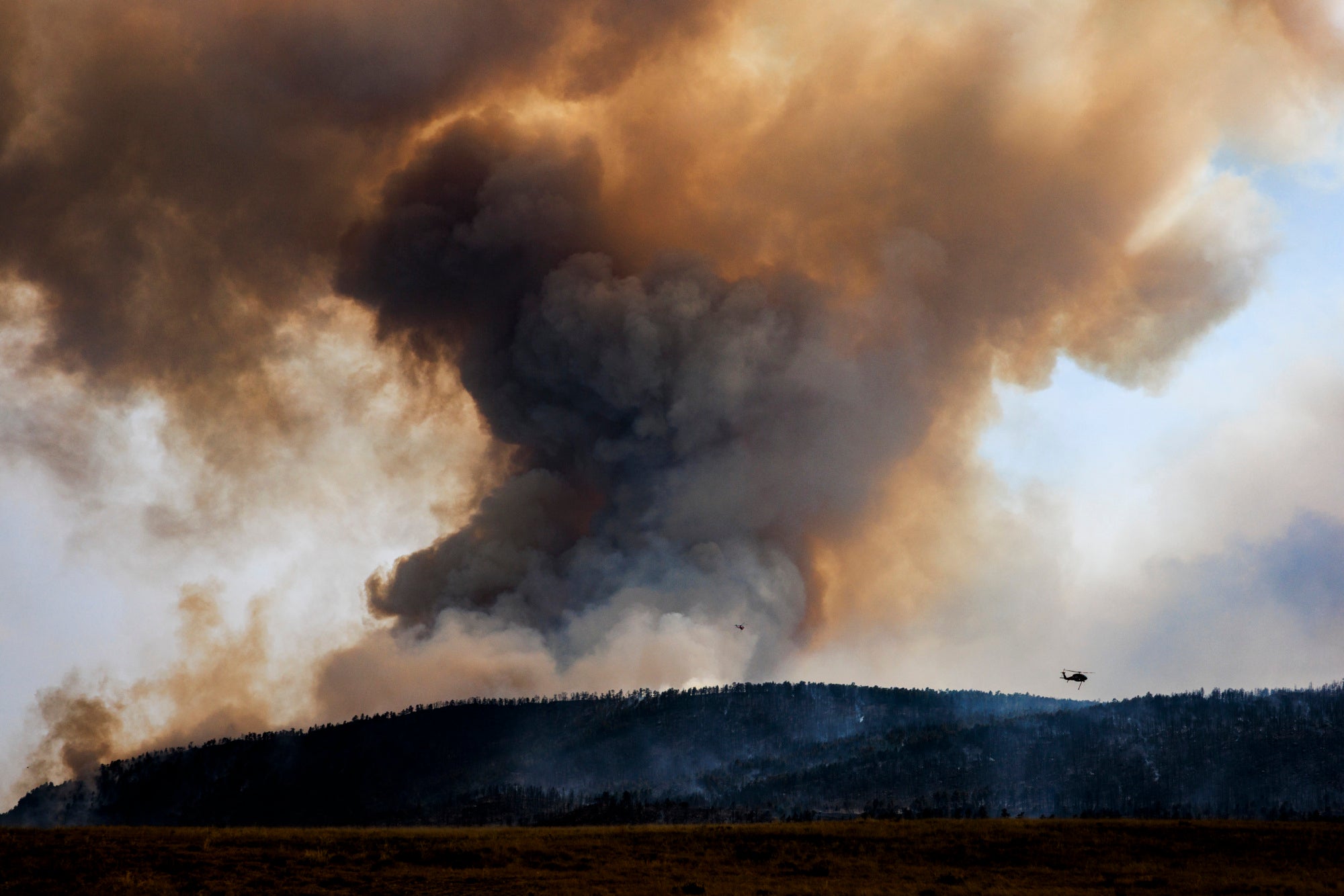
So we saw this with Hurricane Helene and impacts on the Baxter facility, which produces about—at the time, produced about 60 percent of the IV fluids and sterile injectable fluids used by health systems in the United States. And that supply was abruptly interrupted, and as a result, a number of health systems, large health systems around the country were impacted and had to make rapid changes in scheduling of surgical services and a lot of changes in how they administer medications to patients in emergency departments and in the hospital. And some healthcare facilities were able to integrate this and manage supplies and work carefully with Baxter and with federal authorities to help, squeeze out their inventory, and it had relatively little impact on patient care in those facilities. But other facilities saw significant impacts, and this impacted patient care, impacted revenue flow, and that’s just one example. So you pick another location and we see a significant increase in wildfire activity, particularly in the West. And that, of course, impacts health care both by threatening facilities, by diminishing the ability of staff to be present and respond when we have those events, and also by increasing exposures to hazards like wildfire smoke that are very dangerous for people, including firefighters. And so you see a number of different impacts, again, it varies regionally, but in many cases, these disasters are having impacts that extend well beyond the local region because of tight interconnection in our supply chain and other systems.
What do you wish journalists better understood when reporting on the intersection of climate science and regulation?
ELENA RENKEN: Thank you all for these answers. I want to remind reporters to please submit your questions using the Q&A box found at the bottom of your Zoom screen. And I’m now going to open up the conversation with a question for all three panelists, and then we’ll begin taking audience questions. First off, to all three of you, what do you wish journalists better understood when reporting on the intersection of climate science and regulation? Dr. Meiburg, do you want to weigh in first?
STAN MEIBURG: The understanding is simply that these are all parts of a rather complex system, and so that simple answers are rarely correct. It’s important to understand the interplay between climate regulation and energy systems in particular, that in some ways, we’ve benefited from the fact, and it’s complex, and this is maybe a perfect example of just how complicated it is. We have benefited, as Dr. Field mentioned, in a decline in carbon emissions from the electric utility sector because you’ve had substitution for old coal fired power plants, which in 2008 generated 50 percent of the country’s electricity, is now being replaced by natural gas and by renewables. So the coal fire power plants, which emitted highest levels of carbon per unit of electricity generated are now about 20 percent of the country’s base load generation. And that’s occurred, even though EPA’s first attempt at regulating carbon emissions from power plants was overturned by the Supreme Court. So in some ways, some of those kind of transitions have been driven by economics, both the economics of additional availability of natural gas due to hydraulic fracturing and the continued improvement in the economics of renewable energy sources.
And so that’s the kind of complexity that it’s important to understand and that what you would like to have is all of the incentives working in the same direction to prevent the kind of health effects that Dr. Field and Dr. Hess referred to over the long term. If you stopped emitting carbon today, there is still a certain amount of energy built in the system, and you won’t see a change overnight. But what you do today is going to have a significant impact 20 to 30 years from now. And you have to be thinking not just in what happens in the next six months or a year, but what happens over ten, 20, 30 years in the future is influenced immediately by what we do today.
ELENA RENKEN: Thank you. And Dr. Field?
CHRIS FIELD: I think the most important things for reporters to understand is that the endangerment finding is the sole legal foundation for the federal government’s ability to regulate greenhouse gases. And there are lots of economic things that are happening, there are lots of international competition things that are happening to help bend the curve on decreasing emissions in a way that will stop further warming.
But we also need a federal foundation for legal action, that’s what the endangerment finding is. Removing it means that the cost advantages of renewable electricity will still be there. The driver experience advantages of electric vehicles will still be there, but we will lack the ability to have coordinated policies, including federal initiatives to regulate the gases that cause climate change. It is the sole foundation, pulling the endangerment finding means the federal government has no legal recourse to address climate change.
ELENA RENKEN: Very useful. Thank you. And Dr. Hess?
JEREMY HESS: So overall, I think actually, journalists do a really good job of explaining a lot of these issues, and they are admittedly quite complex and have long legs and they’re complicated stories to tell. And so I don’t have many criticisms of journalistic coverage of these issues. I think two things that I want to offer up as important themes that perhaps could get some more attention, the first is the importance of sea level rise. That we have experience with, as I mentioned, almost all of these climate sensitive hazards, but we don’t have experience with rapid sea level rise on a continental scale. And this is going to have pretty significant impacts on parts of the United States that are heavily impacted, which is the Atlantic Seaboard and the Gulf Coast, principally, but not only. And this is going to have a lot of impacts on migration. It’s going to have a lot of impacts on health facilities, on infrastructure generally. And I don’t believe that this issue gets enough attention anywhere in the United States. And it’s not super far off, I mean, these are issues and risks that we absolutely should be discussing openly, given the impacts on infrastructure over the next several decades. The second kind of extends from the first, and that overall, this is a set of questions related to risk management. So the endangerment finding specifically is a mechanism for risk management.
But what we’re overall talking about is the best scientific assessment of current and future risk, and then ways we can address it. And the United States already has significant challenges in managing health risks and incorporating best practices for population health management and healthcare delivery from around the world. What journalists need to understand is that these choices will increase risks to health downstream, some of it near term, some of it long term. And those risks to health have costs, they have significant costs. And we don’t have mechanisms to adequately manage those costs or defray them over the population in ways that we might otherwise. And telling that story is an important one, it’s difficult to talk about costs 20 or 30 years down the road, but easier to talk about what happens when you lose a large hospital in a community as a result of repeated exposure to climate sensitive hazards and under or uninsurance of that facility and inability to rebuild. It has major impacts on a community’s health and well being. And I think those stories need to be told.
STAN MEIBURG: Well, I want to just jump in and add to what Dr. Hess said as the Atlantic Coast representative on this panel. That’s exactly right, that you see in the coastal areas, you see these even when you don’t have extreme weather, you have higher level tides and they start to influence both the infrastructure in these areas and planning for infrastructure in the future. They also disrupt the ecological balancing of areas all across the Atlantic Seaboard and into the Gulf Coast, as well. And there are really significant risks for even what you might consider relatively small increases in sea level rise, because so many of our coastal areas are built up with assumptions that the ocean was going to stay where it was.
And when it doesn’t, then you put tremendous amounts of infrastructure investment at risk, and you have to plan for that in the future, even at the best case scenario. Plus, you also learned from experiences like Hurricane Helene, which was very close to Winston-Salem where I live, and the idea that people had moved up to the mountains of Western North Carolina because they thought of it as a climate refuge, a place that was less likely to be affected by climate change. And they found out that you can’t do that, all these extreme weather events are very much driven by the same energies that are affected by climate change, and there is no climate refuge. It’s something all of us have to confront, no matter where we live for those kind of impacts.
What impact, if any, could overturning this finding have on landfill gas regulations?
ELENA RENKEN: Thank you for pointing out those sea level rise topics and others, where there are more stories to tell, appreciate it. A question here from a reporter at WUFT Public Media in Florida. What impact, if any, could overturning this finding have on landfill gas regulations? Would any of you be able to weigh in on that?
CHRIS FIELD: Well, I was just going to say that landfill gases are regulated by a combination of federal and state actors. They are regulated under the Clean Air Act for sources above certain size, and landfills produce both toxic pollutants and greenhouse gases. And as we’ve been saying, the withdrawal of the endangerment finding doesn’t change the EPA’s responsibility to regulate criteria pollutants, but it means that the legal foundation for regulating greenhouse gases goes away. Much of the regulation of landfill emissions in the United States is controlled at the State level, and States might or might not maintain their regulations around greenhouse gases from landfills into the future. One of those things that’s just hard to know, an interesting sideline of landfill gas emissions is that when converted into what’s called renewable natural gas, landfill gas emissions can actually be an important source of income for landfills that are operating conscientiously.
ELENA RENKEN: Dr. Meiburg, did you have something to add there, too?
STAN MEIBURG: No, I have nothing to add, Dr. Field said what I would have said only better.
How would repealing the endangerment finding affect land management practices?
ELENA RENKEN: Thank you. Then we can move on to another question, this one from a reporter based in Ohio. How would repealing the endangerment finding affect land management practices? Any of you able to take that one?
STAN MEIBURG: I will just take it briefly in the sense that, and giving the same answer that we gave to some others, it’s a little hard to say. Generally, the Clean Air Act is not a land management statute. That’s not to say that there are not air pollution impacts from land management, because there absolutely are, but most of the regulatory authority of the Act is aimed at industrial and commercial activities rather than land management per se. And that goes all the way back to, sort of, separation of power or federalism and who controls what and those kind of powers and authorities, generally, it doesn’t reach land management classically, except to the extent of the management of Federal lands, which can be affected by it, and they’re used for mineral resources and things like that.
So I’m hard pressed to say, and I would welcome additional thoughts from Dr. Field or Dr. Hess about that. But generally on land management per se, the main issue is going to be thinking again in the future, when you’re managing land and managing communities, you’d better be thinking about your infrastructure 20 or 30 years out. And the repeal of an endangerment finding that made it less likely that we would significantly address climate- greenhouse gases is going to create more stress on infrastructure managers who will have to plan for more extreme events.
CHRIS FIELD: I think a good way to think about the endangerment finding is that it’s a big marker that says the United States has a legal responsibility to address climate change causing emissions. And it specifically relates to greenhouse gases from the automotive sector, but I think as a marker of the legal responsibility to address climate change more broadly, it has important implications for the way other agencies think about their regulatory responsibilities, for the way other countries see the level of action that the United States is or isn’t taking, and it has therefore, important kind of communications components that are layered on top of the specific regulatory components.
If the finding is overturned, how can journalists track impacts in their communities, and what sources or data should they follow?
ELENA RENKEN: Thank you. And another question here for anyone who has thoughts to weigh in with. If the finding does get overturned, how can local journalists keep up with what it means in their own community? What are some of the sources they should be following up with, or data sources they should keep track of?
STAN MEIBURG: Let me just say from a regulatory standpoint, there are a number of good programs that are doing that. There’s a Harvard project tracking environmental rulemaking and litigation, that’s a good way to keep up on it. It is very complicated because there are a sequence of steps. Probably the most important thing on the endangerment finding to remember is that, if the endangerment finding is overturned, then as, I think both Dr. Field and Dr. Hess noted, then the underpinnings of all of our regulations of greenhouse gases under the Clean Air Act, kind of, collapses. And so you’ll start to see a whole scramble of activities around emissions from both the transportation and the utility sector, where it will be a free for all. What exactly will happen in that arena? It’s hard to predict, it’s influenced by economics and influenced by other social considerations. And so it will turn out to be a very local specific topic. And I would be looking, especially in the electric power sector for what are your local communities doing to encourage or discourage the use of renewable energy? What are utilities doing? There are certain utilities who have tended to disfavor renewable energy unless they are pushed by their own utilities commissions or by their State legislatures. So the repeal of the endangerment finding will make this a more complicated nuanced local story to tell, I think.
CHRIS FIELD: I had one quick add on to that, and I think it’s important for people to remember that the whole idea of the endangerment finding is that it needs to be in place if there is a reasonable expectation that these greenhouse gases cause climate change that endangers public health and welfare. And the most important story to tell is the story of how climate change is altering public health and welfare through the mechanisms we’ve already talked about heat waves, intense storm, sea level rise, wildfire, making it clear that climate change is a critical driver of the nation’s overall health and well being, is the most important thing for reorienting the country around recognizing that endangerment is a real thing.
JEREMY HESS: Chris said it very well, that ultimately where the rubber hits the road here is with human health. And so continuing to track the health impacts of climate change in a given community and tell that story, and tell that story in all of its difference by region, because there’s a lot of local variation, and a lot of communities are impacted that at first blush, you might not expect. And so one of the stories to track if the endangerment finding is repealed is how quickly climate change is moving forward in a given community and how that community is responding, and what the costs are of that response. And in costing, it’s important to think about lost opportunities and lost revenues, as well as immediate cash outlays and losses of human life, which unfortunately we’re starting to see as a result of climate change in the U.S.
STAN MEIBURG: I would add on to that, even though on the short-term cost, it’s very interesting because, again, this is so bound up with energy production. And if you have a situation where the use of renewable energy, even when it is more cost effective than the use of fossil fueled energy, if you have occasions where the use of renewable energy is disfavored in favor of fossil fuel emissions sources. Consumers can find themselves ironically paying more for their energy costs than they will in a situation where renewable energy- cheaper renewable energy was favored. And so the local story, again, I would want for people to follow is to look at your state legislatures and utilities commissions and see how they are considering the cost pricing and cost efficiency of the power generation systems they are setting up for the future. And this affects transmission lines as well as generating sources, and especially as some of the older less efficient fossil fuel fired sources inevitably reached the end of their useful life. That’s a really important story, and the endangerment finding is bound up in it because it’s one of those factors pushing the consideration of cheaper, cleaner, renewable energy. And part of the reason for the attack on the Endangerment Finding just frankly is some rather self interested behavior on the part of sectors of the economy that benefit from fossil fuel fired energy.
From the perspective of utilities, automakers, and other industries, would revoking the finding be welcomed or could it expose them to unwanted lawsuits?
ELENA RENKEN: To follow up on that line of thought, actually, we have a question from a reporter based in Vermont, for Dr. Meiburg. Do you think that from the perspective of utilities, car makers, and other regulated industry actors, EPA’s revocation of the endangerment finding would be a welcome next step in their challenges to the Clean Air Act, or would this go even further than some industry actors would like, given that it opens them up to potential civil and common lawsuits related to their emissions?
STAN MEIBURG: Oh, boy. That’s a complex question, and the answer is probably it depends. It depends somewhat by company, that there are a number of companies who have already invested, both in the automobile sector and the electric power sector, who have committed to a clean energy transition. And if they find themselves, then somehow subject to shareholders making arguments, which I personally believe are unfounded, making arguments that somehow they have economically disadvantaged their area with respect to energy production. That will certainly further complicate what is already complex decision making, about the development and dispatch of energy resources. So it will not make their life any easier in that regard. It’s hard to say, and it does depend on a number of very specific factors, and, again, I mentioned transmission lines earlier that one of the great challenges in the United States is we don’t now have an energy transmission system that would allow the dispatch of cheaper renewable energy sources from the places where you can generate inexpensive renewable energy to places that need it.
And that is a consideration. You’re also having tremendous technological change in the availability of energy storage and batteries and other types of energy storage mechanisms that if allowed to be fully in place and not disfavored as some states are doing, could make energy cheaper for average people.
And that’s a useful framing because you hear occasionally the noise that somehow the push for more renewable energy sources is actually increase in costs, whether it’s the motorists or to regular consumers of electricity. And the facts just simply haven’t borne that out, but that’s a story that needs to be- a framing that needs to be emphasized that even for people who are not convinced of the urgency of climate change as a factor, most people would rather have less expensive energy than more expensive energy. And so that question really needs to be considered in the framing of the response.
CHRIS FIELD: Can I add one more point about the way companies see the issue. For companies that are competing on an international stage, they need to make, for example, cars that are in demand in countries that are being proactive about action on climate. And if we double down on legacy technologies that are basically gas guzzlers, the prospects for American automakers to be competitive on the global stage is dramatically eroded. The United States is an important part of the world economy, but it’s not a standalone part. And we have companies that make everything from electricity generating hardware to automobiles that really need to be part of the global landscape to be successful, and they need to make 21st century forward looking products in order to do that.
STAN MEIBURG: And this is already happening in the motor vehicle sector with respect to the Chinese, who’ve made some pretty impressive gains in their ability to manufacture automobiles that were they available for sale in the United States would be very popular.
Which industries other than auto and electricity would be impacted by a repeal of the endangerment finding?
ELENA RENKEN: Thank you. Another question here. Panelists have mentioned the auto and electricity as industries that would be impacted by a repeal of the endangerment finding, are there others?
STAN MEIBURG: Yes, there are quite a few. Heavy industrial activities, such as cement manufacturing, iron and steel production come immediately to mind, and, of course, chemical manufacturing in the oil and gas sector. Now, the oil and gas sector has tended to take the position that they are disfavored by regulations regarding the climate, and so they have tended to oppose climate regulations and will probably as a sector, I’m not using this for every single company, but as a sector have tended to argue in favor of reduced levels of regulation on climate. I do think to Dr. Field’s point that companies that are operating in a global sector, however, recognize that the United States views on these things are not the only ones that matter across the world. And if you are going to be globally competitive, you have to demonstrate a certain sense of responsibility. Plus, you have the overwhelming scientific consensus that, in fact, climate change is happening, and the humans are contributing to it. And so, consequently, that is always there playing in the background, regardless of the legal arguments, which I think the endangerment, despite the attempt to- in this current proposal to discount that, I don’t think that’s overturned in most people’s minds, the overwhelming scientific consensus around climate change. I hope I’m correct about that, but mostly what you have here is a legal argument in the United States, more than an argument about the science. And even the Bush administration back in 2007, did not attempt to dispute the idea that humans were changing the climate.
Which states other than California would likely continue efforts to curb greenhouse gas emissions despite EPA rollbacks?
ELENA RENKEN: One more quick question before we do our final wrap ups. Dr. Field mentioned a possible patchwork of policies that could emerge should the national regulations get rolled back. Other than the obvious example of California, are there particular states where you’d expect some level of continuity in attempting to keep reining in greenhouse gas emissions despite the rollbacks?
CHRIS FIELD: You know, the landscape of action and deploying efficient transportation and electricity is very mixed. Many of the States that have been most ambitious in deploying renewables, wind and solar are red States. The Dakotas, Oklahoma, Texas are real leaders in wind and solar. And of course, many States have made State level commitments to tackling climate change, California, notably, with its cap and trade program, the Northeast through the Reggie activity. Washington and Oregon have been deeply involved. And so there are individual States that are deeply committed, there are a wide range of States that are taking advantage of the lower cost electricity that comes from renewables, and there is certainly the possibility that we will see some diversity of regulatory environments that would be consistent with particular states’ goals, but truly problematic from nationwide and global providers who were trying to work with these regulations.
What is one key take home message for reporters covering this issue?
ELENA RENKEN: Thank you. Now, I have one last question for our panelists, which will give our panel here a chance to highlight crucial takeaways. But first, I wanted to mention to reporters on the call that you’ll get a brief e-mail survey after you sign off. If you have one spare minute to share your feedback, that would really help us design our services to be as useful as possible for you. And now for our final question for each of you, in about 30 seconds, what is one key take home message for reporters covering this issue? Dr. Meiburg, would you go first?
STAN MEIBURG: The main takeaway is that the current action by the Administration is an attempt at one fell swoop to undo and overturn the idea that the Clean Air Act, can be used to regulate greenhouse gas emissions, which gives them the ability to avoid doing things that they otherwise have to do one by one, to undo regulations on the transportation sector, the electric utility sector, and other sectors. And it’s driven by a belief that they now can have a Supreme Court that is willing to overturn past precedents and take this matter on.
ELENA RENKEN: Thank you. Dr. Field.
CHRIS FIELD: Well, climate change clearly is a defining challenge of the 21st century. We need to have a comprehensive set of smart policies to tackle emissions of greenhouse gases. The Endangerment Finding in place since 2009 was one way to do it. It’s been effective, and we could use it to be even more effective in the future. Withdrawing it means that we’re simply not in the game in terms of addressing the critical challenge of our century.
ELENA RENKEN: Thank you. Dr. Hess.
JEREMY HESS: Ultimately, climate change is a health issue, and the endangerment finding highlights this. Reducing greenhouse gas emissions is overwhelmingly beneficial to population health. And to the extent that we don’t take advantage of opportunities to reduce greenhouse gas emissions, we will be further constrained in the future by worsening health impacts, more costly health impacts, and potentially in some locations, health impacts that we are not able to address. So there’s a significant long term interest from a health perspective in avoiding dangerous climate change.
ELENA RENKEN: To our panelists today, thank you so much for sharing your expertise and clarifying so many aspects of this complex issue. And to all the journalists on the line, we really appreciate your dedication to science backed coverage and thorough reporting on this. I hope we’ll see you at our next briefing. Thank you.