What are Reporting Resources?
By Sandra Larson
The rising cost of living, more than almost any other issue, has been cited as top-of-mind for Americans ahead of this year’s midterm election. In various parts of the country, housing affordability has become a chief concern. Nationally, existing home prices have jumped 54% since 2020 and stand at nearly five times median income—far above the 1990s-era ratio of three times median income—making homeownership increasingly out of reach for first-time buyers, while for renters, housing cost burden has grown worse across the income scale.
Local journalists covering housing affordability can step back from the political back-and-forth on the issue by turning to the work of nonpartisan researchers who study economic factors and the impacts of policies and practices from local, state, and federal government.
Efforts to tackle housing affordability have garnered attention over the past year both at the local and federal levels.
In New York City, Zohran Mamdani made “freezing the rent” a central tenet in his 2025 mayoral campaign. His win, which included heavy support in renter-dominated districts, and subsequent action to keep rents level in the city’s rent-stabilized apartments, generated something of a ripple effect, possibly helping several candidates with similar platforms defeat establishment Democrats in Congressional primaries this year in New York, Colorado, and elsewhere.
At the federal level, both houses of Congress this spring overwhelmingly passed the 21st Century ROAD to Housing Act. Although President Trump declined at the last minute to sign the bill, it became law without his signature on July 11. According to the bill summary and briefs by the Bipartisan Policy Center and Smart Growth America, among the 381-page bill’s many measures are some that aim to help speed up housing production, widely seen by economists and housing experts as a key factor needed to bring prices down. The measure had strong bipartisan support, and members of Congress on both sides of the aisle are likely to tout their role in passing it.
But, as the New York Times points out, cities and states, not the federal government, control most of the levers that allow or encourage housing to be built. Recent reporting by housing journalist Roshan Abraham notes that the law is short on mandates and funding, and deep staffing cuts at the U.S. Department of Housing and Urban Development could slow its implementation.
This guide is designed to help journalists covering midterm elections find accurate, contextualized housing data and become familiar with the myriad concepts and terminology related to housing problems, policies, and potential solutions.
It covers what research shows about housing affordability; what solutions are being implemented or proposed; tips for journalists covering these issues; and where you can find accurate housing data and useful explainers.
In April, a national poll of 1,000 registered voters by the Bipartisan Policy Center, an advocacy organization, found that 79% of respondents said the cost of housing is an extremely or very important issue; 57% said housing costs made it difficult to meet other financial obligations; and 63% said they would be “more likely to vote for their senator or representative if they helped pass legislation to build more affordable homes and lower housing costs.”
In May polls from Pew Research Center, a nonpartisan provider of public policy analysis and data, 71% of U.S. homeowners said their home insurance cost has gone up over the past few years, and 75% of adults said their home energy cost has gone up.
Data supports housing affordability concerns. An all-time high number of households across the U.S. are cost-burdened, paying more than 30% of their incomes—in some cases even more than 50%—on housing, according to this year’s assessment of the state of the nation’s housing from the Joint Center for Housing Studies at Harvard University. Housing cost burden falls particularly hard on lower-income households but is rising rapidly in moderate income brackets, too, the analysis shows, and is increasingly affecting older adults.
Rents have risen 29% nationwide since the COVID-19 pandemic, outpacing non-housing inflation, the JCHS report shows, and while rent growth has slowed recently in some areas, rents remain high and continue to rise in others. At the same time, single-family home prices have skyrocketed. According to Zillow, more than half of states now have cities where a “starter home”—defined as falling in the bottom third of regional home values—is priced at or above $1 million.
For many looking to enter home ownership, high prices and rising mortgage interest rates make prospects gloomy. The National Association of Realtors’ annual survey of homebuyers made headlines last year when it showed the median age of first-time buyers had risen to 40, up from late-20s in the 1980s, though other analyses put that stat into doubt and suggest the age has remained relatively stable at around 33. Still, younger buyers may have trouble accessing credit, especially if they’re saddled with student loan debt, and minority households are disproportionately denied mortgages. Tightened mortgage lending standards implemented after the Great Recession of 2007-2009 continue to hinder even financially prepared would-be buyers, according to Pew, and home ownership rates still have not rebounded to pre-recession levels.
A Gallup poll in April surveying 286 U.S. non-homeowning adults found that the share who expect to buy a home in the next five years has dropped to 25% this year, the lowest the pollsters have seen since they began asking the question in 2013 and down from a peak of 49% in 2017. The drop was particularly sharp among young adults ages 18-34.
While large coastal cities such as New York, Boston, and San Francisco have been well-known for decades as centers of dramatically rising home prices, prices also have shot up in other locations across the U.S. For example, median home prices rose about 100% or more between 2016 and 2026 in inland cities such as Tulsa, Memphis, Cleveland, Phoenix, and Milwaukee. An analysis last year by the Houston Chronicle showed home values in that city’s traditionally affordable working-class neighborhoods rose sharply over the past 10 years, in some cases climbing more than 300%.
Some rural and vacation areas saw housing prices spike as people migrated during the pandemic. Bozeman, Montana, for example, has seen housing costs reach record highs after an influx of remote workers and social distancers arrived from other states, pushing local workers farther out of town and causing small-business owners to take on second jobs.
“We’re in the middle of a housing affordability crisis that’s nationwide, and that means this is going to be incredibly relevant for a wide swath of the population,” said Katherine Einstein, a Boston University political science professor, associate director at the university’s Initiative on Cities, and a researcher in its Housing Politics Lab. “We’re seeing how important that is in voter opinion polls and in the way politicians are talking, especially at the local level.”
Here are some of the most prominent focus areas for policymakers attempting to ease housing costs.
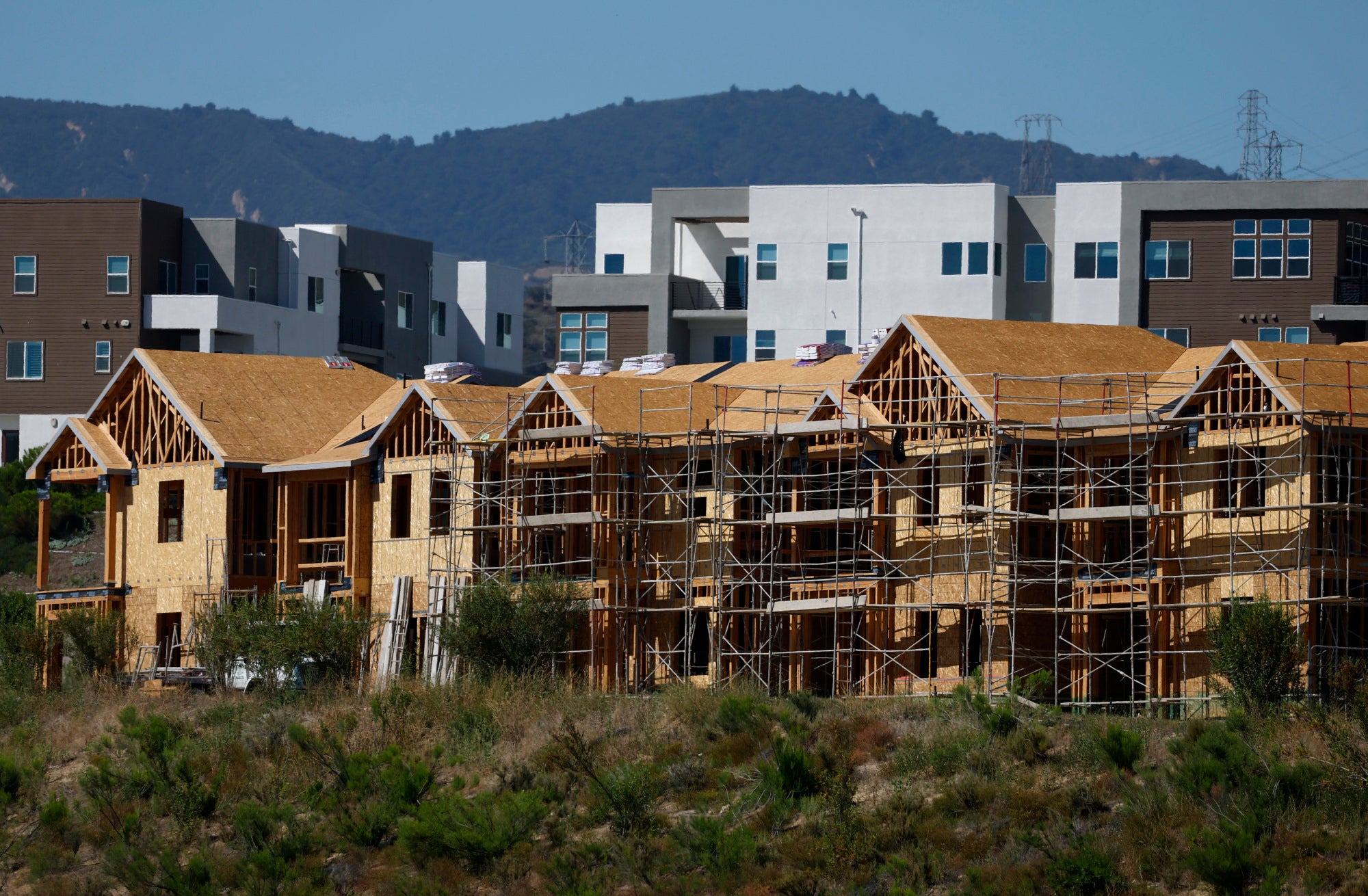
There’s a strong consensus among economists and housing experts that high housing costs reflect a national shortage of housing, and a key way to bring housing cost down is to increase the supply.
“When we think about the causes of the increase in housing prices, one of the things economists point to is we have made it really hard to build in places people want to live. It’s driven by a mismatch between supply and demand,” Einstein said. “The process of addressing it is going to look different in different places, but we need to build more housing.”
Policies aimed at increasing housing supply include altering land use and permitting policies to make it easier to build; allowing property owners to add accessory dwelling units; and encouraging construction of affordable housing on land owned by faith organizations and school districts.
In a survey of mayors conducted by Einstein and her colleagues at the Housing Politics Lab at Boston University, two cities—Minneapolis and Austin—were each cited by 15 mayors as top models for responding to housing affordability problems. Both cities had recently and prominently reformed their zoning to allow more density and multi-family housing.
Research on zoning reform finds that such policy changes have in some areas spurred housing construction, leading to lower rents or at least tamped-down price increases.
In Austin, an aggressive set of reforms to push new housing construction increased housing stock by 30% and caused rents to drop between 2015 and 2024, according to Pew.
Minneapolis, a city dominated by single-family homes, took a series of actions between 2009 and 2020 to make it easier to add multi-family housing. These included removing minimum parking requirements for new buildings, mandating minimum heights in certain areas to increase density, and eventually allowing duplex and triplex construction on all residential lots—in other words, ending single-family-only zoning throughout the city.
A 2024 review by Pew of the impact of Minneapolis’ zoning changes found that between 2017 and 2022, nearly 21,000 new units of housing were permitted in Minneapolis, 87% in buildings with 20 or more units and 1% in buildings with two to four units. The report concluded that the city’s duplex and triplex policy had had a “modest” impact on the housing stock, while the reforms enabling apartment building construction had a greater effect. The city increased its housing stock by 12%, while housing in Minnesota as a whole increased only 4%, the Pew report notes. Rents did not drop, but also did not rise as much as in other places.
“Minneapolis has sharply improved housing affordability by allowing new apartments,” said Alex Horowitz, a researcher with Pew who worked on the report, speaking to Minnesota Public Radio. “So during the five-year time period that we looked at, 2017 to 2022, rents went up about 30% in the U.S. They went up 14% in Minnesota. But they only went up 1% in Minneapolis.”
Plans to build more housing, especially multifamily housing, often run up against local opposition. With home equity making up a large share of wealth for many Americans, nearby homeowners often protest denser development they see as potentially decreasing property values, among other concerns such as unwanted changes in neighborhood character. Besides the often-mentioned “not in my backyard” responses, research shows the general public is not convinced that building more is the answer. Einstein and her colleagues have studied this. She said while economics shows that building more housing will lead to price drops, many ordinary people have not adopted that belief fully, exhibiting “supply skepticism.”
“There’s a wide swath of the public, and somewhat smaller segment of politicians, that do not believe that building more housing will reduce prices,” she said.
A 2025 study by University of California researchers discusses the “folk economics” of housing, asserting, “Across three original surveys of urban and suburban residents, only a minority of respondents say that a large, positive, regional housing supply shock would reduce prices or rents.” Instead, they note, people blame landlords and developers for high costs and believe that “price controls, demand subsidies, and restrictions on putative bad actors” would be more effective for affordability than incentivizing more supply.
Vincent Reina, a University of Pennsylvania urban planning and policy professor and founder of the Housing Initiative at Penn, emphasized that an often-overlooked part of the supply problem is deterioration and loss of existing affordable housing stock.
“There’s a consensus that we have a housing supply problem on a national scale,” he said, “but some stop at that statement and just say ‘build anything anywhere.’ But because we underbuilt for so long, we wholesale lost most of our low-cost housing across the country, and the remaining stock is in poor quality and occupied. We have not just a supply problem, but an affordability problem.”
Reina is co-author of a comprehensive analysis that he describes as a “primer” on key trends, challenges, and policy recommendations for improving housing affordability. In that paper, the authors say policy solutions include not only making it easier to build, but also “ensuring homeownership is attainable; creating a stronger and more complete housing safety net; and ensuring financing is available through the cycle.”
A Pew analysis earlier this year termed property taxes a “lightning rod” for state policymakers trying to appease homeowners’ frustration. One solution many states have pursued or considered is to cap, reduce, or eliminate property taxes. It’s a charged issue, as this roundup from Realtor.com shows, with efforts in several states gaining steam and then faltering as they run up against the obvious tradeoff: lost revenue for schools, emergency services, and local governments. Read more about these dynamics and which states have property taxes on the ballot in SciLine’s guide to reporting on property taxes and education.
Beyond New York City, a few other city and state governments have enacted some form of restrictions on rent increases. Two of the most recent are in Takoma Park, Maryland, and in Washington state. Some other efforts have stalled, such as those in Massachusetts, Washington D.C., and Providence, Rhode Island. But Providence Mayor Brett Smiley, who vetoed a rent stabilization act approved by the city council, was defeated in the September primary by a challenger whose platform included support for the measure.
The effectiveness of rent stabilization measures—which typically allow limited rent increases for existing tenants, with variations in whether or how much landlords can raise rates between tenants—is far from a settled question, though. While these measures limit rent increases for current tenants, many economists argue that they also lead to reduced supply and quality of rental housing.
“A lot of economic research has suggested that rent control does not make housing affordable for everyone and can reduce rental housing stock overall and its quality,” Einstein said.” So that’s a policy area to be more skeptical of. As a caveat, though, the way it’s implemented makes a difference. Mild ways may work better.”
A 2025 study in the Journal of Housing Economics examining 27 metropolitan areas found that rent control reforms increased the availability of units affordable to extremely low-income households but were also associated with a 10% reduction in total number of rental units in a city. The authors conclude that “supply side policies such as upzoning and increasing the speed of development might be needed in tandem with rent control to ensure that rent control does not further reduce the supply of rental units and potentially affordability in the long run.”
A number of housing-related issues will appear on ballots in the November elections, according to Ballotpedia, a nonpartisan site that tracks legislation and ballot measures nationwide. For example, voters will decide in Wyoming and Louisiana on proposed partial property tax exemptions, and in Rhode Island and California on bond measures to help fund housing construction or homebuyer assistance. In Massachusetts, a ballot question dubbed “legalize starter homes” would change lot-size regulations to allow construction of smaller single-family homes. In California’s San Francisco Bay Area, voters in Redwood City and San Pablo will decide on rent control measures stricter than those already in place statewide.
We asked researchers who study housing to share reporting tips and story ideas for journalists covering housing affordability in 2026.
Juan Pablo Garnham is communication and policy engagement manager at the Eviction Lab, a hub of national eviction data housed at Princeton University. Formerly an urban affairs reporter at the Texas Tribune, Garnham now works not only to help disseminate eviction data, but to assist journalists in covering housing issues. He has compiled an extensive list of databases and resources for journalists covering housing issues.
Garnham laid out some things journalists should keep in mind when covering housing affordability topics. One is making sure to connect individual anecdotes with data to show the context of a wider issue.
“Let’s say a reporter got a tip on someone that is getting evicted. It’s an 89-year-old on a fixed income. They tell that story well. It makes us feel things, and that’s really important,” he said. “But a lot of times, with a little effort to find context and data, you can make that story something bigger than just the anecdote.”
He also advises reporters to be mindful of how vulnerable people often are when in the throes of imminent loss of housing. He recommends that reporters take time to go into housing courts.
“Sit there, listen, and then maybe talk to the tenants after they’re done with the hearing. Going to housing court allows you to learn so much about how our housing system works, how our justice system works. A lot of the key systemic issues that are important to consider are revealed there. You might find people a little bit more calm, too, and more able to answer,” he said, comparing that situation to trying to interview evicted tenants as they watch their belongings being removed.
And, he said, journalism needs to pay attention to renters. “In general, homeowner issues get so much more attention,” Garnham said. “We have to get serious about putting the emphasis on renters too—especially given that if you’re a renter and you go through a rough patch, you’re so much more vulnerable than if you’re a homeowner.”
This deep-dive article on rising rents in Madison, Wisconsin, by journalist Allison Garfield is a good example of balancing individual renters’ stories with facts and data on why prices have jumped so fast and how the state of Wisconsin has preempted local governments’ power to enact measures like rent control or inclusionary zoning.
Katharine Burgess, vice president of programs and operations at the research and advocacy organization Smart Growth America, cautions against adopting the sometimes exaggerated phrasing used by people who are passionately for or against a policy. “In places like Minneapolis, for instance, people describe [its zoning reform] as ‘no longer allowing single-family housing,’ but this is false,” she said, noting that the reform does not ban single-family housing construction. Rather, it allows builders to choose to add small multi-unit buildings such as duplexes and triplexes on lots formerly zoned for single-family only.
Some innovative state and local initiatives to build housing supply are highlighted in this roundup by the National Conference of State Legislatures. Journalists could look into whether promising local innovations have actually resulted in housing production.
If you’re covering development of affordable housing in your area, know that while the Low-Income Housing Tax Credit is a federal tax incentive, the tax credits are awarded to developers by state housing finance agencies, and states can create their own incentives, for example, to spur development of certain types or in certain locations. Journalists can find out about requirements and incentives for LIHTC-financed affordable housing in their state by locating their state’s Housing Finance Agency and looking at the Qualified Allocation Program.
The ROAD to Housing Act places some restrictions on home purchases by large institutional investors. Will this affect your area? It could make a difference in some Sunbelt and midwestern cities such as Phoenix, Dallas, Nashville, Jacksonville, and Cincinnati, where purchases of single-family homes by large institutional investors have risen sharply in recent years, reducing supply and pricing out first-time buyers, even as it potentially brings more homes into the rental market.
Homeowner insurance costs vary considerably among states, according to LendingTree, which lays out rates and average monthly premium amounts for all states and highlights the highest- and lowest-cost states. Insurance is likely to continue to be an urgent issue for homeowners, especially as climate change contributes to extreme weather events, making it hard for homeowners in some areas to obtain insurance at all. You might look into whether this is a particular pain point for your audience, and whether local policymakers are trying to do something about it.
Look for local dashboards and regionally focused research centers. Garnham’s journalist resource document contains a number of recommended regional resources.
Did your governor lay out any housing affordability policy plans? As the midterms approach, how are these stated priorities holding up? MultiState, a government relations and lobbying consulting organization, has compiled transcripts of all of the 2026 State of the State addresses, which can provide a glimpse of governors’ priorities early in the year. MultiState also provides a handy list, updated monthly, of 2026 gubernatorial candidates by state.
Is your area affected by historical patterns of discrimination? The effects of “redlining,” a 20th-century system of lending discrimination based on neighborhood rankings, continue to play a role in racial homeownership disparities and wealth inequality today, as shown by research published in March in the journal Cities. Mapping Inequality, a digital archive housed at the University of Richmond, provides a set of redlining maps and information that can show the history of redlining in your community.
Some helpful guides and glossaries exist to help you catch up on housing concepts, jargon, and acronyms.
Whether you’re reporting data from public institutions, private companies, or other organizations, checking where the data comes from can inform how you use it.
U.S. Census Bureau
“If you’re trying to understand how affordable housing is at the local level, the census is your friend,” Einstein said. “The census has a variety of ways to extract data, but what you really want are median housing values that allow you to trace trends over time.”
Garnham, too, emphasizes the census as a source. His shared document of housing coverage resources directs journalists specifically to table DPO4 of the American Community Survey as the top recommended source for rent information by geographic levels, from state to census tract.
The Census Bureau itself offers webinar recordings on its Census Academy website and short videos on its YouTube channel to walk users through how to explore housing data and provides a guide to finding tables and building customized maps using Census data.
Federal Reserve Economic Data
This online database maintained by the Federal Reserve Bank of St. Louis is a reliable source of regularly updated data along with tools to help use and display the data in charts. For instance, easily downloaded graphs could show trends over a chosen time range in mortgage rates nationwide or in median home prices in Bozeman, Montana.
Federal Reserve Banks
These 12 regional banks offer a wealth of regional housing research. For example, the Federal Reserve Bank of Minneapolis has produced research and analysis on housing issues and policies, including topics such as Native American homeownership disparities, in Minnesota and surrounding states.
The Joint Center for Housing Studies at Harvard University is highly recommended by experts for its research papers, informative blog posts, and annual State of the Nation’s Housing report and accompanying presentation, which Garnham called “a must for anyone that cares about housing issues.”
The Furman Center at New York University, the Terner Center for Housing Innovation at the University of California, Berkeley, and the University of Pennsylvania’s Housing Initiative at Penn all offer useful data and research on their local areas.
Advocacy groups can bring a particular perspective to their analyses, but they also often have excellent data. In addition, going to the data sources cited in their reports can lead you to additional unbiased sources.
The National Low Income Housing Coalition produces two useful annual reports experts recommend for exploring rental housing affordability:
The National Housing Conference, a longstanding coalition of affordable housing leaders, provides several useful resources:
The Eviction Lab provides up-to-date maps, data, and reports on evictions in the U.S.
The Bipartisan Policy Center highlights bipartisan solutions to housing issues and has set up a ROAD Act Implementation Tracker.
The Housing Affordability Institute, a subsidiary of a Minnesota building industry trade association, produces research on exclusionary zoning issues and other housing policy topics, and monitors states’ efforts on housing policy reform across the U.S.
Ballotpedia has a section dedicated to housing policy ballot measures. You’ll need to look at the subsections—for example, housing development funding or land use and development policy—to make sure you’re finding all the measures in a given jurisdiction.
Sandra Larson is a Boston-based freelance journalist covering urban and social issues and policy with a particular focus on housing. Her work has appeared in Shelterforce, CQ Researcher, Next City, HealthCity, the Bay State Banner, The New York Times, and the Guardian. See more at www.sandralarsononline.com.
This is a list of some of the key research papers, reports, and experts we consulted for this reporting guide and why they were chosen.
“The State of the Nation’s Housing 2026” and related interactive maps and data
This annual report from the Joint Center for Housing Studies of Harvard University is highly respected and frequently cited by housing affordability experts. Other signature reports from JCHS include “America’s Rental Housing” (2026) and “Housing America’s Older Adults” (2023).
“Paycheck to Paycheck”
This database presented by the National Housing Conference’s Housing Resource Center draws on The Bureau of Labor Statistics’ Metropolitan Area Occupational Employment and Wage Estimates, The Zillow Home Value Index, and the Department of Housing and Urban Development’s Fair Market Rent calculations to estimate the annual salary required to “sustainably own or rent a home” in each metro area and to glean the median salary for various occupations.
“Rent control and the supply of affordable housing”
This 2025 study, conducted by researchers from Urban Institute, Oakland University, Colorado State University, the Federal Housing Financing Agency, and Harvard University, analyzes rent-control effects on housing supply across 27 metropolitan areas, a larger panel than previous studies have covered. The data highlight a tradeoff between rent control’s positive effect of increasing the number of units available to the lowest-income households and the negative effect of reducing the total number of rental units.
“Improving Housing Affordability”
Authored by Vincent Reina of the Housing Initiative at Penn and Benjamin J. Keys, real estate and finance professor at University of Pennsylvania Wharton School and a research associate at the National Bureau of Economic Research, a nonprofit, nonpartisan research organization, this comprehensive report lays out data on housing challenges for both renters and homeowners. It also offers policy recommendations for making housing supply meet demand while maintaining affordability.
RESEARCHERS
We asked Katherine Einstein for her input because she has deep expertise in the politics of local housing development and the effect of misinformation on democratic politics. Einstein is an associate professor of political science at Boston University, where she also is associate director of the Initiative on Cities and a researcher in the Housing Politics Lab along with fellow political scientists David Glick and Maxwell Palmer.
Vincent Reina is a professor in the University of Pennsylvania’s department of city and regional planning, founder and faculty director of the Housing Initiative at Penn, and editor-in-chief of the journal Housing Policy Debate. He has researched and written on policies that could improve housing affordability.
We spoke with Juan Pablo Garnham, communication and policy engagement manager at the Eviction Lab, because he is not only an expert on assessing eviction data, but also a former urban affairs reporter. Part of his current role is to educate journalists in covering housing issues. He regularly appears on expert panels at conferences and in webinars and has done an immense amount of work to compile resources for journalists.
Katharine Burgess is vice president of programs and operations at Smart Growth America, a nonprofit organization advocating for sustainable growth strategies. We consulted her because of SGA’s longstanding work in expanding housing and modernizing zoning codes and her deep experience in urban and land use planning.