What are Reporting Resources?
By Denise-Marie Ordway
Nearly 50 million adults aged 18 to 29 will be eligible to vote in the 2026 midterm elections, making Generation Z potentially one of the nation’s most powerful and influential voting blocs.
The reality is that many Americans in this age group do not vote, a problem that researchers have studied for decades. Meanwhile, a number of new laws and policy proposals across the U.S. may make it even harder for young people to register to vote and cast their ballots on time.
We created this guide to encourage journalists to examine independent, nonpartisan research about youth voting patterns and obstacles and to use that knowledge to ground their coverage of the 2026 midterm elections.
Historically, young adults have voted at lower rates than older adults. Less than a third of U.S. citizens aged 18 to 29 voted during the 2022 midterm elections, compared with 47% of voters aged 30 to 44, 58% of voters aged 45 to 64, and 67% of voters aged 65 and older, the U.S. Census Bureau estimates.
Even so, social scientists warn journalists not to equate a lack of voting with political apathy.
“A lot of our research shows young people deeply value democracy,” says Sara Suzuki, a senior researcher at the Tufts University Center for Information & Research on Civic Learning and Engagement. Commonly known as CIRCLE, the center is a leading, nonpartisan source of data and analysis on the country’s youngest voters.
These voters, whom scholars refer to as youth voters, must overcome a series of structural and logistical hurdles to participate in elections, Suzuki says. Election laws in some states make voting more difficult for college students in particular, especially students who have a permanent residence in one state but live in a different state during the academic year.
Jonathan Becker, a voting rights scholar and acting president of Bard College in New York, has spoken out about election laws that he believes were meant to make it tougher for young adults to influence election results.
“Some of the systems used to exclude African Americans [from voting] have been used on young people,” Becker told a crowd of college students who gathered at Emerson College in Boston on Sept. 17 in recognition of Constitution Day.
In recent years, some conservative lawmakers and political candidates have voiced support for adding more barriers to young adults’ access to the ballot box. In extreme cases, they have suggested taking away their right to vote entirely. For example, while campaigning for the U.S. presidency in 2023, biotech entrepreneur Vivek Ramaswamy—currently the Republican nominee for governor in Ohio—proposed raising the voting age to 25.
State laws and policies that researchers say discourage young people from voting include:
Banning student IDs and out-of-state driver’s licenses as forms of voter identification.
Earlier this year, New Hampshire and Florida became the latest states to adopt laws prohibiting voters from using a student ID to verify their identity. Of the states that allow student IDs, some only allow them under certain conditions. For example, Georgia allows college student IDs only if they have been issued by one of the state’s public colleges or universities.
Voters in 36 states must present identification before they can vote at the polls on Election Day, according to Ballotpedia, a reliable resource for election-related information. The 24 states that require a photo ID generally do not accept driver’s licenses from other states. This can make voting difficult for out-of-state college students who prefer to vote in the state where they go to college, or who may not be able to vote by mail or travel to their home state to vote.
Requiring proof of national citizenship.
Some states require adults to provide documents such as a U.S. birth certificate or passport to demonstrate they are U.S. citizens before they can register to vote. Many young adults do not have passports and, researchers assert, many also do not have ready access to their birth certificates.
Closing or rejecting requests to open polling locations on college campuses.
In January, the North Carolina State Board of Elections removed an early voting site at Western Carolina University and rejected plans to open early voting sites at three other universities, reports the nonprofit news outlet NC Local. On Sept. 1, county commissioners in Tarrant County, Texas, decided against restoring polling places at the University of Texas at Arlington and two Tarrant County College campuses, according to the digital news platform Democracy Docket.
Restricting voting rules related to state residency.
State laws that limit voters to one legal address can make registering to vote complicated for young adults who live with their parents but also reside in a different state during the academic year to attend college.
Limiting mail voting.
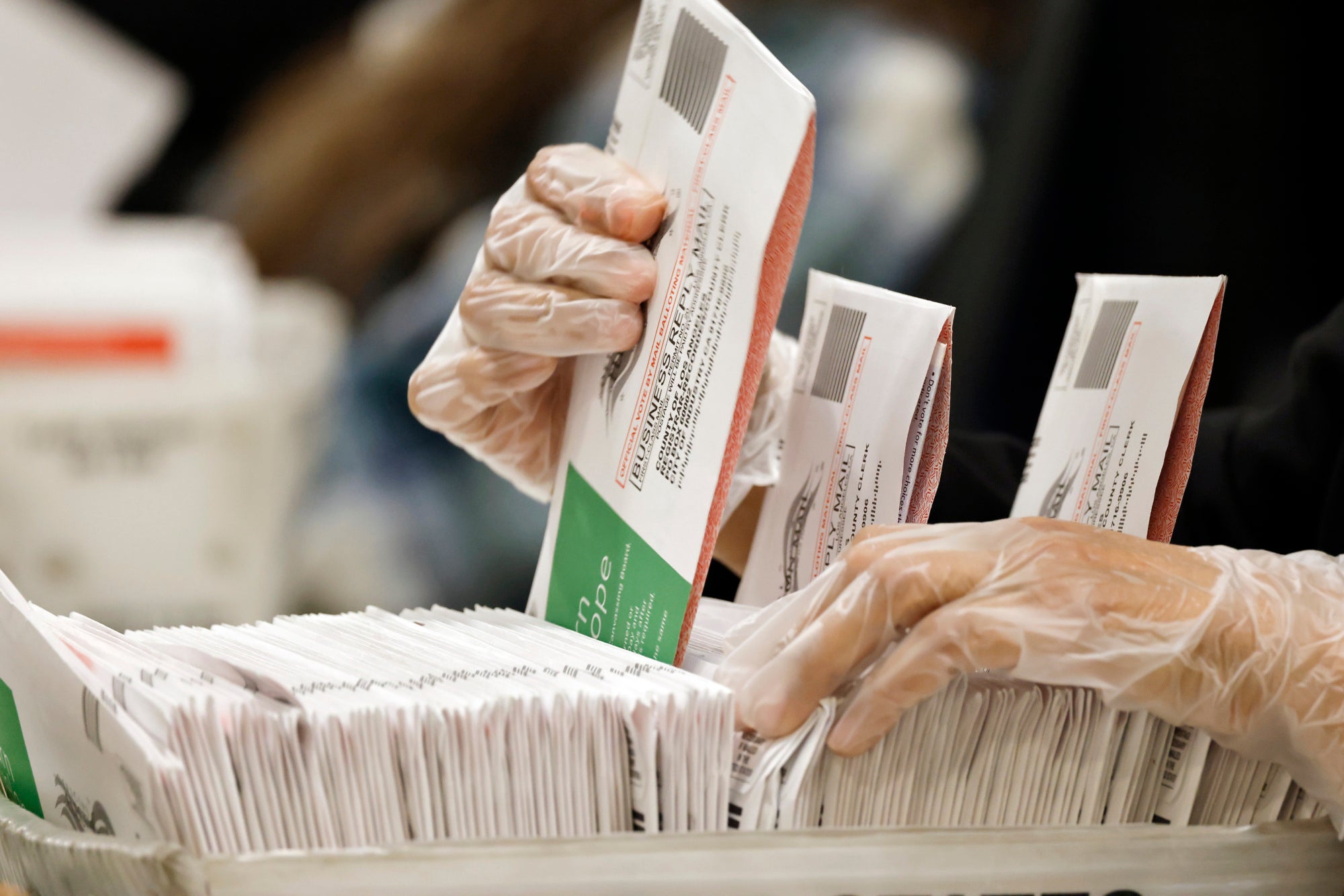
Election officials in 13 states only allow certain voters to use mail ballots, reports the National Conference of State Legislatures, which tracks state election laws. In those states, requests for mail ballots are granted based on the excuse the voter gives for not being able to vote in person at a polling location. In the other states, voters can submit mail ballots without needing to provide a reason or excuse.
Mandating that residents register to vote weeks before an election.
Voter registration deadlines vary across the U.S. As of May 2026, 15 states required their residents to register to vote at least 28 to 30 days prior to an election, according to the National Conference of State Legislatures. In nine states, the deadline is 20 to 27 days before an election. Seven states have a deadline of one to 19 days before an election.
An analysis from CIRCLE finds that youth voter turnout during the 2022 midterm elections often was highest in states where residents could register to vote on the same day they cast their ballots and in states with automatic voter registration. California and Oregon were the first to introduce automatic voter registration systems, which use data collected by certain government agencies, such as a state department of motor vehicles, to register eligible adults to vote.
Courtney Juelich, an associate professor of political science at the University of Wisconsin-Stout Polytechnic, points out that legal battles over mail voting this year will likely affect turnout, too. She says President Donald Trump’s push to restrict mail voting, partly by changing the way the Postal Service processes mail-in ballots, has created confusion among voters.
“Even though the Supreme Court decided the Postal Service isn’t going to be doing that, it’s still in this crucial period of time close to the election,” Juelich says, adding that voters who do not follow election issues closely and adults who are not familiar with the voting process might decide not to vote. “This will be discordant for low-information voters, who are typically young.”
Young adults gained the right to vote beginning at age 18 after Congress passed and the states ratified the 26th Amendment to the U.S. Constitution in July 1971. Although researchers have now spent decades studying youth voters and how various laws, policies, and programs affect them, it can be difficult to make broad generalizations about the people in this group.
That is because the rules around elections vary from state to state, and youth voters themselves are a racially, socially, and economically diverse group. Also, the habits and attitudes of 18- and 19-year-olds often differ considerably from the habits and attitudes of 28- and 29-year-olds.
That said, the research to date indicates:
A substantial proportion of young adults do not identify with either of the major political parties.
A national survey the Pew Research Center conducted in late 2023 finds that the youngest voters aligned more closely with the Democratic Party than older voters did. But about half of voters under age 25 identified as independent or something other than a Democrat or Republican, Pew reported in 2024. A nationwide survey conducted this year by CIRCLE and the nonpartisan, nonprofit organization When We All Vote got similar results. They found that 43% of the 5,549 adults aged 18 to 29 who completed the survey did not identify as Republican or Democrat.
In some states, young adults’ ballots are more likely to be challenged and rejected than those of older adults.
For example, from 2020 to 2025, election officials in Washington challenged 5.3% of all mail ballots submitted by adults aged 18 to 25 because of signature-related problems–more than any other age group, according to a new analysis by researchers from the University of Washington and the University of California, Berkeley. Election officials ended up rejecting 3.4% of their mail ballots, a higher rate than for voters from other age groups. As a comparison, election officials challenged 1.1% of mail ballots submitted by voters aged 46 to 65 because of signature issues. They rejected 0.7% of those voters’ ballots during the five-year period.
A Rutgers University Law Review article examines rejection rates for provisional ballots in North Carolina during elections in 2008, 2012, 2016, and 2020. It reveals that rejection rates rose over time for voters in most age groups but increased most for adults aged 18 to 25. In 2020, election officials rejected 80% of the provisional ballots completed by the state’s youngest voters, up from 68% in 2008. The rejection rate rose from 58% to 67% over the same period for voters aged 26 to 40 and from 53% to 58% for voters aged 41 to 65. The rate fell slightly for voters aged 66 and older.
Political campaigns often overlook or ignore youth voters.
A 2022 report from CIRCLE underscores the key role political campaigns play in educating 18- to 29-year-olds about political candidates, policy issues, and the voting process. CIRCLE surveyed 2,018 youth voters after the 2022 midterm election and learned that those contacted by campaigns were much more likely to vote. “Our research has consistently shown that outreach correlates with higher youth voting, and this new survey suggests that was the case once again in the 2022 midterms,” CIRCLE researchers write. Almost half of the young adults who participated in the survey said they had not been contacted by any organization, candidate, or party about elections that year. “Young people who said they were contacted were 29 [percentage] points more likely to report that they voted than those who were not contacted,” researchers write.
Financial hardship is linked to lower levels of civic engagement.
Suzuki says CIRCLE researchers have consistently found that young people’s financial struggles tend to influence their attitudes about voting and their civic engagement. A key takeaway of one recent analysis: Young adults who missed voter registration deadlines or ran out of time to register were twice as likely to have money troubles. “Being too busy or having a conflicting work schedule are commonly cited barriers to voting, a challenge that is likely heightened for young people struggling to make ends meet,” CIRCLE researchers write.
Political scientist Nathan Micatka studies the voting habits of young adults who participated in government assistance programs as children. A paper he wrote that appeared last year in the Policy Studies Journal estimates that white, non-Hispanic young adults who participated in these programs as adolescents were 6 to 17 percentage points less likely to vote in their first election as adults, compared with white, non-Hispanic young adults who did not participate in those programs. Micatka, an assistant professor at the University of South Alabama, looked at election turnout in 2004, 2006, 2008, and 2010.
He says the stigma associated with welfare programs and having negative experiences with government employees could help explain why the individuals he studied had lower odds of voting. Another possible reason: While these young adults were growing up, they might not have seen their parents or other role models vote or engage with the political process. Micatka did not find a relationship between voting and receiving government assistance for Hispanic young adults or Black, non-Hispanic young adults. In his paper, he writes that “the null results among non-white respondents may be rooted in historical political exclusion and racialization of politics that are more impactful for voting than welfare participation.”
We consulted three researchers with deep expertise in U.S. elections and young voters to create this reporting guide. Suzuki, Micatka, and Juelich shared a wealth of tips and insights to help journalists report on youth voters. Here are three of their recommendations:
1) Feature the views and experiences of young adults prominently in news stories about youth voting.
Suzuki says a lot of the news coverage on youth voting focuses on experts and decisionmakers such as researchers, legislators, election officials, and higher education administrators. What often is missing, she adds, are young adults’ personal stories and observations.
“Young people can speak for themselves,” she says. “They have a voice.”
A good place to find these voters: youth-led organizations such as New Voters and TurnUp.
Jeulich urges journalists to find out what young voters care about and to ask a range of questions aimed at gaining a better understanding of how the values, attitudes, and opinions of young Americans vary.
Scholars have limited information about these topics because they rely heavily on telephone and online surveys to gather information from young adults. To encourage youth voters to take the surveys, researchers keep them short and ask mostly multiple-choice questions.
“Ask open-ended questions and publish [the answers],” Juelich suggests. “People will read it. It would be of interest to social scientists broadly. I think there is a feedback loop we could have that is normatively better for society.”
2) Don’t present youth voters only as college students.
Suzuki urges journalists to ask themselves this question: Who comes to mind when you think about youth voters? She says news stories and images frequently present them as college students, even though most 18- to 29-year-olds in the U.S. are not college students. Many never attended college.
“If young people equals college students, you’re missing large, large segments of young people,” Suzuki notes.
The National Center for Education Statistics reports that fewer than 40% of adults aged 18 to 24—the primary age range for going to college—were college students in 2022, the most recent year for which the federal agency has complete data.
Micatka encourages journalists to interview young adults of different ages, education levels, and backgrounds so news stories make clear that youth voters are a very diverse group.
He adds: “College campuses are easy [to access], and there are a lot of young people there. But we need to shift the focus away from college campuses.”
3) Don’t report or imply that low voter turnout indicates political apathy.
Juelich, Micatka, and Suzuki all stress the need for journalists to understand the various hurdles young people must overcome to vote. A report that CIRCLE released in January, “25 Things We Learned About Young Voters in 2025,” explains some of the most common challenges.
“A lot of times journalists, researchers, and average citizens, we tend to think low turnout means people don’t care,” Micatka says. “We need to be careful not to equate low turnout with political apathy.”
Juelich says many young people lack basic information about voting. During a recent classroom discussion, she corrected a misunderstanding that some of her students had about whether they could vote in the state where their college is located.
“I’m talking to my students and my out-of-state students are saying, ‘I can’t vote here,’” Juelich says. “And I say, ‘Yes, you can.’”
There are psychological barriers, too, researchers at the Annenberg School for Communication at the University of Pennsylvania write in a December 2025 commentary in the journal Social and Personality Psychology Compass.
“Emerging adults are still developing self‐regulatory skills, such as goal setting, planning, and organization, that are important for voting,” they write. “Even those who have strong intentions to vote may not effectively act on their intentions due to poor planning, missed deadlines, or unforeseen circumstances.”
Here are three story ideas that journalists can localize for their audiences:
1) Getting young adults to vote: What works?
Researchers have identified programs and policies that encourage voting and prepare young people to participate in civic activities. For example, CIRCLE released a report on the topic in 2022 that includes recommendations for how political campaigns, nonprofit organizations, news outlets, educators, parents, and others can pitch in to help.
In a paper published in The ANNALS of the American Academy of Political and Social Science in 2023, researchers at Duke University and the University of Virginia explain the various ways K-12 teachers can prepare young people to vote in the future.
“Schools should be laboratories of democracy, where young people’s civic intentions are converted into civic behaviors,” the researchers write.
Encouraging teenagers to preregister, or register to vote before they turn 18, also helps, another group of researchers writes in a 2020 paper in the American Economic Journal: Economic Policy. That paper finds that pre-registering is associated with higher voter turnout and increased state funding for higher education. As of September 2025, all states except North Dakota allowed pre-registration, according to Ballotpedia. North Dakota does not require its residents to register in order to vote.
2) Colleges’ efforts to motivate students to vote
Colleges and universities play a key role in mobilizing voters. In fact, the federal Higher Education Act of 1965 mandates that higher education institutions distribute voter registration forms to their students. Campus administrators and student and nonprofit organizations are continuously seeking new ways to better inform and engage students.
Examples:
3) Civic engagement among young adults
Micatka says his research indicates that some young adults who received public assistance as kids do not vote, but do participate in other civic activities such as volunteering for political campaigns, writing letters to lawmakers, and donating money to a cause they support.
“Remember voting is not the only way to engage with the political process,” he says.
Suzuki recommends journalists ask young adults about their civic engagement and then report on it. She says the general public might not realize that many young adults are deeply committed to their families, communities, and the causes they support.
“Talk to young people running for office, young people running civic organizations, young people who are running voter registration drives at their schools and in their communities,” Suzuki says.
These are some of the organizations and research projects that provide reliable information about youth voters or young adults more broadly.
Ballotpedia: A frequently-updated digital encyclopedia of U.S. politics. It provides information on local, state, and federal elections and election laws.
Berkeley Initiative for Young Americans: A research center at the University of California, Berkeley that studies various issues affecting young adults, including their personal values and politics.
Center for Information & Research on Civic Learning and Engagement, also known as CIRCLE: A Tufts University research center that studies civic engagement among young people in the U.S.
Harvard Youth Poll: A widely cited national survey the Harvard Kennedy School of Government conducts each spring and fall to ask 18- to 29-year-olds for their views on a range of issues.
National Center for Education Statistics: The federal government agency responsible for collecting and sharing data on K-12 education and higher education in the U.S.
National Conference of State Legislatures: A bipartisan, nonprofit organization that tracks and reports on various state policies.
Pew Research Center: A private, nonpartisan think tank known for its survey research on a wide range of policy topics and social issues.
Student Vote Research Network: A joint project of Menlo College, the Students Learn Students Vote Coalition and the ALL IN Campus Democracy Challenge that brings scholars and practitioners together to study youth voting and find ways to mobilize youth voters.
Student Voting Rights Lab: A research and advocacy organization run by Duke University and North Carolina Central University focused on the voting rights of young adults in the U.S.
Students Learn Students Vote Coalition: A broad network of higher education institutions, student groups, and nonpartisan, nonprofit organizations that are working to increase voting among young adults.
Voting Information Trends Interactive Dashboard: A digital tool created recently by the Shorenstein Center on Media, Politics and Public Policy at Harvard Kennedy School that looks at where adults go online to get information about the 2026 midterm elections. Journalists can view data for adults of different age groups.
Denise-Marie Ordway is a veteran education journalist who recently accepted a position at the Harvard Graduate School of Education as senior advisor for knowledge mobilization and journalist-in-residence. Ordway was managing editor of The Journalist’s Resource at Harvard’s Shorenstein Center on Media, Politics and Public Policy from 2016 until earlier this year. She has a master’s degree in higher education and serves on the national Education Writers Association’s board of directors.
This is a list of the research papers, reports, and other resources we consulted for this journalism guide.
The U.S. Electorate’s Changing Racial and Ethnic Makeup
Mark Hugo Lopez, Dalia Fahmy, Alexandra Cahn, Jeffrey S. Passel. Pew Research Center, September 2026.
The Views and Needs of College Students Ahead of the 2026 Election
Yanlin Ren and Alberto Medina. Report from the Tufts University Center for Information & Research on Civic Learning and Engagement, August 2026.
Examining the predictors of “Gen Z” college student intentions to vote & engage in politics
Eleni M. Mantas-Kourounis and Todd Matthews. The Social Science Journal, July 2026.
Two-Thirds of Youth Have Shifted their Political Views in Recent Years
Sarah Burnham, Seona Maskara, Ruby Belle Booth, and Alberto Medina. Report from the Tufts University Center for Information & Research on Civic Learning and Engagement, July 2026.
Patterns in Civic Engagement and Health Among Diverse Adolescent Students
Parissa J. Ballard, Sara Suzuki, Erin Manalo-Pedro, and Alison K. Cohen. Health Promotion Practice, May 2026.
The 50 Million: Gen Z’s Power, Priorities, and Participation
Report from the Tufts University Center for Information & Research on Civic Learning and Engagement and When We All Vote, April 2026.
Who Lacks ID and Proof of Citizenship in California Today? An Exploration of Voter ID Access, Barriers, and Knowledge
Jillian Andres Rothschild, Samuel B. Novey, and Michael J. Hanmer. An analysis conducted by the Center for Democracy and Civic Engagement at the University of Maryland, April 2026.
Thresholds of Trust: The Political Consequences of Cumulative State Interactions During Adolescence
Nathan K. Micatka. Political Research Quarterly, December 2025.
Motivating and Supporting Youth to Vote Using Theory-Driven Approaches
Danielle Cosme, Kirsten Lydic, Diego A. Reinero, Alyssa H. Sinclair, and Emily B. Falk. Social and Personality Psychology Compass, December 2025.
Motivating and Supporting Youth to Vote Using Theory-Driven Approaches
Danielle Cosme, Kirsten Lydic, Diego A. Reinero, Alyssa H. Sinclair, and Emily B. Falk.
Youth Voting Rights: Civil Rights, the Twenty-Sixth Amendment, and the Fight for American Democracy on College Campuses
Jonathan Becker and Yael Bromberg. De Gruyter Brill, December 2025.
Values and the Conditional Effect of Ballot Measures on Youth Voter Turnout
Courtney Juelich, Scott J. LaCombe, and Joseph A. Coll. Political Research Quarterly, June 2025.
Learning to Avoid: The Long-Term Effects of Adolescent Welfare Participation on Voting Habits in Adulthood
Nathan K. Micatka. Policy Studies Journal, February 2025.
Which Colleges Increase Voting Rates?
D’Wayne Bell, John B. Holbein, Samuel J. Imlay, and Jonathan Smith. Working paper from the Annenberg Institute for School Reform at Brown University, February 2024.
Elevating the Voting Rights of Youth: How California Can Ensure Voting Access in County Juvenile Facilities
Report from the Youth Law Center, April 2024.
Educating Students for Democracy: What Colleges Are Doing, How It’s Working, and What Needs to Happen Next
Elizabeth A. Bennion and Melissa R. Michelson. The ANNALS of the American Academy of Political and Social Science, November 2023.
Refocusing Civic Education: Developing the Skills Young People Need to Engage in Democracy
Sunshine Hillygus and John B. Holbein. The ANNALS of the American Academy of Political and Social Science, November 2023.
Trajectories of Sociopolitical Stress During the 2020 United States Presidential Election Season: Associations With Psychological Well-Being, Civic Action, and Social Identities
Sara Suzuki, Lindsay Till Hoyt, Neshat Yazdani, Mariah Kornbluh, Elan C. Hope, Melissa J. Hagan, Alison K. Cohen, and Parissa J. Ballard. Comprehensive Psychoneuroendocrinology, October 2023.
States of Confusion: How New Voter ID Requirements Fail Democracy and What to Do About It
Don Waisanen, Sonia R. Jarvis and Nicole A. Gordon. NYU Press, January 2023.
Provisional Rights and Provisional Ballots in a Swing State: Understanding How and Why North Carolina College Students Lose Their Right to Vote, 2008-Present
Gunther Peck, Ameya Rao, Kathryn Thomas, Delaney Eisen, Miles King, Hannah McKnight, and Luhan Yao. Rutgers University Law Review, Summer 2022.
Closeness and Strategic Participation: Does the Relative Closeness of the US Presidential Elections Shape Where College Students Register to Vote?
Jacob M. Montgomery and Min Hee Seo. The Journal of Politics, April 2022.
Electoral Double-Bind: How Electoral Environments Affect Racial and Ethnic Youth Voting Behavior
Joseph A. Coll and Courtney L. Juelich. Journal of Race, Ethnicity, and Politics, April 2022.
From Prison to Polls: America’s Disenfranchisement of the Black Vote through Juvenile Incarceration
Radarius Morrow. National Bar Association Magazine, February 2021.
Rock the Vote or Block the Vote? How the Cost of Voting Affects the Voting Behavior of American Youth
Courtney L. Juelich and Joseph A. Coll. American Politics Research, May 2020.
Making Young Voters: Converting Civic Attitudes into Civic Action
John B. Holbein and D. Sunshine Hillygus. Cambridge University Press, February 2020.
We asked Courtney Juelich, an associate professor of political science at the University of Wisconsin-Stout Polytechnic, to help us with this guide because of her expertise on youth voters. She has studied and written about the political attitudes and voting habits of young adults for many years.
We reached out to Nathan Micatka, an assistant professor of political science at the University of South Alabama, because of his research examining how participating in government assistance programs as a child can influence voting habits during early adulthood. Micatka, who also is a senior research associate at the USA Survey Research Center at the University of South Alabama, has written several forthcoming journal articles exploring the relationship between political participation and receiving public assistance.
We asked Sara Suzuki, a senior researcher at the Tufts University Center for Information & Research on Civic Learning and Engagement, for help because of her expertise in youth voting and in youth civic engagement more broadly. Suzuki is also a research professor at the Jonathan M. Tisch College of Civic Life at Tufts University and a Democracy Visiting Fellow at the Ash Center for Democratic Governance and Innovation at Harvard Kennedy School.