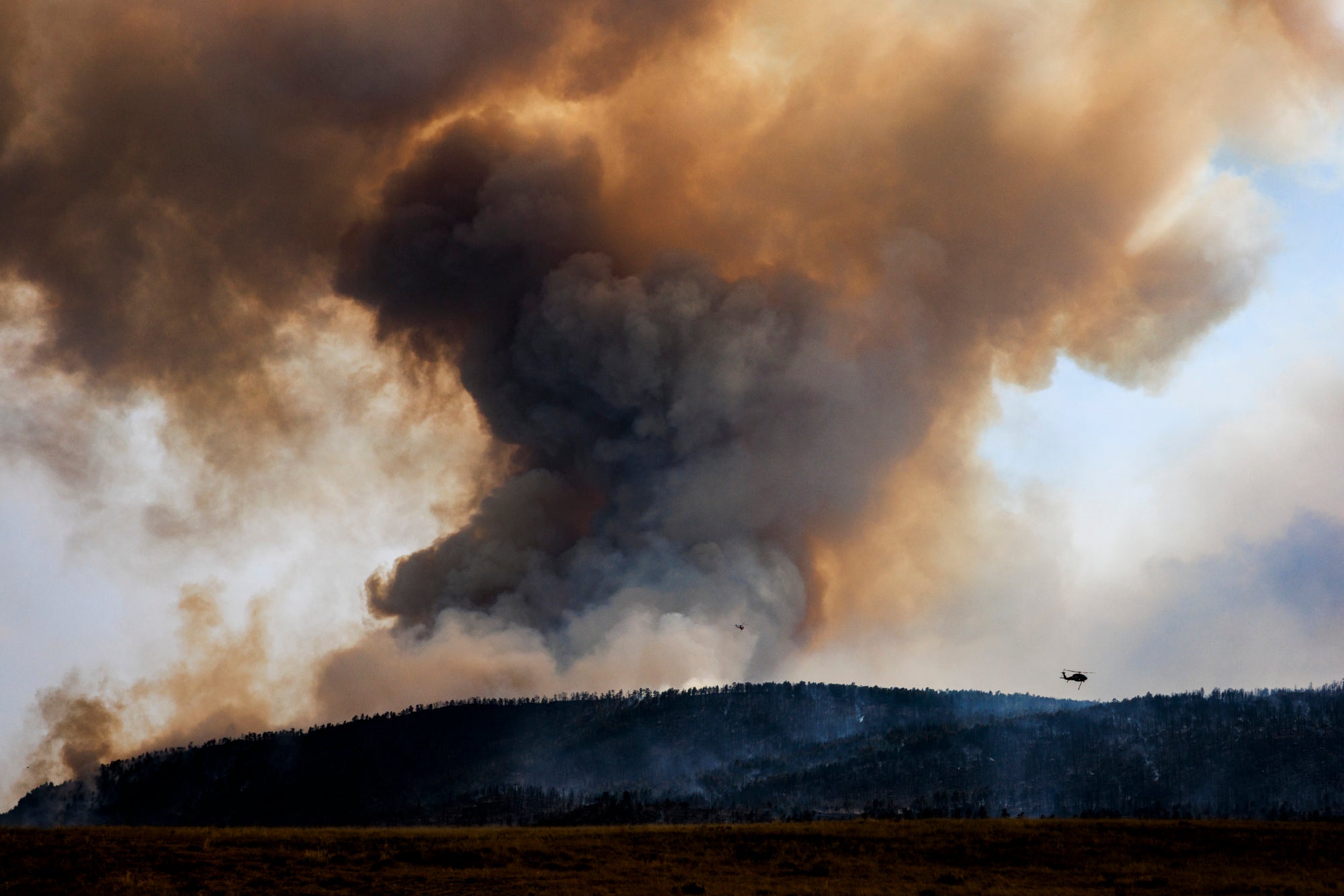
As climate change fuels a longer and more intense wildfire season, how are birds impacted during and after these fires? On October 21, 2026, SciLine interviewed Dr. Morgan Tingley, a professor of ecology and evolutionary biology at the University of California, Los Angeles.
TV bundle includes:
Soundbite (SOT)
VOSOT script (can be used as-is or modified)
Raw, full-length interview video & log with timecodes (upon request via form below)
These resources are free to use. No attribution to SciLine is required.
Click for VOSOT script (can be used as-is or modified)
ANCHOR AS CLIMATE CHANGE FUELS A LONGER AND MORE INTENSE WILDFIRE SEASON… HOW ARE BIRDS IMPACTED BY THE FLAMES?
VO
DOCTOR MORGAN TINGLEY… A PROFESSOR OF ECOLOGY AND EVOLUTIONARY BIOLOGY AT U-C-L-A… STUDIES HOW WILDFIRES AFFECT BIRDS.
HE SAYS FLAMES CAN KILL BIRDS… LIKE OTHER WILDLIFE… DURING AN ACTIVE FIRE… BUT THE LINGERING SMOKE ALSO TAKES A TOLL.
HIS RESEARCH SHOWS BIRDS LOSE ABOUT TWO-PERCENT OF THEIR BODY WEIGHT AFTER ABOUT TEN-DAYS OF UNHEALTHY AIR.
SOT Duration: :33 Super: Dr. Morgan Tingley – Professor, University of California, Los Angeles
“Which doesn’t sound like much, except we’re actually talking about very small amounts of smoke in the air, the type that maybe you and I could walk outside and smell it, but not be like, maybe I shouldn’t go for a run today. And so just like relatively small amounts of smoke in the air over about a little over a week can cause really sort of strong declines in body mass. Whether that means that birds are just not feeding when it’s smoky, because they’re not feeling well, or whether or not they’re changing their activity in some other way, is a big question that we’re still trying to figure out.”
VO
SURPRISINGLY… SOME BIRDS THRIVE AFTER A WILDFIRE…. LIKE WOODPECKERS.
DOCTOR TINGLEY SAYS DEAD TREES ATTRACT INSECTS… PROVIDING FOOD FOR THE BIRDS FOR UP TO TEN-YEARS.
BUT HE SAYS CLIMATE CHANGE IS NOW FUELING HOTTER… BIGGER FIRES… SOMETIMES DESTROYING TOO MUCH HABITAT… LEAVING EVEN WOODPECKERS STRUGGLING TO FIND SHELTER.
SOT
Duration: :39
“Now with Canadian wildfires, with fires springing up in parts of the East Coast where fire never really used to occur, everyone’s kind of starting to realize that fire is a problem for all of us. And it’s a threat. That is really kind of always out there, whether it’s in Tennessee or in California. And so that is a problem not just for humans, but it’s also a problem for birds. And so, I mean, birds are along for the ride, and we are generally responsible for the health of their populations. And so we should care because it also means something about our future and our livelihoods.”
Raw, full-length interview covers:
How wildfires directly affect birds, including how some species thrive in habitats created by fires while others struggle to survive or relocate;
How wildfire smoke harms birds, causing weight loss, breeding delays, and other health problems;
Why growing megafires are pushing some birds beyond their ability to adapt; and
What increasingly frequent, severe wildfires could mean for bird populations, migration patterns, and ecosystems in the years ahead.