Coming up in 11 days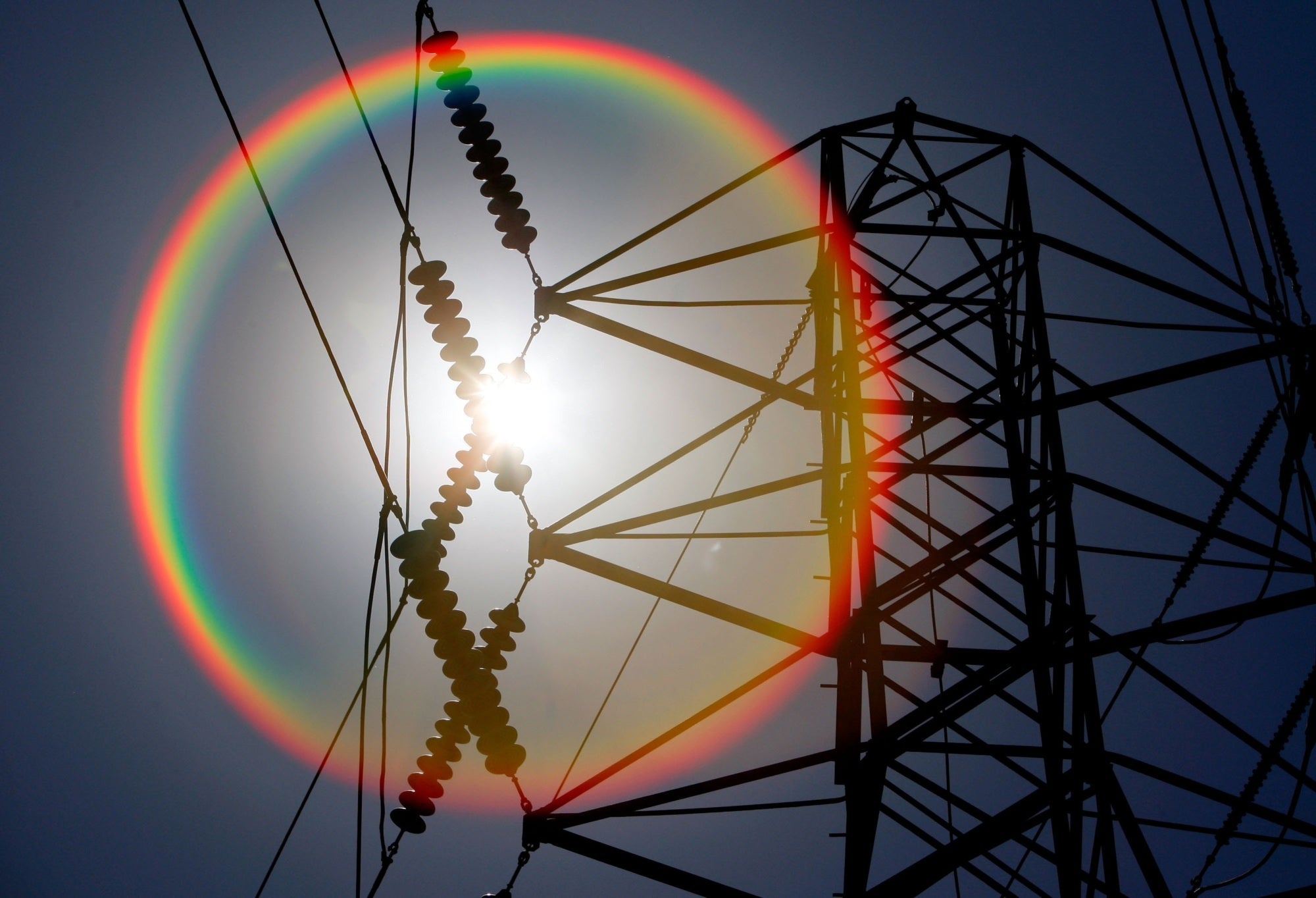
What are Media Briefings?
U.S. communities are grappling with more frequent and intense heat waves and related threats to public health and the electric grid. SciLine’s briefing focused on how extreme heat affects human health and energy infrastructure, and what research-backed steps communities can take to prepare and respond.
Panelists:
High definition (mp4, 1920x1080)
ELENA RENKEN: Hello, everyone, and welcome to SciLine’s media briefing on community health and infrastructure during a heatwave. I’m Elena Renken, SciLine’s journalism projects editor. And with recent U.S. heatwaves hitting different parts of the country and even breaking some local temperature records, we’ll cover the public health risks, including who is most vulnerable, what cities can do to protect residents, and how factors like air pollution can worsen health effects. We’ll also talk about risks to the electric grid that come with heatwaves and increased electricity demand, and what steps could bring more grid resilience. If SciLine is new to you, we’re an editorially independent non-profit based at the American Association for the Advancement of Science. We’re funded by philanthropists, and all our services for journalists are free.
We strive to make scientific evidence and expertise easy for journalists to use in their reporting. Whether you’re covering topics with a clear science element like the cyclospora outbreak or topics like election administration, where the scientific angle is less obvious, but just as important, there’s scientific evidence to deepen your reporting on all kinds of stories. More of our resources are available on sciline.org, and if you’re working on a story that could benefit from scientific expertise, you can click the blue “I Need An Expert” button on our site, and we’ll look for a source with the right background to answer your questions before your deadline. Now before we start, I’ll give each of our expert panelists a moment to introduce themselves. Dr. Kristie Ebi, would you go ahead?
DR. KRISTIE EBI: Hello. I’m Kristie Ebi. I’m a professor in the Center for Health, Global Environment, University of Washington, and I’ve been working on the effects of extreme heat on our health and well-being for about the last quarter century. I look forward to your questions.
ELENA RENKEN: Thank you, Dr. Ebi. And Dr. Line Roald?
DR. LINE ROALD: Hello, everyone. It’s great to be here. My name is Line Roald, and I’m an associate professor at the University of Wisconsin-Madison in the Department of Electrical and Computer Engineering, where I lead a research group focused on the electric power grid and its operation. And so yeah, I also spend a lot of time thinking about how the grid operates, and particularly during extreme weather events. At the same time, I’m also currently on partial leave to Google, where I work on a project related to data center grid interactions. So although that’s not what we’re here to talk about today, I wanted to mention that as well. I’m looking forward to your questions.
What is the difference between heat index, the wet bulb globe temperature, and other heat metrics?
ELENA RENKEN: Thanks to you both for lending your expertise here. I’ll be asking each of our panelists a few questions before we start taking audience questions. Journalists, you can submit your questions at any time during the briefing. Just click the “Q&A” icon at the bottom of your Zoom screen. And please do let us know if you’d like your question directed to a specific panelist. The recording of this briefing will be up on our website later today, and a transcript will be added in the next couple of days. I will get started. Dr. Ebi, my first question for you, what is the difference between heat index, the wet bulb globe temperature, and other heat metrics reporters may see cited?
DR. KRISTIE EBI: That’s an excellent question with a very long answer that I won’t bore you with. There’s over 100 different metrics for looking at how heat can affect our physiology, our functioning, our well-being. Some of the metrics like the heat index focuses on temperature or temperature and humidity alone. Other metrics, such as the wet bulb temperature, or the globe temperature, which are different, also include an understanding of the physiology, how our bodies interact with heat, and what that can mean for our productivity, for heat-related illness, for other kinds of outcomes.
What role does humidity play in making heat more dangerous?
ELENA RENKEN: And what role does humidity play in making heat more dangerous beyond temperature alone?
DR. KRISTIE EBI: As most of us in the United States know, those hot humid days are more difficult than just the hot days. We all have colleagues that live in the Desert Southwest who are happy to tell you that it’s just a dry heat, because in the Southeast the heat is often more humid, and it is more difficult for our body to be able to release heat back into the environment to help cool ourselves down and make sure that we are not harmed during a heatwave.
How does the body respond to that extreme heat?
ELENA RENKEN: And how does the body respond to that extreme heat? And at what point does heat exposure become really dangerous?
DR. KRISTIE EBI: The focus is on our core body temperature. This is not the temperature you take with a thermometer. For those of you who do yoga, Pilates, it’s your core. Our core body temperature has to stay within a pretty narrow range to protect our cells and our organs. We have physiological responses up to and including sweating, and we have behavioral responses, going out and trying to find someplace shady, someplace by a water body, for example, to help keep that core body temperature cool. But when it’s too hot, and that heat can come both from the external temperature, but also for our activities, you saw the breaks during the World Cup, those hydration breaks that were so important, when you start building up that heat internally, over the course of several hours, the heat starts to harm our cells and our organs.
We know from many studies of heatwaves, about half of the excess deaths following a heatwave are from cardiovascular causes. The heart doesn’t react well to being heated internally. For some people, it’s their kidneys, for some people, it’s their lungs. So the consequences depend to some extent on your own particular physiology, but it’s the fact that the heating is taking place of your internal organs, and it’s critically important to get that internal heat out to help cool your core body temperature down to protect you. If that does not happen, then there’s a range of heat illnesses that can progress to, for example, heat exhaustion, which can progress to heat stroke. Heat stroke is a medical emergency with a fairly high mortality rate.
Which populations face the greatest risk during extreme heat events?
ELENA RENKEN: That’s good for everyone to remember, that it’s that hours-long buildup of heat to look out for. And which populations face the greatest risk during extreme heat events, and why?
DR. KRISTIE EBI: There’s a very long list. The traditional list starts with adults over the age of 65. The appalling statistic in the United States of how many babies die when they’re left in a car, even for a few minutes, that cars heat up very rapidly in the heat, babies can’t tolerate it, but it’s also people who work outdoors, pregnant women exposed to high temperatures during pregnancy more often have low birth weight babies. Babies are smaller and they come sooner, which can have lifelong consequences. It’s people taking certain medications. There’s medications such as beta blockers, some of the psychotropic drugs that reduce the ability of your body to sweat.
There’s a wide range of chronic conditions, people who are obese, people who have high blood pressure, people who’ve got underlying cardiovascular disease. But there’s also syndromes within epilepsy, for example, where heat triggers the seizures. I could go on, but you start seeing that it’s a very long list of people who are particularly vulnerable, and there needs to be actions to protect each one of these in ways that is appropriate for what the risk is.
How does extreme heat interact with air pollution to compound health risks?
ELENA RENKEN: Good to draw attention to more of those groups beyond older adults that often get mentioned. Thank you. And how does extreme heat interact with air pollution to compound health risks?
DR. KRISTIE EBI: It’s a good question with not a clear-cut answer. In some heatwaves, there are interactions between the heat and the air pollution, putting people at even greater risk. In some heatwaves, it doesn’t look like that is as strong as a factor. So it depends on the local environment. It depends on the type of air pollution. So the answer is it can make things worse. It does not always make things worse.
What role does urban design play in heat exposure and the health risk?
ELENA RENKEN: And what role does urban design, such as tree cover and building materials, play in heat exposure and the health risk?
DR. KRISTIE EBI: It’s a very critical factor in making sure that the urban design has places where people can go and cool themselves down. One of the challenges, as most of you know in the United States right now, is redlining. Redlining was done in the 1930s. Redline districts, even today, are hotter than the surrounding environment because of building materials, how close houses, for example, were placed, the various choices that were made during the process of redlining. Planting trees is going to help, not in the short term, but in the long term, but in the long term, thinking about that urban design, thinking about regulations, should every house have a white roof? Should every building over a certain size have a green roof? There’s lots of ways we can think about modifying our current urban design to make it an urban design that will make hotter days more comfortable in the future.
What can cities and public health agencies do to better-warn and protect residents during extreme heat events?
ELENA RENKEN: You pointed to some policy ideas there. What can cities and public health agencies do to better-warn and protect residents during extreme heat events?
DR. KRISTIE EBI: Many cities throughout the United States and worldwide have heat action plans, and part of those heat action plans are to have a heatwave early warning and response system. This is more than just giving a warning. This is also thinking through the responses. There are cities such as Maricopa County, Phoenix, where a significant portion of their heat deaths during a heatwave are in the unhoused. Thinking about what kinds of services can be used to help ensure that the unhoused are not harmed during a heatwave, or thinking about the pregnant women, how do you make sure that they’re informed about the risks, that the obstetricians talk with them about the risks and make sure that they take the actions that they need to take, and they have access to the services they need to do so? And so this is very much a local context question. It depends on where you live.
To address this specifically, there’s a few cities in the U.S. that have named heat officers. It’s their job to help sort through the complexity of our city governments and their interactions with the public health agencies to make sure that if you set up a heatwave early warning system, everyone knows how to get there. If you have to take a bus, you know which buses to take, that you don’t walk in the heat to go take a bus, so finding all of the different ways to help people protect themselves during these very hot days.
Why does extreme heat put unusual strain on the electric grid?
ELENA RENKEN: And that’s a great story idea for local reporters looking into those heat action plans and maybe what your local heat officer wants to do next. Thank you, Dr. Ebi. And let’s move on to you, Dr. Roald. To start off, why does extreme heat put unusual strain on the electric grid, both in terms of demand and supply?
DR. LINE ROALD: So extreme heat on the demand side, we typically tend to use more electricity when it gets really hot. You might all have experience with air conditioning, and that is very energy-intensive. So to cool our houses, our offices, and wherever we are, requires a lot of electricity. And, of course, as it gets hotter outside, and we have to cool more relative to the outside temperature, we need also even more electricity for that. Generally speaking, when it gets really hot, the demand for electricity is soaring. At the same time, power plants often struggle to maintain their output, because they rely on cooling water, and as the cooling water gets hotter, then they oftentimes need to decrease the amount of power that they are able to produce. And there can be also other mechanisms that mean that we have to reduce the amount of power we get from a power plant. And that is on the demand and the supply side.
But then in between, the transmission lines that help us transport our power, they are also sensitive to heat, as in when they transport electricity, they also get warm and they need to be cooled by the outside air, and as the air gets hotter, they can overheat more easily, and thereby that might mean that we can only transport less electricity through those lines. And so essentially, all parts of the electric grid, like from demand and supply to the transmission lines themselves, are impacted by extreme heat.
How does high heat reduce the output or efficiency of power plants and transmission lines?
ELENA RENKEN: How does high heat reduce the output or efficiency of power plants and transmission lines?
DR. LINE ROALD: Yeah, so to follow up on that a little bit more, and we heard from Dr. Ebi that our body needs to be able to cool down, it is actually very similar for power plants and transmission lines, because a transmission line is resistive, so meaning that when we send electricity through the transmission line, it heats up, and it normally relies on being able to shed that heat that gets generated into the environment. And if the environment is hotter, that is less effective. And what happens is that the material of the transmission line itself becomes warmer, and the first thing that happens then is that it expands. And so you could see, actually, when you’re going outside and looking at transmission lines, sometimes you see them sag really far down, so they become longer, essentially, and then come closer to the ground. And that is because they get warmer. And, of course, if you then keep putting ever more electricity through those lines, at some point the material could even get impacted and damaged.
And so that’s why we have to limit the amount of power that we’re sending through transmission lines in general, and why we might need to limit it even more when it’s really hot outside. And similarly, also, for power plants, they rely on cooling water and, essentially, they have to be cooled in order to be able to generate power. So when it is really hot, those processes become less efficient, and thereby, you might need to curtail how much power you are able to produce with a given power plant.
What has caused major grid failures or blackouts during past heatwaves?
ELENA RENKEN: Good to know. Thank you. What has caused major grid failures or blackouts during past heatwaves, and what lessons were learned from that?
DR. LINE ROALD: Yeah, so this is quite an interesting question, because heatwaves are a little bit different than other, for example, extreme weather like storms that also tend to cause outages in the power grid. So when you have a heatwave, what is really impacting the grid is that combined impact on demand that is increased, power generation that gets reduced, and also the capacity of the transmission grid to transport the power. So that means that oftentimes when we know, and we know that it is getting warm, we know that there will be those really large impacts on the grid, and that is where you might see, for example, your local utility or also a system operator, like the transmission system operators or the ISOs throughout the country, issue alerts and say, “Today, there’s going to be a crunch in the grid because of a heatwave.” You might get an alert on your phone if you’re part of a demand response program, you might have experienced that your utility locally will adjust the thermostat at your house in order to reduce the amount of power that you are using.
And so that is the effects that we are often seeing with heatwaves, is that there’s this really large-scale impact on the grid that is fairly predictable, and which means that the type of power outages that occur during those events are oftentimes more a general appeal to reduce consumption, and in some cases with demand response also actively reducing the amount of power that our houses are consuming, and also, of course, any other levels for reducing demand, and so that is often the first thing that happens. If that is not enough, you might see curtailment of load, which means that utility proactively says, “Okay, we have to shut off power to certain parts of the grid in order to maintain balance between supply and demand.” And so that whole process is quite different from, for example, when you have a really big storm coming through where there are sudden outages of transmission lines or power plants, and we don’t really know exactly where they are going to be.
And those impacts are oftentimes much more sudden and can lead to larger-scale blackouts of the whole grid. And so some of that can happen also when we have extreme heat, because of the transmission line getting longer and sagging further down. It’s more easy for them to contract, for example, nearby vegetation, and so that could cause an increased risk of outages that have sudden impacts on the grid and could cause blackouts. But really, the primary reason why heatwaves are stressing the grid and might cause outages of power is because we are simply not able to match the amount of power that is needed for everyone to cool their homes with the power that can be supplied by generators.
How are utilities and grid operators forecasting and preparing for heat-driven demand spikes?
ELENA RENKEN: Thank you. How are utilities and grid operators forecasting and preparing for heat-driven demand spikes?
DR. LINE ROALD: Yeah, so I already alluded to this a little bit. We typically have fairly good weather forecast that tells us that there is a heatwave coming, and the utilities, they issue different kinds of alerts at the larger grid, the transmission grid level, the independent system operators, for example, like MISO, PJM, ERCOT, California ISO, ISO New England. There are many. There’s also Southwest Power Pool. There are many different operators throughout the grid of the transmission grid. They have different systems and also different web pages where they will post alerts about, “Now there is about to be a heatwave,” and everyone who is drawing power from the grid has to be aware that there could be a crunch coming. And so they will tell, for example, generators to try to avoid scheduling maintenance during those times. If there is maintenance that is planned, it might get canceled.
Similarly, for transmission lines, they could cancel maintenance or avoid scheduling in the first place to try to have as much resources available as possible. And then at the same time, they might also issue alerts if the situation is looking very challenging. They will also tell utilities that, “Hey, you have to prepare your customers that there might not be enough power available,” and they will start things like demand response program or in some cases also just appeal to the general public to reduce their consumption of electricity. And so all of those efforts are then targeted at trying to decrease the demand, increase the available generation and transmission capacity, in order to maintain the balance and need for power that we have.
What role does the growing use of air conditioning play in driving peak electricity demand?
ELENA RENKEN: And what role does the growing use of air conditioning play in driving peak electricity demand during heatwaves?
DR. LINE ROALD: Yeah, so as I’ve already alluded to, air conditioning is really a major source of electricity consumption. We are seeing that in increasing large parts of the country. It’s always the summer peak, which is driven by air conditioning, that is the highest time of the year for power consumption. In the past, it could have been the winter, which is also a time where when it’s very, very cold we sometimes also need power from the grid for heating and other purposes. But air conditioning is really driving the peak electricity consumption. And it’s increasing. As the temperatures get higher, then we also need more air conditioning, which leads again to higher electricity demand. And so air conditioning is really key to this increasing demand.
How does the integration of renewable energy sources like solar and wind affect grid reliability during extreme heat?
ELENA RENKEN: How does the integration of renewable energy sources like solar and wind affect grid reliability during extreme heat more generally?
DR. LINE ROALD: Yeah, so the fact that we have all these new renewable energy sources on the grid, it’s great. They are there. They produce power. You can imagine if it’s a really sunny day that typically speaking, also, you’d get a lot of solar power, and so it can be nicely correlated with heat. But it’s not always that it’s windy or sunny when it is also really warm. And so as a result, what can happen is that those resources, because we cannot really schedule when we want power from solar and wind generation, that is available when there is sun and wind available, it can mean that it is harder for utilities, and also in this whole balance between demand and supply, it’s not always that the supply is there on the days we need it the most, or that we don’t have the full supply and maximum supply on those days.
And so forecasting and making sure and understanding how much wind and solar will be available during a heatwave also impacts the ability of the grid to support the load during that time. And so there’s definitely additional challenges with the variability of renewable energy. At the same time, I do want to mention that, as I said, one challenge for conventional power plants like thermal power plants, coal, natural gas, nuclear, they rely on cooling water for cooling, and because the cooling water is oftentimes hotter, their production can be significantly curtailed during heatwaves, and wind and solar have no dependence on water in the same way, and so they typically can continue to produce power more or less as before, with much less impact of the heat itself. So that is a really, really great thing about those technologies, generally them being less reliant on water for power production.
What infrastructure investments or policy changes would most improve grid resilience to extreme heat?
ELENA RENKEN: What infrastructure investments or policy changes would most improve grid resilience to extreme heat?
DR. LINE ROALD: Yeah, I think that’s a really good question. I think we have many infrastructure investments that could be helpful for the grid overall. Currently, it is really challenging to get new transmission lines built, so we have a backlog of building new transmission lines to transport power in the country, and that has to do with when we have more transmission lines, it is easier for us to transport power from a region where there is excess generation capacity to where there is a lot of demand. And so the heatwave might not hit everywhere equally, and so being able to transport power from a region where there is more available power to where the demand is going to be really high is really key.
And so having more transmission capacity helps with a lot of different things. It helps with balancing power supply and demand during extreme heatwaves, but also more generally, it can allow us to access wind and solar power from further away, and it can also generally make our transmission system just work better. So I think investing in transmission infrastructure can really help make the grid more resilient and reliable, not only during heatwave, but also in general. And then I think increasingly we’re also waking up to understanding that we need to plan the grid for extreme heatwaves more. So it’s important to understand how different generation technologies get impacted differently by heat, and also that their specific location in the grid will be impacted differently as we have different heatwaves.
And so understanding how temperature patterns across larger regions vary over time, and how that means that we might need to invest differently in new generation infrastructure, or at least account for that when we are assessing reliability of the grid, that is also an important development that is happening, is to integrate more of this weather dependence, not only for wind and solar, but also for all the other generation technologies, into the planning of the electric grid. So that is a change that is, I would say, ongoing already today. And so we see, for example, the Federal Energy Regulatory Commission having had rules in recent years about how the weather dependence in the grid and how that enters into grid planning has to be further developed.
What local or regional data sources should reporters consult to find information about heatwaves in health or heatwaves and the electric grid?
ELENA RENKEN: Thank you both so much. I’ll now start asking questions to our experts here. And for reporters on the line, please submit your questions using the “Q&A” box found at the bottom of your Zoom screen. First off, I wanted to ask both of you, what local or regional data sources should reporters consult to find information about heatwaves in health or heatwaves and the electric grid? Dr. Ebi?
DR. KRISTIE EBI: I would start by searching whether there is a heatwave early warning and response system in your region, in your city. They are in many. They’re collaborations between the meteorological services and the public health agencies. That would be a great place to start. Another, and this is not local or regional, is heat.gov, and this is a collaboration across 23, I think, federal agencies and organizations, and has a lot of information that can be applied locally or regionally about heat. And finally, another source that is sending out information about heat is Climate Central, and they’re an organization that does communication around science. They have quite a few, for example, graphs showing how temperatures have changed in each city, and you can download these for free and take a look at them and use them as appropriate in your stories. Thank you.
ELENA RENKEN: And Dr. Roald?
DR. LINE ROALD: Yeah. So I would suggest for information about the grid in real time, so it’s important to understand which region you are in, what is the transmission grid operator that is operating there, whether, for example, if you’re in Texas, that would be ERCOT, if you’re here in Wisconsin, that’s MISO, on the East Coast, PJM, California ISO, so understanding which such system operator is operating the transmission grid, and finding their page where they are posting alerts about what’s going on in the grid. And so this is not only for extreme heat, but it can also help understand if there’s any stresses that are going on in the grid, also related to, for example, extreme weather or other kind of impacts. And that is on the transmission grid regional level. Also, when you go down to the more local area, there’s typically a utility, a local utility, that is providing electricity to end consumers. They oftentimes have things like demand response programs. Ours here in Wisconsin or in Madison is called Rush Hour Rewards.
And so I can sign up for that and I am getting messages on my phone when my thermostat is about to be adapted, and so there are oftentimes statistics and also public information available about when those types of programs are being triggered. And that can help also give some indications about what are the local impacts of these grid alerts, and also how people where you are might be impacted more directly at home by electric grid crunches. And then there’s also many nice sources out there to look at things like power outages and so on. But yeah, so it’s typically possible to find that data, but I think looking really at the demand response data is probably one of the more interesting ones.
How does poor air quality exacerbate the effects of heatwaves?
ELENA RENKEN: Thank you. I have a couple of related questions here from the Washington Informer and Wisconsin Public Radio. “How does poor air quality, especially as affected by smoke from Canadian wildfires, exacerbate the effects of heatwaves? And would the hazardous air quality the Midwest saw last week qualify as an instance when pollution makes heat’s effect worse?”
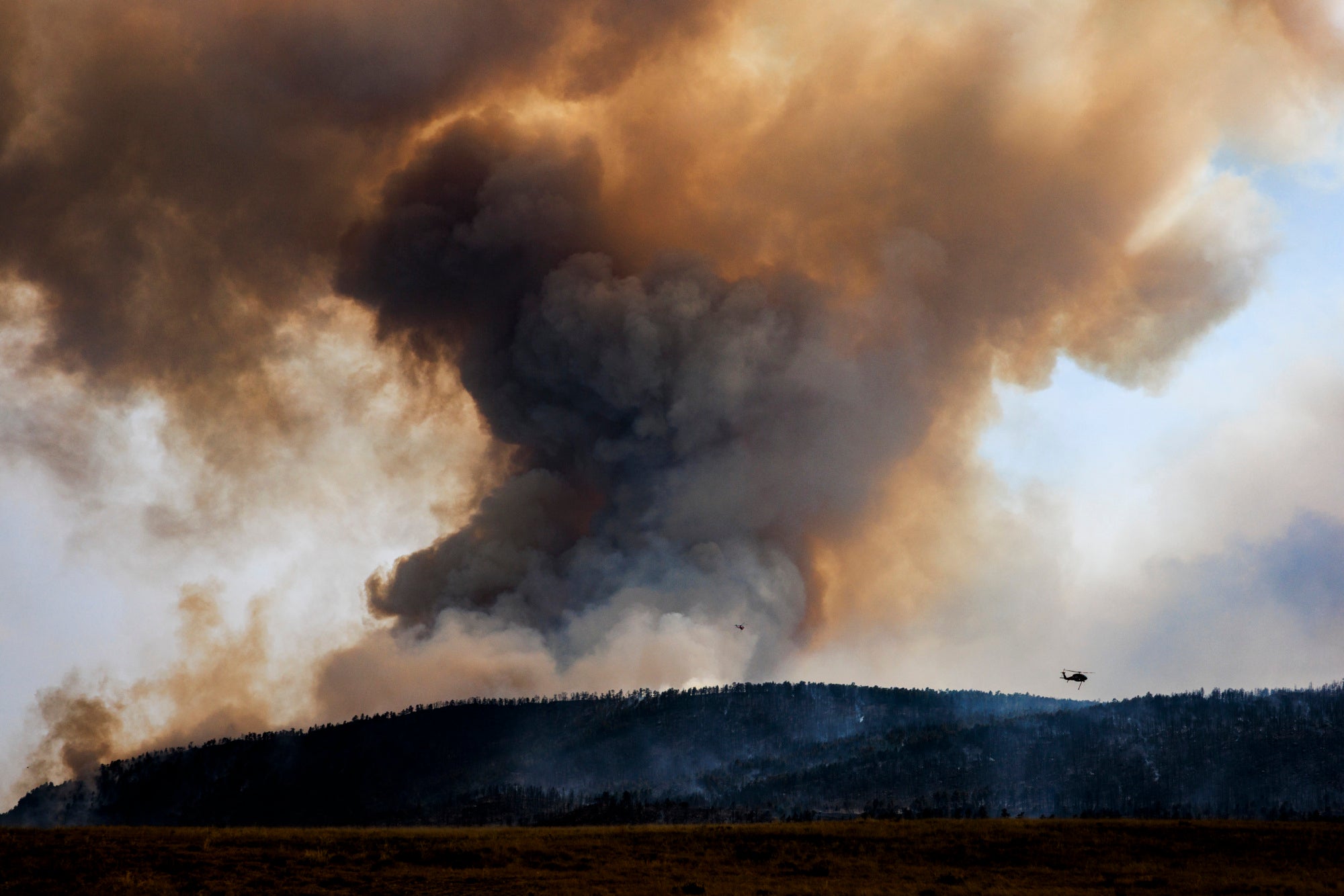
DR. KRISTIE EBI: I can start, and there’s multiple dimensions to the answer to that question. One is on us as individuals. When it’s both hot and smoky, we’re much more uncomfortable than if it’s just hot or if it’s just smoky. And it is important to understand that wildfire smoke is about 3-10 times more toxic than regular air pollution, so it is extremely hazardous. There’s also questions then about what kind of response do you have? I live in Seattle. We do have a heatwave early warning and response system, but only about half of people have air conditioning, and so it’s a real challenge for the public health authorities of what do you tell people to do when it’s both hot and smoky?
With the heat, you want to open your windows and doors, get better air circulation. But when it’s smoky, you want those windows and doors closed, and finding ways where people can find cooling shelters, can find someplace that’s cool and that has some kind of filtering system so that they can protect their lungs from the hazardous exposure to smoke. So when thinking about those questions, the answer is both are important. Both can harm our health. As I said, in some places, they can be synergistic. In other places, there won’t be much synergy between them, but we have to have the mechanisms in place to protect people so they don’t suffer.
DR. LINE ROALD:: Yeah. And so to add a little bit to that, I think we’re also seeing some direct impact on the grid. So first of all, when there is smoke, the effectiveness of solar generation goes down. In fact, we did a study on that here in Wisconsin looking at data from a few selected solar power plants, and you can very clearly see on those days where there is smoke, how the power output of solar generation just is much lower than what you would expect, and so that impacts the supply side of the electricity equation. And then at the same time, if you do have air conditioning, people tend to stay more indoors and use that more. Typically, also, if you have an air circulation system in your home, you might want to run that to circulate the air to get it filtered. And so that can also contribute to higher demand.
Of course, also if people use air purifiers, that increases electricity consumption. So there can be some impacts of smoke on electricity supply and demand as well. And I would say that probably mostly goes in direction of increased impacts and more crunch on the electric grid. I will also mention that the electric grid sometimes has a role to play in the ignition of fires. So in my research group at Wisconsin, we’ve been looking quite extensively on how electric power infrastructure can cause wildfire ignitions. And so while that is not part of the current wildfire discussion, that is something that definitely, for example, in California has been a very important interaction between grid, wildfires, smoke, and then in some cases also then heat and grid crunches. So just to mention that as well.
Does the scientific evidence show that the increasing frequency and intensity of heatwaves are connected to climate change?
ELENA RENKEN: Thank you. A question here from NBC4 in Reno. “Does the scientific evidence show that the increasing frequency and intensity of heatwaves in Nevada and across the U.S. are connected to climate change?”
DR. KRISTIE EBI: Yes, the evidence shows that heatwaves are increasing in frequency, intensity, and duration, and using sophisticated modeling, it’s possible to show that those absolutely are because of climate change, to the state where many climatologists will tell you there is now no heatwave that hasn’t been exacerbated in some way by climate change. As we saw over the last few weeks in the United States, as we’ve seen in Europe over the past several weeks as well, we’re now seeing extremely extreme wildfires well outside of anybody’s previous experience that were virtually impossible without climate change. We’re definitely moving into a world where we’ll continue to see more heatwaves, which makes this briefing really important, and thank you for joining to ask your questions.
What is the role of climate change in heatwave events?
ELENA RENKEN: To dig a little deeper on that climate angle, we have a question from a freelancer based in Baltimore. “Can both speakers address climate change and understanding its role here? Dr. Ebi, please speak more on the relationship between pollution and extreme heat. Dr. Roald, can you speak to the benefits of increasingly localizing energy and microgrids to reduce reliance on transmission lines?”
DR. KRISTIE EBI: It’s a great question. I’m not sure what kind of answer is being sought. On the air pollution, the concerns are particulate matter and our ozone. Ozone is formed on clear, cloudless days. The rate at which it’s formed is temperature-dependent. All else being equal, and all else is never equal, but assuming all else is being equal, on hotter days there’s more ozone. Ozone is a lung irritant, and so people who have lung issues during heatwaves when there’s also ozone will have a stronger reaction. Ozone mostly affects people. It depends on the concentration, of course. But for the kinds of concentrations we’ve seen over the past decade or so in the US, it primarily affects people who have developing lungs, people who have diseases like chronic obstructive pulmonary disease, asthma, will be exacerbated when the ozone concentrations are high.
And so you can see an exacerbation of some of these lung issues during heatwaves. It’s a more mixed message with particulate matter. That’s the other form of pollution that’s of concern. And as we just talked about, particularly when you have wildfire smoke, because it is so toxic, then you’re setting your body up for both reacting to the temperature, how hot it is, and you’re possibly damaging your lungs, depending on the concentration of wildfire smoke.
ELENA RENKEN: And Dr. Roald, could you speak a bit more to the benefits of increasingly localizing energy and microgrids?
DR. LINE ROALD: Yeah. So I think that’s a very interesting question. So since we are also talking about the climate angle here, let’s maybe talk first about how electricity is in some sense a climate solution. We’re seeing a lot of effort being put into electrifying many different sectors like transportation, heating and cooling, or particularly heating our houses, other industrial sectors as well. And then at the same time, we’ve been trying to shift a lot of our electricity generation towards renewable energy sources that pollute less both locally, but also in terms of greenhouse gases. And so with renewable energy, we have an opportunity to generate electricity just from sun and wind. But as we mentioned before, there is a variability in when wind and solar-driven power is available. And so that can cause some challenges in terms of meeting demand for electricity with those types of resources.
Now we can think about this on a grid scale, nationwide level, or on the local level. And I think that when we are talking about a very, very localized energy, we oftentimes think about things like putting solar panels on your roof, installing a battery, and you could essentially go off grid and have your own little micro grid. There are also other versions of this that is slightly bigger, where we have maybe community solar in an area. And in some cases, if you’re in a remote location, there could be a micro grid that is fully powered by solar power or oftentimes then combined with diesel generation, or you can also have within local regions parts of the grid which effectively can disconnect from the major and larger grid in order to operate autonomously. So those are referred to as microgrids. And so those microgrids, they can help us source our power locally, and essentially also allow us to build some resiliency for situations where the larger grid is down or not able to supply the power that we need.
So what we were talking about before, if there is a really big difference between the amount of power that is available in the transmission grid and the power that is needed, if you have a microgrid, you could say, “Okay, I’m good. I can go on my own and just generate my power locally and then consume it also locally.” So having this localized, as alluded to in the question, having this very localized version of the grid is helpful, because it reduces the amount of transmission that we need. So we don’t need as many power lines to send power from one location to another, and that has benefits in that it reduces the losses associated with power transmission, and it also reduces the chance that there would be something that impacts that transmission lines and causes it to fail. Could be many different things.
Now at the same time, if we have these very local microgrids, they are more vulnerable to local effects and local outages. That is why we have a transmission grid and why we have a larger grid, is because it significantly improves reliability when we are able to share power with each other. I think that effect is becoming even more important when we are looking at wind and solar power, because if we have wind and solar power that is installed across a large region, then there is more chances that variability in the power supply from those sources evens out a little bit across that very large region, as opposed to being very, very variable at the local level. And so when we’re talking about the grid and how it is developing and the type of new generation that we are seeing, then there are both positive effects of making it localized, but also very significant benefits to maintaining a grid that help us share power between different regions and locations. I don’t know if that answers the question.
How is farm worker health affected during heatwaves, and are there legal protections for farm workers?
ELENA RENKEN: Very helpful context. Thank you. And let’s see. We had a question here from KOPN Public Radio in Missouri. “Can you speak to farm worker health specifically during heatwaves, and enforcement of any protections if they exist?”
DR. KRISTIE EBI: It’s an excellent question, and I should have mentioned farm workers when I was mentioning outdoor workers a little bit earlier. Farm workers are at very high risk. They do need protections. In the United States, there are, I believe, five states that have protection for outdoor workers. It’s the three western states. It’s Missouri and it’s Colorado, as I recall. I don’t know if any states have enacted more regulations. They need to have breaks. They need to have access to shade. They need to have access to water. Again, the World Cup showed us how important it is when it’s really hot out to make sure that there’s hydration breaks. Workers really need to have these in order to stay safe. And it’s the whole range of outdoor workers. A lot of focus appropriately is on farm workers.
Also, there’s a surprisingly large number of deaths from delivery workers, people who work in the vans that are un-air conditioned that deliver packages, for example, to our doors or to deliver our mail, and making sure that those workers can access the cooling, can access the additional water that they need, will help ensure that they will stay safe during heatwaves.
How does heat affect incarcerated populations?
ELENA RENKEN: Thank you. And another question about a specific population, this one from Wyoming Public Media. “How does heat affect incarcerated populations, specifically in areas that are not yet heat adapted? For example, in Wyoming last week, we heard it reached over 90°F in the state prison. What kind of impact can that prolonged heat exposure have on inmates and staff?”
DR. KRISTIE EBI: I believe there’s a couple of lawsuits about this, because prisons are not necessarily air conditioned and it can get very hot. The same solutions apply to people who are incarcerated as to people who are unhoused, people who work outdoors, anywhere where there’s a situation where it can become very hot. There are lots of ways that people can bring down their core body temperature without air conditioning. There are instances where air conditioning is needed, for many other people, having an electric fan, sitting in front of an electric fan and spraying a little bit of water on yourself. We’ve all walked through misters and know how a mister can make you feel cooler. Putting your feet in cold water, putting a cold towel around your neck. If it’s really hot, putting on wet clothing so that as that water evaporates, it can cool you down.
So there’s many ways that people can be helped to bring down their core body temperature by taking these actions. They have to have access to fans, to that water, to a way to put on wet clothing, for example, to bring their core body temperature down. And so it’s looking at all the ways that people can protect themselves, and making sure that they can access those particular services. As I mentioned though, some people do have to have air conditioning. When we think about frail people, often they have significant chronic medical conditions and they just are not as able to bring down their core body temperature. A natural part of the aging process is people become less well able to tell they’re getting into trouble with the heat. For some populations, that air conditioning is going to be critical. For others, there’s a range of other options that can be used to help protect anybody and everybody during heatwaves.
In areas where A/C is not as common, where is increased energy demand coming from during heatwaves?
ELENA RENKEN: Thank you very much. A question here from the Cascadia Daily News in Washington State. “In areas where A/C is not as common, where is increased energy demand coming from during heatwaves?”
DR. KRISTIE EBI: It’s a good question. I’m looking forward to the answer.
DR. LINE ROALD: Yeah, okay, so that’s a really good question. I would say that the main reason why we are seeing higher power consumption during heatwaves has to do with air conditioning. But you could imagine other processes for cooling, like refrigeration and so on. There’s oftentimes that there’s a differential between what is the outdoor temperature and where do you need the temperature, for example, inside your fridge to be. And as it gets hotter, then that will take more energy, generally speaking. Yeah, but I think that, for example, so if you are in a cold northern region, I myself is from Norway, where there is historically been a lot of electric heating and very little air conditioning.
And in Norway, the winter peak, there’s a winter peak in electricity consumption. So there is very little use for air conditioning during summer, and so really the power is driven by peak demand in winter. And so in those countries, for example, like in Scandinavia, we are seeing that increasing temperatures overall is actually reducing the peak demand for power, because it’s reducing the coldness in winter, as opposed to increasing consumption during summer. So really, the driver, I would say, of this really high summer peak electricity consumption has to do with air conditioning.
How has our reliance on A/C diminished the power of passive cooling for buildings?
ELENA RENKEN: Very good to know. Thank you. We have a question from the Tucson Spotlight. “How has our reliance on A/C diminished the power of passive building? And what do you think can be done from a local government perspective to implement heat-resilient infrastructure?”
DR. LINE ROALD: I don’t know if that is for me or for Dr. Ebi.
ELENA RENKEN: If you can take a stab at it, that would be great.
DR. LINE ROALD: So yeah, I think that’s, again, a really good question. We do build houses differently when we know that there is air conditioning or not. I think one challenge that exists in certain places is that the housing stock has been around for a while and is now being exposed to new temperatures. And so people are living in houses that were totally fine living in without air conditioning previously, but now, as we are seeing this increased number and severity of heatwaves, it’s becoming increasingly tough to actually to live in those. And so, for example, where I am at in Madison, Wisconsin, it’s very common that we have houses that are heated with central air, and many, many, many of those houses are now being retrofitted with air conditioning for summer. However, just maybe a couple of decades ago, there wasn’t that many of those houses that actually had air conditioning. And so that is a change that comes to my mind when I’m thinking about this, but Dr. Ebi probably has other things to add here.
DR. KRISTIE EBI: Like you, it’s a very good question, and it highlights the importance of acclimatization, that we all know that we eventually acclimatize. All of us have been on holidays where the first few days are extremely hot, but it gets a little bit easier over time. We know that people in warmer regions are more acclimatized to heat than people in colder regions. There are still limits to that acclimatization. As we face a warmer future, there are lots of questions of how do we help facilitate more acclimatization and use less air conditioning, particularly in places where you don’t need air conditioning very often? And the better people are acclimatized, the better they are able to handle the heat.
There was a media story, and I don’t remember where I read this, just within the last day or even today, about various mechanisms for athletes to train for the heat, and doing a variety of things, intervals, other kinds of activities, to raise their core body temperatures. They do these strenuous exercises and then they go take a hot bath, which apparently really helps their acclimatization. I found that surprising. But people are working on understanding how we can all be better-acclimatized, and so we don’t have to rely so much on air conditioning, and then don’t have to worry if people go out during the day when it’s really hot, because people can be able to handle that.
What do you find yourself explaining over and over to your friends and family?
ELENA RENKEN: And I have a question here that’s addressed to Dr. Ebi, but I’d be curious for both of your answers, if you’re willing to share. “What do you find yourself explaining over and over to your friends and family? And if there are any specific information pieces you can share about Seattle, what’s commonly misunderstood about heat in Seattle?”
DR. KRISTIE EBI: There are so many myths about heat, and I actually just wrote something for Substack on this a couple of days ago. Now I’ve got to remember exactly what I wrote on Substack. There’s a number of blogs, social media pieces, that on the one hand are emphasizing, as we go into a warmer future, that the temperatures in winter will go down, but are implying that the number of deaths that will occur will offset the number of deaths from heatwaves. That’s just not the case. An important fact, and I know I’m going to be asked this at the end, but I will repeat it at the end, an important fact from my side for you to take away is essentially all deaths in a heatwave are preventable. Nobody needs to die in the heat. There’s enough understanding of the physiology of what we need to do with our infrastructure, what we need to do with our early warning systems, that we can protect everybody.
The other part of this is that we’ve had recent heatwaves, I forgot the number now, but the heatwave recently in New Jersey, there was, I think, 29 reported deaths, something like that. That’s a tiny fraction of the real number. So one thing I explain frequently is that when you look at the number of deaths that are recorded, these are people who had a death certificate that indicated they died from the heat or that heat contributed to their death. It’s a very small fraction. What we do as epidemiologists is it takes about a year in the United States to get all the death certificates in. When somebody dies, there has to be a death certificate. It has to be completed typically by somebody with health training. There then is a process where these are coded against official codes, and once you have all of those, there are analyses where we look at the number of excess deaths. How many deaths occurred during this heatwave versus the same time last year when there was no heatwave?
When you start looking at the excess deaths, the numbers are so much larger. For years, the CDC reported that the number of heat-related deaths in the U.S. was in the range of 700. That’s been increased to about 1,200. But when you model excess deaths, the numbers are more like 10,000. The numbers in Europe are in 50,000 and 70,000, looking at the excess deaths. So many more people are dying from heat than you’re seeing in these short-term records. This is one of the reasons that heat is called the silent killer. We’re just not seeing the extent of the damage this is doing until much later. And that, of course, is much harder for you to report on.
What is one-take home message you have for reporters?
ELENA RENKEN: That’s a really useful note for reporters to remember that those excess deaths numbers can give a better picture of the full context here. Now it’s time for our final question, which will give our panelists a chance to give quick takeaway messages. But I want to flag for reporters on the line that you’ll receive a quick email survey from us after you sign off from this briefing. It’s very fast. So if you have even 30 seconds, your answers would really help us plan our services so they’re most useful to you. Now for our last question, in about 30 seconds, what is one take-home message for the reporters here? Dr. Ebi?
DR. KRISTIE EBI: The same message. Almost all deaths in a heatwave are preventable. We don’t need to see people dying from the heat.
ELENA RENKEN: Thank you. And Dr. Roald?
DR. LINE ROALD: Yeah, so I would maybe say, and this is maybe also a little bit related to the previous question, that I think many times renewable energy is getting too much blame for things that are happening in the grid. It is a type of technology that is challenging how we operate the grid and how it functions. But we have shown that it is possible for us to use a lot of renewable energy, and thereby also contributing to lower air pollution, and also really try to address some of the maybe underlying drivers of these heatwaves, climate change. I would say that renewable energy, in my mind, is such a win for the grid and for our society to continue to pursue. And then I also wanted to mention another thing as a take-home message, and that is that when we are in these crunches with the grid, and we do see that utilities are appealing to the public to, for example, reduce their consumption or participate in things like demand response, it is actually really something that everyone can contribute to.
It does help the grid, and also overall our electricity system, our electric bills, to try to help reduce demand during hours where electricity consumption is really high. And the reason for this is that we have very few hours during the year where the electricity consumption is just really, really high. And if we have to build new power plants, new transmission lines, and new infrastructure, in order to support that very, very high load, that costs a lot of money. It will cause additional pollution. And so if we can help the grid by reducing consumption a little bit during those hours, then we can just really significantly also maybe help both manage the grid safely and avoid unwanted disruption and sudden disruptions, and we can have a positive impact on our electricity bills and the affordability of electricity longer term. So that’s where I wanted to end.
ELENA RENKEN: Thank you both so much for adding your research-informed insights here, especially on such an urgent topic that’s coming up more and more often. And to reporters, thank you all for taking the time to gather more information for your coverage. I hope to see you all at SciLine’s next briefing. Thank you.