What are Media Briefings?
Automatic license plate reader (ALPR) systems, such as Flock and Axon, have rapidly expanded their reach as a surveillance tool for law enforcement and commercial use across the country. SciLine’s media briefing explored how ALPR technologies work, what data they collect, and what research tells us about disparities in deployment and the potential for misuse. Three panelists participated in a moderated discussion, then took questions from reporters, all on the record.
Panelists:
High definition (mp4, 1920x1080)
TAYLOR SEITZ: Hi, everyone. Welcome to SciLine’s media briefing on license plate readers and community surveillance. My name is Taylor Seitz, and I’m a scientific outreach manager here at SciLine. Today, we’re joined by three experts, and we’re going to be talking about how license plate reader systems work, the types of data they’re collecting, where they’re being deployed, and the potential uses for this technology, including those beyond the intended purposes. If SciLine is new to you, welcome. We are an editorially independent non-profit based at the American Association for the Advancement of Science or AAAS. We are funded by philanthropies, and all our services for journalists are free.
Our mission is to make it as easy as possible for reporters like you to use scientific evidence and expertise in your coverage across all types of topics. That may be a story with a straightforward science angle, like the cyclosporiasis outbreaks earlier this year, or maybe it’s a story where the science angle isn’t as clear, but where research can still help answer important questions, like with housing affordability or reading curricula and education outcomes. You can find more of our resources at sciline.org, including our collection of reporting guides and other resources related to midterm election issues. And if you’re looking for a scientist’s expertise on a story you’re covering now, you can always click the blue, “I need an expert,” button on our website, and we’ll do our best to help connect you with a source who’s available to answer your questions before your deadline. Before we start, I’m going to give each of our expert panelists a chance to introduce themselves. Kim, I’ll pass it to you first.
KIMBERLY PRZESZLOWSKI: Hi, I’m Kim Przeszlowski. I’m an assistant professor of criminal justice at Quinnipiac University. My research focuses on police technology, but specifically real-time crime centers and their operational effectiveness or the effectiveness of the technologies that are situated within them, including license plate readers.
TAYLOR SEITZ: Thank you. Steven?
STEVEN KEENER: Hi, everybody. My name is Steven Keener. I’m an assistant professor of criminology and the director of our Center for Crime, Equity, and Justice at Christopher Newport University. That’s in Newport News, Virginia. My research broadly focuses on inequality within and driven by the criminal justice system, but the past year, a lot of my research has been dominated by the deployment of these license plate reader cameras, specifically where they’re being deployed and the impacts of that. I’ve also spent the past year traveling Virginia, Maryland, and D.C., doing public education events about this topic, and meeting with local officials and police leaders about it as well.
TAYLOR SEITZ: Great. Thank you. Johnny?
JOHNNY NHAN: Hi, everybody. I’m Johnny Nhan. I am a professor of criminology and criminal justice. I’m also the interim associate provost and dean of graduate studies, and I’m also a reserve police officer for Fort Worth Police Department. Sorry, there’s a lot of titles there. My research, like Kim’s, is primarily focused on policing and technology, so I’ve research areas including specifically Flock as well as other forms of technology like network security and stuff like that.
What are automated license plate readers, and how are police and private companies like retailers using them today?
TAYLOR SEITZ: Thanks for the introductions, and thank you all for taking the time to chat with us today. I’m going to begin by asking each of you a few questions before we move into audience questions. Reporters, you can submit your questions at any time during the briefing. Just click on the “Q&A” icon at the bottom of your Zoom screen, and please let us know if you’d like your question directed to a specific panelist. The recording of the briefing will be up on our website later today if you’re interested in that, and a transcript will be added in the next few days. To start us off, Kim, can you tell us exactly what automated license plate readers are and how police departments and private companies like retailers may be using them today?
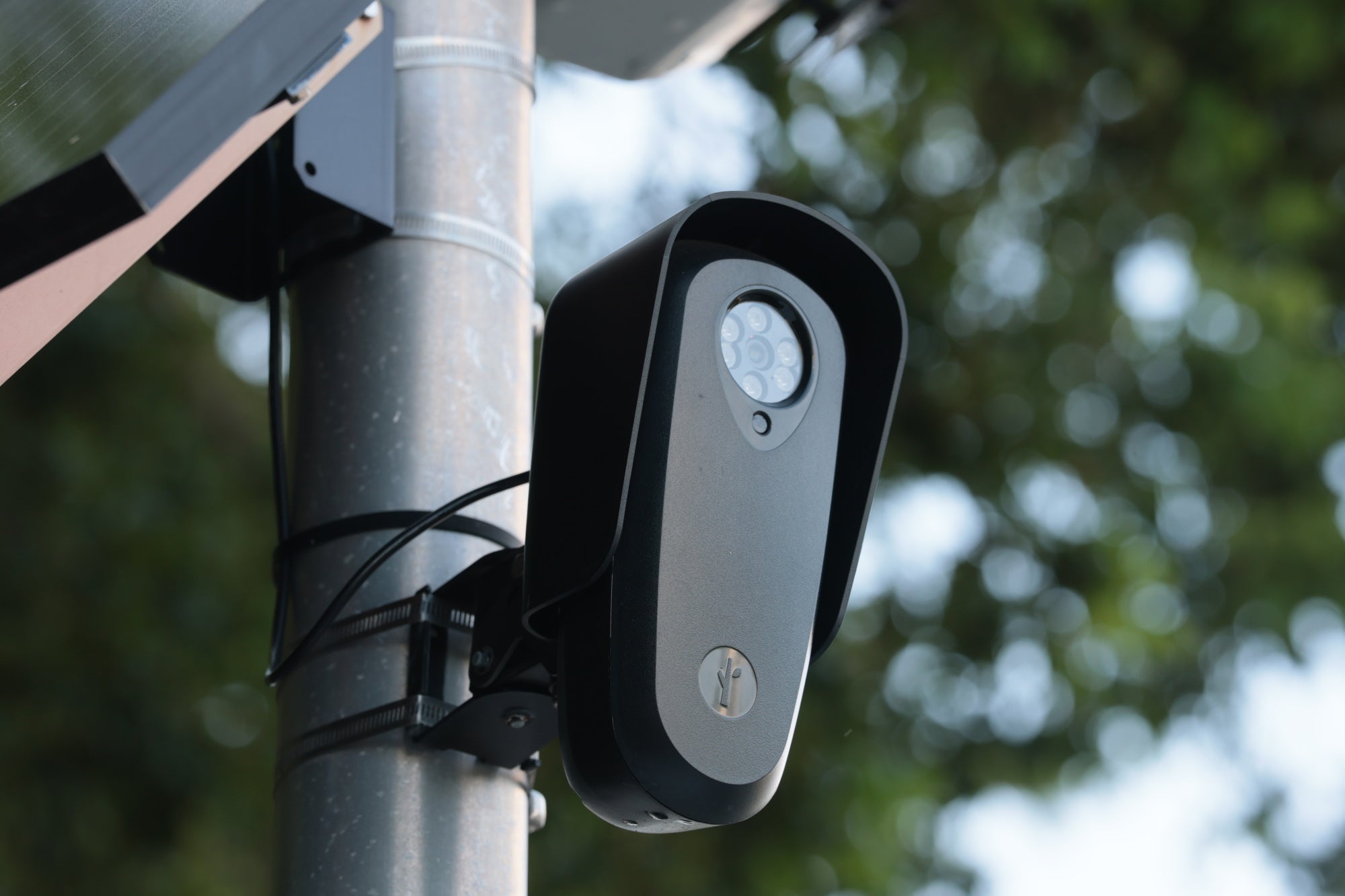
KIMBERLY PRZESZLOWSKI: In simple terms, a license plate reader is a camera that’s oftentimes paired with software that allows it to photograph vehicles as they pass the camera itself, and then this photograph essentially allows for the quantification of information based on the vehicle. There are different types of LPRs, and so the information that they collect can range depending on the vendor and the settings that are set. Police agencies generally use them in two primary ways, I would say, so in real-time or in near real-time for retrospective investigations. So an agency might receive an alert. That alert might be coming from the integration of the National Crime Information Center, so things like if there’s a wanted person, a missing person, an Amber Alert, and so on and so forth. Then it could also be used, again, retrospectively, or in an active investigation post-incident to determine where a particular vehicle passed an LPR.
One other thing I’ll note is that there are, again, different forms of LPRs. So there’s an LPR kit which can be placed at the front of a vehicle or at the top of a patrol cruiser, and then there’s a newer form, I think, of LPRs that are situated within what’s called Condor. Those track information differently than your traditional still photos. And the only thing, again, that I’ll add, sorry, is that traditionally, law enforcement officers were able to actually search and query vehicles on their own time, but the difference now with LPRs is the scale, but also the searchability. So in a given hour, an officer could maybe search 100 plates, whereas an LPR can scan thousands of plates in real-time. So that’s the main difference.
What is a real-time crime center, and how have real-time crime centers and license plate readers changed how police investigate crimes?
TAYLOR SEITZ: Wow. Yes, that is a big scale difference there. So since this seems to have revolutionized the speed at which we can process data, how have technologies such as license plate readers and real-time crime centers changed the way police investigate crimes? And can you first explain what a real-time crime center is?
KIMBERLY PRZESZLOWSKI: There’s not one definition for a real-time crime center, but they’re essentially centralized hubs that house all different forms of technology, depending on the agency and depending on what they are able to procure. But, of course, right now we’re speaking on LPRs, so those can be situated within a real-time crime center, depending on the state or the municipality, facial recognition software, different types of databases, gunshot detection systems, you name it. Anything that would be useful for an investigation. The benefit of a real-time crime center is that it houses all these tools and technologies within one, again, centralized area. So in terms of investigations and how quickly we’re able to acquire information and then digest that information and send it back out into the field is much more rapid or occurs at a more rapid pace.
And so intuitively, although there’s still not enough research to really have a sound evidence base for it, but it should improve the time to case clearances or potentially different types of metrics like arrests or you name it. And so it’s not uncommon to see an LPR situated within this type of hub, and, again, instead of having to contact a different unit, contact a particular investigator, all that is central in one location.
How do license plate readers differ from existing technology like CCTV?
TAYLOR SEITZ: I think you’ve got at this a little bit, but how are license plate readers different than other technology that we already have like CCTV?
KIMBERLY PRZESZLOWSKI: So license plate readers traditionally are used to capture a license plate. Again, with modern technology and advancements in AI and the software behind it, they’re able to capture a lot more than just the plate alone now. They differ from CCTV, because, again, traditionally, CCTV wasn’t used to quantify information or aggregate information in that way. And I would say that LPRs are an advancement over traditional CCTV, but, again, there are numerous vendors, there are different types of softwares out there, so it really is dependent on what type of LPR is acquired by a particular agency or jurisdiction.
Beyond license plates, what other data can these readers collect?
TAYLOR SEITZ: You’ve mentioned that while these license plate readers are there typically to collect license plate information, what other type of data can they collect beyond that?
KIMBERLY PRZESZLOWSKI: I believe Flock terms that vehicle fingerprint, and so it’s similar to what a fingerprint could tell you about an individual, but beyond a plate, it could inform you of the make and the model of a particular vehicle, could also provide you, obviously, the camera location, the date and timestamp, vehicle characteristics. So not only the body type, but the color and additionally, again, depending on the setting, it can capture information about vehicle characteristics, and what I mean by that is if there’s damage to a bumper or if there’s a bumper sticker. So that information can become quantifiable and/or visible to law enforcement personnel who are handling particular LPR information.
What are common misconceptions about what a license plate reader check can and can’t tell police?
TAYLOR SEITZ: That sounds very detailed, then. What are some common misconceptions about what license plate reader check can and cannot tell police?
KIMBERLY PRZESZLOWSKI: I think one of the main things is that it doesn’t tell you too much about the actual individual driving the vehicle. So sometimes you can see a shadow of an individual or you might capture the fact that there was an individual or two present, but that information is, again, not necessarily quantifiable and it’s not used to solidify, I would say, an investigation. It’s a piece of it. LPRs traditionally don’t identify the driver. Again, as we just mentioned, used to only capture the plate and because of modern technology that’s improved upon. Also, I think a common misconception is that it can prove criminal involvement.
I think that’s where this conversation is really important, because given the span of them and the scale of them, obviously, one hit is innocuous, meaning it might not be overly concerning, but when you have additional aggregated information about one particular vehicle, that could become more problematic or paint a different story or picture. I’d also encourage everyone to not only think about Flock when they think about ALPRs. Flock is just a vendor. There are many more out there. I think another one that is utilized still is Vigilant under Motorola Solutions. Again, I think, the image itself really shouldn’t generate probable cause unless it’s tied to an NCIC case. That alone, it should just be a piece of the investigation and not the entirety of it.
TAYLOR SEITZ: NCIC is National Crime Information Center?
KIMBERLY PRZESZLOWSKI: Yes. The reason why a hit automatically should not be considered probable cause for an arrest is because NCIC only updates that information that feeds into LPRs twice a day, and so an officer has to verify and double-check that there is maybe an active warrant still, and that it hasn’t been taken off the NCIC list. So that’s another component to it, is the integration with other data sources.
Where are Flock and other companies’ cameras being deployed, and which communities have the highest concentration of surveillance?
TAYLOR SEITZ: Got it. Thank you for that really broad and in-depth introduction to what license plate readers do and what they collect. But moving on to you, Steven, to talk more about the distribution and expansion we’ve been seeing over the last while of these systems. To start, what does your research tell us about where Flock and other companies’ cameras are being deployed, and which communities have the greatest concentrations of surveillance?
STEVEN KEENER: Yes, so where we came into it from the research side is in November 2025, there was an ongoing court case, Schmidt v. Norfolk. As part of that court case, the judge, which is a federal judge in the Eastern District of Virginia, he forced the release of all the publicly funded locations of ALPR cameras in the Hampton Roads region, which is where we’re located at Christopher Newport. And this sounds simple, but actually was a big deal because to this point, we have little data on where these cameras are being put officially. For the most part, we know about their locations through this crowdsourced map called DeFlock, which comes with a margin of error. In November 2025, these locations were released, and we got the geographic coordinates of them. It’s a publicly available spreadsheet.
So we took that and we used GIS, which is a mapping tool, and we mapped the cameras throughout the region. We then overlaid those maps with sociodemographic variables and other metrics that we’ve laid out in multiple papers. In the second when you look at the map, and I think Taylor is going to send out a link to our maps, which are interactive after the talk, the patterns are unmistakable. It is the higher the rate of Black residents in a neighborhood, the more cameras there are, and the higher the poverty rate, the more cameras there are. And this pattern, and I’ll read a couple of our highlights, but one of the keys too is the more segregated a neighborhood is, the higher the concentration is of those cameras, to the point where if you live in a predominantly Black neighborhood in this region, your default is surveillance. You cannot move about your daily life in a vehicle without coming across an ALPR camera.
And there’s other patterns you see. For example, they largely surround public housing complexes in the region, and something else that we can unpack in a minute is if you overlay formerly racially redlined maps, they are almost exclusively located in neighborhoods that were formerly racially redlined. A couple of the highlights from ours, in terms of further unpacking that, if you look at the Hampton Roads region, of the 10 census tracks that have the most cameras, nine are in Norfolk. So Norfolk is a really highly surveilled city in this area. And if you look at the census tracks that are the most surveilled, the five with the highest camera counts are all majority Black. Eight of the top 10 are majority Black, and the non-white population in those range from 78-95%.
And when you actually look at the population share in terms of surveillance, for Black residents, they are surveilled at about seven times their population share compared to white residents in the region. And I think one of the places you can see it once you look at our maps is really from Virginia Beach to Norfolk. Virginia Beach is more affluent, higher white population, but there’s a lot of commuters that live in Virginia Beach that work in Norfolk. And you can see from the second when you cross from Virginia Beach into Norfolk, you go from very little ALPR cameras to almost impossible to move once you’re in that city.
Are these cameras and networks maintained mainly by police departments or private companies?
TAYLOR SEITZ: Wow. Yes, that’s a very stark difference there. Are these cameras or networks being maintained primarily by police departments or private companies?
STEVEN KEENER: That’s a great question. The locations that we have, which were 614 in the region, these are all the publicly funded cameras, and so they’re are all their cameras that Lowe’s and Home Depot have. There’s some small businesses now that are getting these cameras. So in that dataset, this is just the publicly funded ones. Actually, something I should mention I think is really important, the neighborhood that has the most cameras in our region is where Norfolk State University is located, which is the only public HBCU in the region. Actually, it is impossible to get on or off Norfolk State campus without going across Flock cameras, whereas where I work, which is a PWI, and ODU in the region as well, the only cameras close to us are through major thoroughfares, on Warwick Boulevard, if anybody knows this region. But, yes, the dataset we have, our dataset is solely publicly funded. DeFlock includes both publicly and privately funded cameras.
Is DeFlock the go-to resource for mapping camera locations, or are there other resources reporters can use to see what’s happening locally?
TAYLOR SEITZ: You just mentioned DeFlock again. Are there other good resources, or is this the resource to go to for maps of where these cameras are deployed for reporters who want to find out what’s going on where they live?
STEVEN KEENER: Yes, DeFlock is good. There are some departments that have released their locations, which departments could. They could release all their locations tomorrow. A few have, but not many, and I’ve been in quite a few meetings this summer and asked that question. Why not release the locations? People recognize these now. They know when they pass a stationary LPR. They know what it is. And the response I’ve most consistently gotten is they’re afraid of vandalism, that the thought is if they put the locations up, there’s going to be increased vandalism related to the cameras.
Take that for what it’s worth, but that is the most consistent argument that I’ve heard. So to this point, if your locality has not officially released all the locations, DeFlock is really the best tool you’ve got. And in some places, people have done a lot of work to verify the DeFlock locations. So in some places, it’s highly accurate. In other places, there’s quite a few missing, or what’s very common is somebody will see a different camera and upload it as an ALPR and it’s not, and these cameras are fundamentally different than other surveillance tools. So that’s one of the things we really worry about when we’re doing the same mapping exercise with the DeFlock map.
TAYLOR SEITZ: That’s a good tip if you are using DeFlock or using a resource like that, making sure to go a step further and check that it’s verified to actually be one of these license plate reader cameras.
STEVEN KEENER: Correct.
How does license plate reader deployment intersect with existing patterns of policing and surveillance?
TAYLOR SEITZ: I think we can fit one more question for you in. How does the deployment of license plate reader cameras intersect with existing patterns of policing and surveillance?
STEVEN KEENER: Where the cameras are at, especially in our region, it’s the neighborhoods that have historically experienced overpolicing. They were the neighborhoods most impacted by the rise of mass incarceration in this country. I mentioned before, I think one of our findings that’s really important is if you look through our first paper, we have a map of Norfolk, and it’s that formerly racially redlined map in Norfolk, and you see the cameras, where they’re at. And the reason I think that is important is that map is a story about disinvestment in communities of color and underinvestment in communities of color. And also, if you live in these neighborhoods today, you still are more likely to be exposed to environmental toxins, have underfunded schools, be in a food desert, all these social challenges. And the way we see this is now we’re investing in these neighborhoods in the form of surveillance, which is going to lead to increased data collection.
That alludes to this idea of these neighborhoods being more problematic and thus need more surveillance and more policing. Something we stress a lot is the story we think that’s coming from our study, at least, is this is investing surveillance in neighborhoods that have been disinvested in and we’re replicating the same things we’ve done in the past. We’re just doing it in this more tech-washed manner.
What does research say about how effective license plate readers are at solving or preventing crimes?
TAYLOR SEITZ: That’s a really great insight. And reporters listening, we will be sharing the links to all of the resources that Steven just mentioned, so you can follow up with that. Moving on to you, Johnny, and looking a little bit more broadly at how these tools are being used and also overseen, what does the research tell us about the effectiveness of license plate readers in actually helping to solve or prevent crimes?
JOHNNY NHAN: That question is, in terms of the research, a little bit of a mixed bag, because the data in the research is incomplete. The data collection by Flock itself, and I was involved in a study that they did, but then they wanted some advice on that, and they were trying to draw a link between solving crime, reducing the crime rate, and the proliferation of Flock cameras, and that was something that I couldn’t do. I was like, “I don’t know how this data’s collected by the different police departments.” There’s no standardization in terms of how it’s collected, but I will comment broadly on how it’s used from the police perspective. One thing that is particularly pretty effective that police use it for are stolen vehicles. So these vehicles get on their hot lists, which are, in other words, a list of vehicles that are tagged for a certain crime.
Usually, for stolen vehicles, they’re very effective at that. I personally, being a police officer just a tiny percentage of my time, have seen these Flock hits, and it’ll say, “Stolen vehicle.” Sometimes, the technology is pretty good in terms of reading the license plate, but sometimes you get some false positives and it’s because it’s on the hot list wrong. It’s from another state in which the officer can dismiss it, and it could happen, whether it’s driving down the street, or an RTCC, real-time crime center, can put out that information. So it’s good for that. There’s also, if you talk to the police, they like to stress police safety or officer safety. What they like to do is, if there’s some call that comes in that’s a little bit dicey, the real-time crime center, depending on the department, if they have the resources, will activate those cameras and take a look at the scene.
If it’s in an intersection or something like that, they’ll activate that camera before officers arrive to give them the heads up. “That’s nothing,” or, “That is something. That is something dangerous, so approach with caution.” So they like to do that. Another use, a growing use that my research has found, is detectives are using Flock cameras a lot more to in their investigative work. So I think what Kim said, this was something that emerged by detectives. They don’t have to go out as much anymore. They could just tap into their recorded videos and track a car back to its house, basically, if the cameras are in place, but they know direction of travel, and they could check that way.
Are there standards across police departments for recording data and tracking how these cameras affect outcomes, or is it ad hoc?
TAYLOR SEITZ: I’m going to go back a little bit to something that you said closer to the beginning. You mentioned that the type of data that are being collected on these systems and how they’re helping solve crimes or contributing to that process is not always complete or standardized as Flock is collecting it. Are there standards across police forces of how they’re recording data and how they’re keeping track of this sort of thing and how these types of cameras are impacting their outcomes, or is it kind of ad hoc?
JOHNNY NHAN: It’s ad hoc for now, and this is consistent with the research that I’ve done. They just don’t have a universal standard of tracking, A, if Flock was used or not. For some departments, it’s automatic. There’s something they check off. “This was a Flock-initiated something, event,” and other departments, they might write down on their report narrative, “Flock was used for this element.” And for a researcher to get the data, and I have access to most of the data, it’s virtually impossible to extract, because then we have to automate the thousands and thousands of times Flock was mentioned or something like that. There’s no universal standard in collecting that data, but my research really focused on what are the policies in place for data collection, data retention, deletion? There’s lots of questions there about that.
How can technology introduced for a narrow purpose like reading plates expand into broader surveillance of people’s movements and activities?
TAYLOR SEITZ: Yes, it sounds like it. I’m going to pivot a little bit. How can a technology like this, that was maybe originally introduced for a very specific purpose like reading license plates, expand into broader surveillance of people’s movements or activities?
JOHNNY NHAN: That’s a great question, and that’s something that I talk about even with police departments, that the technology is converging, and it’s very powerful compared to other technologies in the past. These link to, like Kim mentioned, databases that police officers historically have had access to, and they need to. This is something that police have to have access to. But when you start integrating drone technology, AI, facial recognition, automatic deployment of drones, these things are not science fiction anymore. These are things that are around the corner, and there’s experimental technologies that are not released to the public yet that are in the works. And you could see the scenario, and a lot of it is in the name of officer safety, where maybe we don’t do high-speed pursuits anymore. We’re going to just do automatic drone deployments from a real-time crime center-detected crime, and then you deploy the drones, and then they follow the person home, and then that’s where you deploy a SWAT team or something like that. So I can see that, but when you integrate the AI into it, it just creates a little slippery slope.
What misuse or abuse is possible when officers have access to this highly detailed data, and do you have any examples?
TAYLOR SEITZ: Yes, I can see that. I’ve noticed a theme running through all three of your answers has been just this mass quantity of data that we’re now able to collect, which, to me, seems very powerful, and I can see this not always being used for good necessarily. What kinds of misuse or abuse are possible when police officers have access to this really hyper-detailed data that’s collected by these camera systems? Do you have any examples?
JOHNNY NHAN: Yes. This is a long-standing problem. Police, as I mentioned, need to have access to information on these databases. This is criminal records to whatever information. Because police officers are trusted individuals, they have past background checks. There are layers of security in terms of data access that logs everything. This is a long-standing problem, where police can abuse this stuff. For example, Texas police officers have to access state databases, and then there’s also it’s called CJIS, Criminal Justice Information Systems. I think it’s by the FBI.
And officers need to get recertified every year to access that data. So it expires. I’ve experienced it myself. It expires after a year, and then when you type in a license plate to pull up information, you don’t get anything. You don’t get a return because your license has expired. And then you go to take a test, basically, and then renew that. And the test is based, I want to say 80%, on user access control. “When can you use this? When are you in violation of this?”
So it’s a lot of information. It’s always open to abuse, and there’s stories even recently of stalking where an officer accessed in an unauthorized way, tens of thousands of times where they accessed that stuff. It’s available today to all police officers, and Flock data is actually just a very tiny portion of that.
How can journalists distinguish between what this technology can do and how it’s being used in their community?
TAYLOR SEITZ: We’re going to start moving on to reporter questions since we really have them rushing in. Thank you, all three of you for that really excellent context. Reporters, you can keep submitting your questions using the Q&A box at the bottom of your Zoom screen. But first off, a question for all of you. When reporting on license plate reader systems, like the ones we’re talking about, how can journalists identify and distinguish between what the technology is capable of doing and what it’s actually being used for in their community? Kim, do you want to start?
KIMBERLY PRZESZLOWSKI: I think that it’s really important to note that this isn’t a standardized system. I think that just because there are two departments who both acquire Flock or acquire ALPR, that doesn’t mean that they’re utilizing it in the same way or to the same capacity. So I think that’s really important to note. I also think that there’s several layers to it, because sometimes we focus too much on what the technology can do, but I think questions of what it can’t do are also just as important, asking questions about what’s enabled, what the policies are. I think there’s a lot of questions around policy right now. There’s a lot of questions about data storage and retention, and I know Johnny was just talking about access control.
So when it comes to real-time crime center, sometimes it’s a good thing to have technology centralized. In the example that I have, I worked as an embedded criminologist with a large agency in South Florida, and not everyone had access to all the systems. I think that’s really critical. It’s also really important to better understand what happens with that information after it’s collected. And so that’s just one piece of the puzzle, because we’re getting these alerts in, they’re used for investigative leads, but what is actually the outcome? And I think moving towards asking questions again, sorry, to Johnny’s point about how is the agency not storing information, but how are they collecting it to then produce information of whether it’s effective or efficient or whatever that may be?
That data collection portion is really important, and I know that oftentimes when officers are situated within a real-time crime center, their primary duty is not to sit there and enter data into an Excel sheet. They’re there to try and gather information quickly and rapidly, so having someone who’s in-house is really important. But just better understanding the nuances and I think really honing in on the fact that it’s not standardized and asking questions if there should be a standard across a state or across a region or whatever that may entail.
TAYLOR SEITZ: Great. Thank you. Steven?
STEVEN KEENER: I’m sorry, but I’m going to complicate this a little bit, because of some state laws that have created problems in this space, and Virginia is the one I know best, so I’ll speak to that. In Virginia, we have a bill. It’s House Bill 2724. It is now law in Virginia as of July 1st. It is one of these “guardrails” bills. It’s about how long the data can be stored, who can have access to the data, where it can be shared. Two things on that. One is that law went to effect, July 1, 2025.
Our first Crime Commission report following up on that found departments were violating that law. They were storing the data longer than allowed, they were sharing the data with the federal government, sharing it out of states, and the repercussions were they received a letter from the Virginia [State] Crime Commission, and departments were not notified who was, who wasn’t violating the law. That’s one piece of it. But something gets lost in this that I think is really important, and it’s a major legislative debate in Virginia, and I’m guessing it will be elsewhere. As part of this bill, there was FOIA exemptions put into it, and so we went through a time period here where journalists were getting pretty good access and good insight into how the ALPR data was being used. Queries into the database.
One of the best stories I’ve seen done was the Virginia Center for Investigative Journalism. They were looking through the reasons for searches in the LPR database, and they found one of the most common common reasons for the searches was, “123.” It was because departments, officers were just filling out a form and they weren’t actually putting anything of detail or substance into why they were using the database. It’s very hard now to get that data, because of these FOIA exemptions that have passed. So, for journalists, that’s going to be something you’re going to have to deal with, is, based on the FOIA exemptions, what is accessible and what is not in your states when you’re trying to get access to how your department is using this stuff?
TAYLOR SEITZ: Thanks. Yes, that is really good insight on how things might be totally different in one state versus another. Johnny?
JOHNNY NHAN: I agree with what Steven and Kim have been saying. I just want to chime in that sometimes it’s a little bit complicated, because not all communities reject Flock. This is just anecdotal, I haven’t done the research on this, but there are some homeowners associations that purchase Flock. Just an anecdotal story, here at TCU, one of our staff members found out that I was doing some research, and she was like, “I’m interested in putting Flock cameras in my neighborhood,” and I’m like, “Why do you want to do something like that?” And she’s like, “We had a home invasion robbery, and the neighborhood was looking at different security options, and Flock is the one that directly taps into the police, so they’re happy to do it.” And, anecdotally, I bumped into her recently, this was a year-and-a-half later, and I was like, “How’s the Flock cameras working now?” She’s like, “They actually have, in a weird way, a deterrent effect.” They’ll put signs everywhere, and so they welcome it versus other communities that would have a problem with it.
I talked to the police departments and asked them, “In terms of the Flock cameras, where do you put them?” Because I am interested in what Steve is talking about, is there bias involved? And what they tell me is there’s a human and budget limitations to Flock cameras. “We can only afford to put them here. We’ll put them in the hot spots,” where it’s intersections, and they like to use the anecdote, “If the pizza guy can approach that area, then that’s as far as we go, but we don’t want to look into people’s backyards and windows and stuff like that.” So that’s what they like to talk about. But there is a human limitation to real-time crime centers. They can’t see everything everywhere, and that’s where I think AI can come in to fill that gap, but as of right now, it’s just a handful of people, if it’s well-staffed, perusing the cameras, listening to the radios.
Where can reporters find an estimate of how many U.S. police departments use real-time crime centers?
TAYLOR SEITZ: I’m going to move on to more reporter questions, and for reporters on the line, we do have a lot of questions, and our panelists have generously agreed to stay on 5-10 extra minutes past 2:00 PM, so we will try to get to as many as possible. Johnny, you just mentioned real-time crime centers. We were talking about them earlier. I have a question from a reporter. Where did it go? Let’s see. Sorry, my questions just jumped around.
I had a question from a reporter, there’s a couple of questions coming in, from the Atlanta Journal-Constitution and FOS 25 in Oklahoma City about data. One reporter has mentioned struggling to find an accurate number of real-time crime centers in the US, and is wondering is there a place they can go to find an estimate of police departments that are using real-time crime centers? Another, to add on to this, mentioned struggling to find audit logs from Flock records, and is wondering how important are those logs compared to just the records themselves? Maybe, Kim, we could start with you.
KIMBERLY PRZESZLOWSKI: Two things. There is a study that I published with colleagues of mine. This is an outdated study. I think it was 2023 at this point, and we were able to identify only 60 in the country. And since that time period of data collection, which was around Covid, real-time crime centers have diffused rapidly, and I think it’s in the hundreds now. I do know that a good source, I’m not sure how comprehensive it is, is actually atlasofsurveillance.org. They seem to be tracking data points on not only real-time crime centers, but fusion centers and the different types of technologies like drone programs.
I could be incorrect, but I tend to see that they are continuously adding information and they’re doing a good job at it. But I think having a concrete number, I can’t tell you that. I think it’s a good estimate in terms of what they have provided for us.
How important are Flock audit logs compared to the records themselves, given how hard they are to obtain?
TAYLOR SEITZ: Great, thank you. We can make sure that resource is shared after the briefing as well. Back to the other half of this big question was reporters are struggling to find audit logs from Flock records, and how important might those logs be compared to the records themselves? Yes, Steven?
STEVEN KEENER: They in theory could be very important for helping. There’s a lot of community advocacy going on right now on this, and a lot of those advocacy groups are doing the FOIA requests, which I talked about before, just working with city representatives and police leaders to get this information. The ones that I’ve worked with or I’ve done public talks with, the audit logs they’re getting don’t provide much insight at all into how the database is actually being used. In theory, there would be better, more detailed audit logs, but what I’ve seen before, actually, you would put a lot of work into getting something that doesn’t really tell you much. It would tell you how many searches made, something general like that, but nothing really at the granular level.
What are the best and worst policies and procedures governing LPR use?
TAYLOR SEITZ: That seems like helpful context. We have a lot of questions here on data and policy standards, and I have a question here from Tulsa World in Oklahoma. What are the gold standards or best practices as far as policies and procedures governing the use of LPR technology, and what are some of the worst policies and procedures on the books? Johnny, I know you were touching on this during the first half, if you want to start?
JOHNNY NHAN: I don’t know what the gold standard is, quite honestly. It’s still developing. I know that it’s not particularly on Flock itself, but the real-time crime center, they began their national organization, and they’re supposedly putting out, best practices with stuff like that, but from my own research, it’s just all over the place in terms of policy. There are some robust policies that have everything from access control and only a handful of officers or sworn officers can access this type of information, and then for other departments, it’s anybody in the department can have access to it. There’s no standard. There are some departments, one went as far as to get the ACLU involved to be like, “It’s an open process. You guide it with the public forums.” And then they stated that afterwards, the policy was very transparent and robust, that they didn’t get any complaints. They did their homework on that, whereas others might even operate with very minimal policy. They just adopt the technology first and then ask questions later.
Have you seen many agencies using LPR without a policy in place?
TAYLOR SEITZ: This is a very related question from a reporter with the Arkansas Democrat-Gazette. Have any of you noticed a prevalence of agencies using LPR that don’t have a policy in place?
STEVEN KEENER: Can I speak to that and add something else in? I have not heard of that. I’ve run into they have policies, but like Johnny’s saying, there is a lot of variance. I’ve seen departments that have only a few people in the department that are allowed to actually access the Flock data and you have to go through them to get it, and I’ve talked to other departments that everybody has access until they do something wrong with it and then it’s removed. Something that I do think, though, it’s a little broader, but I think it’s important for this policy discussion, is it’s both the internal policies, but also looking forward, because, like Johnny was saying earlier, this is not the start of this. This is not the end of this.
Surveillance isn’t going away if you cancel your Flock contracts tomorrow, especially the first responder drones. They are pretty prevalent in most of the regions in which we operate, and I’m sure it’s the case across the country. I think what Harrisonburg, Virginia, did is, to me, the model going forward from a municipality. They canceled their Flock contract. They did a multi-stage. They did that. They took the cameras physically down. But they just recently passed an ordinance and that ordinance essentially reverses this process, and any future surveillance tech has to go through public input now. There has to be a public process, a democratic process to that.
And that’s been probably the most frustrating things that community leaders have run into that I’ve seen this summer, is they feel like when they’re going to meet with their mayor, their city council members, they’re hearing the same thing. “The cameras are here now, so we just have to deal with it and we have to put guardrails up,” and community members feel like they’re at such a negotiating disadvantage for that reason. One of the things they say a lot is, “We weren’t included in the decision to put these up, and if we would have been, maybe they never go up to begin with.” And we tried to get that passed in Virginia statewide, but it didn’t, reversing this process, where there is some kind of public input before the next form of surveillance shows up in your community.
TAYLOR SEITZ: That’s great. This might be a good angle for reporters that maybe don’t have a big presence of these types of cameras in their community to be focused on, if they’re looking for a spot to start reporting on.
JOHNNY NHAN: Can I add one small thing? Looking at these companies, they’re very savvy companies, and at the end of the day, it is a huge commercial enterprise. And just in a funny way, some of the Flock users that I’ve talked to, it’s like Costco, or drug dealers. They’ll give you a free sample, some free cameras, and then you get hooked on it, because it is effective in certain things. And then once they get that, then it’s contract time, and they get hooked on it.
How are Flock and other LPR firms marketing to local governments, such as sponsoring events or funding trips for police chiefs, and have these strategies changed under public scrutiny?
TAYLOR SEITZ: We have a couple of questions along those lines that I can move into from the Maine Monitor and CT Insider. Can the panelists or can any of you speak to the sales or marketing strategies that companies like Flock and other LPR firms are using when selling these cameras to local governments? Are they sponsoring events, sending police chiefs on trips? Have these strategies started to change as public scrutiny has grown?
JOHNNY NHAN: I would add for the reporters out there, one place to look at the emerging policing technologies is to attend a police chiefs association annual meeting or conference. They usually have a vendor fair there. And I know because I’ve set up our graduate programs and I’m trying to advertise education programs, and there are police lights and cameras and guns and all that other stuff that they market to police chiefs. And it would be interesting to go there, and you’ll see all the emerging technologies and vendors there. But I do know that they do give out free cameras for use for a limited time, and I think, like I said, it’s like Costco. You get the sample, and then you get hooked on it, and then you end up buying the package of 20-pound cookies or whatever it is.
KIMBERLY PRZESZLOWSKI: I would also add it sort of snowballs. In Connecticut and South Florida, for example, if one agency anecdotally determined that whatever tech it is is successful or is working well for them, then oftentimes they want to grow that network, because crime can be cross-jurisdictional, and so having a network that can work together is really important. And so the snowball effect then takes place where they’ll get in contact with an agency, and I’ve sat in on some demonstrations that they go through, and, to Johnny’s point, there’s an incentive for the agency. There has to be some sort of buy-in, but once you have a tool that is seemingly effective, anecdotally, at least, quick, it’s easy to further buy into that. But the National Real Time Crime Center Association also has vendors that are present at their conferences. I don’t know if it’s open for public. I think right now it’s only law enforcement officers can attend these conferences and some researchers, but I do know that that’s another potential, maybe, organization to seek out more information from.
STEVEN KEENER: I like the comparison to giving the sample, because that is the case. I’ve heard this multiple times, sometimes through mayors, but there was one meeting with the mayor and the police chief in the same room, and the chief, during the meeting, said to the mayor, “If you take this away from me, I don’t know how we’re going to do this without this tool now.” This idea that, “I don’t know how we’re going to adapt back to what we were doing before the existence of this tech.” And so that’s something I think that’s important in all this too is it’s not just the selling part, but it is the controlling the narrative around it. And this has come up in various outlets, but there has been PR playbooks sent from these vendors to localities about how to control the narrative around this.
This happened in Richmond, Virginia. There was a group that went to city council. They were voicing opposition to the Flock contract renewal and after that, a reporter got these texts via FOIA requests, but the police chief, the mayor and staff were texting each other during and after the meeting with, “We need to get good stories about Flock to paint the narrative,” or, “We need to change the narrative around this.” That’s one way, and that’s not surprising, but I’ve been surprised by how much the top-down PR playbook is coming regarding controlling the narrative. The first time we start to pick up on it is almost heard word-for-word defenses of the tech from city council members in different jurisdictions. That’s when your ears prick up, like, “Wait, this is odd.”
I get the argument being the same, but almost word for word? It was around the 287(g) sharing. That is shortly after the report came out that companies like Flock were giving guidance on how to control this narrative.
Are agencies with 287(g) agreements with ICE using license plate readers for immigration enforcement?
TAYLOR SEITZ: Steven, you just mentioned the 287(g) agreements. We have a question from a reporter with Spotlight PA, and they’ve said that some law enforcement agencies have 287(g) agreements with the U.S. Immigration and Customs Enforcement that enable them to perform immigration enforcement actions. Are those agencies using license plate readers for immigration enforcement, then?
STEVEN KEENER: It has happened, yes. The first time I remember this coming up in our space was last summer. There was five different localities across Virginia where their Flock data had been tapped and it was on their immigration purposes. And it was through the side door access, which I think has come up so far today. Essentially, a side door access is the federal government, in this case, ICE, getting access from friendly departments. And that’s the most common way that it’s happening.
But what also makes this data uniquely different that both Kimberly and Johnny were talking about is this data is shared. This is not data that stays locally, and that’s honestly one of the selling points, is, “If your investigation crosses local lines, don’t worry. You’re sharing with the next county over. They’re sharing with you.” But that’s also where the vulnerabilities have shown up as well, because in the case in Virginia, the reporter went to a couple of these localities to the police chief and said, “Your Flock data is actively being used for immigration searches. You’ve said that you aren’t complying with ICE, you aren’t working with them. That’s not what you do at a local policing level.”
In these cases, I believe them, the chief said, “We didn’t know that was happening. We had no idea our data was being tapped into until we did this audit and found it.” And what it was was through a side door, because somebody they were sharing with had given access to ICE at the time. When we had that report come out that departments were violating our guardrails bill, that was one of the questions I asked in a meeting with the chief. I said, “Do you know which departments are continuing to share with the federal government and have you cut off access to them?” He said, “No. The state will not notify us, so we don’t know who is and who isn’t following the law. In theory, we could cut off sharing access to them, but we don’t actually know.”
Who can access license plate reader data, and can any agency contracting with a company like Flock access data collected states away?
TAYLOR SEITZ: There may not be a straightforward answer to this question, based on what I’ve been hearing from all three of you. But we have a reporter with KASU Public Radio in Arkansas, who is wondering who has access to this license plate reader data? Can any organization that has a contract with the company, like Flock, access data that was gathered from a state or a few states away? Kim, do you want to start?
KIMBERLY PRZESZLOWSKI: It depends. So in Connecticut, there was change in legislation on October 1st that went into effect, so Connecticut can only share with certain states that are neighboring states. And if there are states that are outside of that, there needs to be a probable cause warrant, essentially, attached to it. So it really does depend. I do also know, just to go back to the conversation that we just had, in Connecticut, data from LPRs cannot be shared for immigration enforcement purposes. I think we also touched on this briefly, but in Connecticut as well, they cannot be positioned in anywhere where there are sexual health facilities or gender affirming care facilities. So in Connecticut, they’re very cognizant of the camera placement and making sure that certain vulnerable populations are not being captured in the data itself.
How can reporters navigate data request red tape, including how to word requests and which overlooked records to push for?
TAYLOR SEITZ: That’s a really interesting point to make, how different communities are managing the location and placement. This is more of an advice type of question. We’ve talked a lot about struggles with accessing data on the use of these systems. We have a question from a reporter at WRAL in Raleigh. Following up on the struggles to get data, the lack of standardization, how can reporters get around the red tape for data requests? Are there any tips here? Should requests be worded in a certain way? Are there specific records that aren’t being asked for or talked about enough that they should be focusing on or pushing for?
STEVEN KEENER: I don’t have the direct entry myself, but I will say, and I’m sure my email will be shared, if you want to reach out to me, I know people in the community space that have had quite a bit of success when it comes to their FOIA request, despite some of the legislative hurdles they’re dealing with. I think it varies. Sometimes they’re just very precise in their request, and then that’s helpful. But also, and I’m sure this is the case everywhere, but we deal with this quite a bit where some localities are actively trying to comply with the spirit of FOIA. Even if you don’t ask for the precise thing, they know what you’re looking for, so they get it to you. We have other localities where that’s not the case, where if there is something wrong technically in the way you word the request, then they’re not granting it, but that I think is just going to be a local-to-local variance. But I’m always glad to connect anybody with people I know that have been fairly successful at getting some good information on this.
TAYLOR SEITZ: Thanks. Yes, Johnny?
JOHNNY NHAN: I would say, instead of asking for large datasets where somebody has to go in there to extract, which is incredibly time-consuming, they just won’t do that, I would ask for, “What are the types of data that’s collected? The categories?” I would ask for the policies and things of that nature versus the actual data itself. Maybe they could give you one example, but to pull a large dataset, they’re just not going to do that. They won’t even do that for their own internal people if they just don’t have the resources to do that.
How do you respond to police claims that Flock cameras don’t capture people, given reports of pedestrians and cyclists being captured and searches and arrests apparently based on that data?
TAYLOR SEITZ: We are coming up on the end of the hour, and I mentioned that the experts are going to stay on for a few extra minutes, but if you do have to leave at 2:00 PM, there’s going to be a survey that pops up when you leave the call. If you have a moment to fill it out, please do. Your answers can really help inform us on how to shape media briefings so that they can better help you in the future. But I’m going to go back to a few more questions since we have some time. We’ve had a couple related questions from The New Bedford Light in Massachusetts and a freelancer based in Wisconsin that what do you make of police agencies saying that Flock ALPRs do not capture people? There have been police reports saying that cameras capture people passing by on foot and on bikes, and instances of searches and arrests based presumably on this LPR data. Kim, you mentioned this during your talk at the beginning, if you want to start?
KIMBERLY PRZESZLOWSKI: So there’s this particular jurisdiction or municipality in Connecticut, Milford, in Milford Police Department, and they had put up initially Flock cameras. I mentioned there’s a vast array underneath the umbrella Flock, and so there’s Flock Sparrow and that has a different function, but they went away from the traditional LPR system and they are now working to acquire and and implement Flock Condor. And so those cameras have a PTZ, so point-tilt-zoom capability, and the concerning thing, I think we’re bringing this into the conversation, is they also have a feature called Guardian Mode. Guardian Mode allows for the tracking of movement when it comes to human movement and objects in general, as well as vehicles. That allegedly is turned off across the country, but, again, if that’s true or not I think is unknown.
I do know that, based on my experiences and working within a real-time crime center, one piece of information that there was an individual in a vehicle captured on an LPR hit, that’s not enough to substantiate the conclusion or draw conclusion to a case. That has to be, again, one component to it. And I would like to make that clear. I think I saw Johnny nodding his head. I think that’s the standard. It just can’t be used as the sole reason behind the arrest of an individual.
TAYLOR SEITZ: Johnny, do you have anything, or Steven?
STEVEN KEENER: No, go first, Johnny.
JOHNNY NHAN: I would say, from my personal experience with Flock in terms of what’s captured, and this is in Fort Worth, typically, if you’re just driving along, you log in, and then there would be a sound that alerts officers, and then the thing that pops up is a still picture of the license plate and then a part of the vehicle. Then it will say there’s a hit for something, and then it’s up to the officer to either contact the real-time crime center or something like that to get more live video or something. And that transitions to another system, to where these aren’t Flock cameras, these are just city cameras that are around, and then they could follow the vehicle. Again, everything’s sold a la carte in terms of these services. So it’s really up to the department on how much money they want to spend on stuff like that. But most of them these days are pretty budget-limited, so they’ll participate.
And I will say, going back to the advertising and the adoption, there is a level of FOMO, fear of missing out that some departments have. They’re like, “This neighboring department has this. We need to get this.” And there’s also bundling deals where they’re like, “If you get this, and you just add on-” I’m a victim of that with my internet and cell phone. “If you get this, then we’ll give you a discount,” and it just grows from there.
STEVEN KEENER: Two things I’ll add is there is a lot of variance in the images that are taken, and some of it varies day versus night, the angle at which the camera. You’ll see some images taken during the day where you can see, “I think there’s two people in that car.” You can make assumptions about race. There’s other times where you can’t tell, so it does vary quite a bit. One question I got at a meeting once I think was an interesting one is somebody was a community member that came and said, “The street I live in, I’m in a dead end on one end. The other end, there’s a Flock ALPR camera. I live by myself. Theoretically, if you had access to this data, would you know when I’m home or not?”
The answer to that was yes. I couldn’t see that you specifically were driving, but I know when your car leaves. I think that that’s important for these Fourth Amendment questions going on, because the home is the most protected space in the Fourth Amendment. I think that’s when, these cameras aren’t putting in the home, but we start to ask questions about are we getting enough data where we can say, “Yes, I know when you’re there or not”?
How do license plate reader cameras differ by company, including whether Flock’s technology is more powerful and whether the à la carte setup mentioned affects what data is collected?
TAYLOR SEITZ: We’ve been talking a little bit about how the image quality can differ depending on different time of day, different location. We have a question from a reporter with KLCC Public Radio in Eugene, Oregon, that I think is related. Could one of you talk about if there’s a difference between license plate reader cameras from different companies? For example, is Flock’s technology really more powerful? Johnny, you mentioned the a la carte nature of this, how there’s different pieces to it. Does that impact the type of data that’s collected?
JOHNNY NHAN: I don’t know in terms of the comparison between Flock and other cameras. The technology is always improving all the time with higher resolutions. But I know there is a 2024 study on factors that affect the cameras, and right now, rain, fog, all these things significantly affect the ability for these readers. It’s still a physical thing. If there’s something blocking? I could see where people are starting to put those tints on their license plates and stuff like that, but as far as the tech, it’s fairly accurate in fair weather. If it’s clear, it’s pretty accurate. And I think we’ve had technology like this even way before Flock with toll roads and stuff. That’s how they do it.
How does a standard CCTV camera running vehicle identification software, like Flock’s Wing, compare to an LPR with dedicated hardware?
TAYLOR SEITZ: Similar to that, a question from the Texas Tribune. For vehicle identification software, like Flock’s Wing program, how close does a standard CCTV with said software compared to an LPR with dedicated hardware? I don’t know, Kim, maybe? Do you want to start with that one?
KIMBERLY PRZESZLOWSKI: CCTV, the way that I’m thinking about it, the way that question was phrased, I think once it has an additional software component to it, it’s no longer just a CCTV, because a CCTV is utilized to continuously monitor a particular location, but if it’s equipped with a technology that then captures and quantifies information, it’s no longer just a standalone CCTV. And so I think that there’s a differentiation there.
How do you respond to agencies arguing that phones capture more data than these readers and that people’s data is already out there anyway?
TAYLOR SEITZ: Yes, that’s a great distinction to make. I hadn’t thought of it that way. I think we have time for a couple more questions here. We have a question from a reporter at FOX 25 in Oklahoma City, who said there are arguments from agencies saying that your phone captures more data than these readers and that your data is already out there regardless. Do any of you have thoughts on this?
KIMBERLY PRZESZLOWSKI: The one things I’ll say- I’ll let you go, Steven.
STEVEN KEENER: No, please go.
KIMBERLY PRZESZLOWSKI: You might have more information on this than I do, but I did recently see that there are a lot of criminal court cases and precedent criminal cases that we can look to, not in criminal cases, but that have tried to set a set forth particular limitations and expectations for when a warrant is necessary or when it’s not dealing with cell phone data. I think that it’s not considered in the same realm just quite yet as ALPR data. There is a case out of Oklahoma, and I don’t have the name on the top of my head right now, but I know that there’s conversations about the scale of that as compared to the possible scale of LPRs in the near future.
STEVEN KEENER: The question that the reporter posed, I think, is probably one of the most common things I’ve heard from legislators at the state level and representatives at the local level, is, “I carry this phone around in my pocket, so what’s the big deal? What’s the difference?” I think there’s a fundamental difference between the two. Then my academic and personal halves will start to blend. But like Kimberly’s saying, there are legal barriers to getting access, that you can cross, but you have to go through. You have to cross these barriers to get access to that cell phone data, especially if it’s going to be part of a case, versus currently with the ALPR data, you don’t need a warrant to search for it. That may change in the future.
There’s that, and the fact that we mentioned before, that this is being shared. This doesn’t stay in your locality. This is being shared across the state, across the country. And something that we haven’t talked about but that’s really of concern here is the way this sharing is happening, all the vulnerabilities that are present. For example, in Virginia, there’s a lot of states in the South surrounding us that have passed abortion bans, and actually abortion travel bans as well. A lot of women are coming to Virginia seeking reproductive healthcare, and the question has been posed, “Could these cameras be used to track somebody coming into Virginia and going back to Tennessee, for example, them being used to prosecute that person?”
That, and the fact that people’s bumper stickers are captured, and bumper stickers tell a lot about who we are and our political ideologies and things of that nature. But all of it comes back to the fact that this data is shared and is not constrained locally and the fact that you don’t have to have a warrant to search it.
What can journalists obtain through records requests to police departments using Flock, such as when and how data was shared outside the agency?
TAYLOR SEITZ: We’ve talked throughout this entire briefing about the data and how it’s accessed, how it’s shared between police departments, between communities. We have a question from Jackson Hole Community Radio, and they’re wondering what information can journalists receive through records requests of police departments using Flock? For example, can they learn when and how information was shared outside of a police agency?
STEVEN KEENER: That’s happened here previously, but now with the FOIA exemptions, that’s becoming harder to do. So it’s really going to vary based on the state, but it has. Some of the best journalism that’s been done, I think, around this in our state, have been journalists accessing information like that. Not just who it was shared with, but who tapped into that locality’s data.
What is one take-home message for reporters?
TAYLOR SEITZ: Got it. I have one last question for all of you that I’m going to pressure you to answer in about 30 seconds or less. What is one take-home message that you have for the reporters? I’m going to start with you, Kim.
KIMBERLY PRZESZLOWSKI: I think the biggest take-home message, if it’s not already apparent, is that there’s still a lot that we don’t know when it comes to ALPRs. They’re not standardized, the policies, the retention, the access control, the data sharing, the oversight. You can go on and on. So I think that considerably that varies from jurisdiction to jurisdiction, from state to state, from whatever it may be. So I think that we have some answers, not all the answers. We don’t have all the data. I think that’s why this conversation is incredibly important, because I think that it’s one way of actually making sure that our communities are kept safe, but also that our constitutional rights are upheld as well.
TAYLOR SEITZ: Thanks. Steven?
STEVEN KEENER: I don’t think we’ve mentioned it, but it’s been covered quite a bit now. The concerns cut across the political spectrum, and you see it at the local level. In the same meeting, we’ll hear concerns about reproductive rights, like I talked about before, being exposed here, as well as I’ve had people say, “These cameras are going to be used to take my guns and my weed.” You hear it all, and it cuts across the spectrum, and not just among individuals, but our state representatives. You’re seeing this really interesting coalition of concern. But to go back to our research, and something I don’t want to lose sight of, is our research found these cameras, if you want to know where they’re at in our region, you need two variables, you need race and class.
And when I present those results, I have heard far too often, “If we take these cameras away, then my officers are going to go back to pulling over predominantly Black drivers,” and I think that’s such a false choice. I don’t think the choices are either the ALPR cameras or racially biased policing practices of the past. I think it’s a false choice, and I hate that it’s being framed that way.
TAYLOR SEITZ: Thanks. Johnny?
JOHNNY NHAN: I would suggest to the reporters to look beyond Flock. Flock is just one player. There’s Axon, there’s Motorola that are doing things, and it’s just all the attention is focused on Flock. I would even argue that Flock has a whole division or a small legal division that purposely tries to disentangle itself, focus on privacy and stuff like that. Really looking at it holistically, not just one company, but multiple companies, and looking at that integration and convergence of technologies as it feeds into these real-time crime centers, that’s where you’re going to find a lot of it. Flock is just the camera component of it, but there’s a lot more beyond that.
TAYLOR SEITZ: Thank you. All three of your take-home messages, I think, have some really excellent angles for reporters to follow up on in their communities. I really appreciate all three of you joining me today to get into the research on how license plate reader technology is expanding and being used all over the country. To reporters that are still on the line, thank you for hanging on, and thank you all for coming and gathering more research insights for your coverage. I hope to see you all at SciLine’s next briefing on detecting, preventing, and evaluating election fraud claims. See you then.