What are Media Briefings?
New cyclosporiasis outbreaks continue to be identified, and FDA investigators are working to determine where Cyclospora contamination has occurred and whether cases are connected. This briefing featured short conversations with two experts, followed by a moderated Q&A, all on the record.
Panelists:
High definition (mp4, 1920x1080)
ELENA RENKEN: Hi, everyone, and welcome to SciLine’s media briefing on food contamination, detection, and outbreak response. I’m Elena Renkin, SciLine’s journalism projects editor. As investigations of cyclosporiasis outbreaks aim to trace the disease to its origin points, 2026 cyclosporiasis case numbers have hit a record high in the US compared to previous years on record.
These cases put the spotlight on food borne pathogens and food safety practices, as well as the systems that detect and investigate these diseases as they spread. So we’ll dig into those topics with our expert panelists today. First, a little bit about SciLine. We’re a non-profit based at the American Association for the Advancement of Science. We’re editorially independent, nonpartisan, and funded by philanthropies, and all of our services for journalists are free. We aim to make scientific evidence and expertise easy for journalists to use in the course of their work.
Even if you’re covering topics like election administration or education, where the link to science is less obvious, there’s still a great deal of scientific evidence to deepen your reporting. More of our resources are available on sciline.org. And if you’re working on a story that could benefit from scientific expertise, you can just click the blue ‘I Need an Expert’ button on our site, and we’ll look for a source with the right background to answer your questions before your deadline. Now, before we start, I’ll ask our experts here to introduce themselves. Dr. Kalmia Kniel, would you go ahead?
KALMIA KNIEL: Hi, yes. Thanks for having me. It’s great to be here. My name’s Kalmia Kniel, and I’m a professor in the Department of Animal and Food Sciences at the University of Delaware. I have been working in the area of microbial food safety, in particular, with protozoan parasites and food-borne pathogens for about 25 years. It’s a pleasure to be here.
ELENA RENKEN: Thank you. And Dr. Craig Hedberg?
CRAIG HEDBERG: Good afternoon. I’m Craig Hedberg from the University of Minnesota, professor in the Division of Environmental Health Sciences. I’m an epidemiologist by training and spent much of my career investigating outbreaks and training people how to do better investigations.
How do foodborne pathogens, including Cyclospora, Salmonella, E. coli, and Listeria, contaminate fresh produce and other foods?
ELENA RENKEN: Thanks to you both for lending your expertise here. I’ll be asking each of our panelists a few questions before we start taking audience questions today. Journalists, you can submit your questions at any time during the briefing, just click that Q&A icon at the bottom of your Zoom screen, and do let us know if you’d like your question directed to a specific panelist here.The recording of this briefing will be up on our website later today, and a transcript will follow in the next couple of days. With that, I will get started. Doctor Kniel, my first question for you is, how do food born pathogens, including Cyclospora, Ssalmonella, E. coli, and Listeria contaminate fresh produce and other foods?
KALMIA KNIEL: So contamination can occur with fresh produce anywhere along the farm to fork continuum, but let’s start at the beginning, where inputs like irrigation water or people who are harvesting the product can carry pathogens that can be transmitted that way. Anytime there’s potential contamination on equipment, people’s hands or through irrigation water, we could see that that happens. If we start to move along the chain a little bit, we know that contamination can also occur during cutting and processing of fruits and vegetables, maybe also through packaging, through the equipment or the people that are involved there. And so there is really a wide potential for areas for contamination, which is why training, good hygiene practices, cleaning and sanitizing are so critical throughout that entire process.
What makes Cyclospora different from other foodborne pathogens?
ELENA RENKEN: Is there anything that makes cyclospora different from other pathogens?
KALMIA KNIEL: Yes, Cyclospora is really unique. We have to remember that it is a single-celled protozoan parasite. It’s not a bacterium, so Cyclospora is really different in terms of all biology from salmonella or E. coli. It cannot multiply in the food and it requires a human host to be able to multiply. For what we know, Cyclospora is only shed by humans, meaning that when a human is infected, we can shed the transmissive stage, which is called an oocyst. That is in feces. What also makes Cyclospora unique is, when it’s shed in feces, it’s not immediately infectious like some other organisms. You may have been hearing in the news that we need this time for the oocysts to become mature. That’s when they become infectious, and that’s anywhere from 7-14 days. The timing involved with Cyclospora in terms of its potential to cause contamination is really unique that way. You need that extra bit of time before anyone can ingest it and become sick.
What characteristics of fresh produce make it particularly susceptible to contamination during growing, harvesting, processing, and distribution?
ELENA RENKEN: Very good to know. Thank you. What characteristics of fresh produce make it particularly susceptible to contamination growing, harvesting, processing, and distribution?
KALMIA KNIEL: Well, we are really fortunate to have access to so many different types of fresh fruits and vegetables, and the majority of fresh produce is consumed raw. We love that, and it’s wonderful and nutritious for us, but without that cooking step also means that we don’t have a chance to kill any pathogens that could be present. Think about how well you cook your chicken. We don’t have that with a lot of fruits and vegetables. Another thing to think about is when you go to the grocery store and you come upon your vegetables there, they pretty much all look the same, and they’re all in the same shape and size. That’s because of our distribution system.
When farms are growing the products, a lot of those farms then come together in a distribution center, and those products are co-mingled. There’s opportunities there for contamination when you have co-mingling of product, and then they get shipped to various retailers. All of that is wonderful and gives us great products, but it also makes trace-back a little bit more complicated, as we’ll continue to talk about.
Makes sense. And why can contamination go undetected before food reaches consumers, even with modern food safety practices? I think this is a really important thing to think about. As consumers, it can be frustrating, and we’re all consumers. We cannot visually see contamination by bacteria or by Cyclospora, or norovirus, or anything like that. We’re not able to see that. So even with the best food safety practices, there’s a potential for risk of contamination.
For many people, it’s very difficult to remember what you ate, and maybe even two weeks ago. And so in order to be able to detect that contamination, unfortunately, it usually takes an outbreak or several cases before we identify that. Sometimes the contamination can be detected through environmental monitoring or through testing that might occur as part of environmental monitoring, which is where a food company is going about looking to make sure that they’ve been good at cleaning and sanitizing and that food safety practices are followed. In that case, you can detect that contamination earlier on before people get sick.
What surveillance, environmental monitoring, and testing systems help identify contamination before illnesses are recognized?
ELENA RENKEN: Can we go a little deeper on those food safety systems? What surveillance, environmental monitoring and testing systems help identify contamination before illnesses are recognized?
KALMIA KNIEL: Environmental monitoring has become very popular, and it’s really important and a critical step in terms of food safety for food producers and even at retail and even at restaurants, making sure that people are doing good cleaning and sanitizing and having a means kind of to check that out, to make sure that it’s been done well. That’s really important.
Some of the testing that can be done during routine environmental monitoring can detect if there’s a potential hazard or even if something isn’t working right. For example, if cleaning hasn’t been done appropriately, or you didn’t use the right sanitizer, or something like that. A lot of those things can be picked up during environmental monitoring as well as during training and communication with the workers that are involved. And being more proactive has really been a success story in terms of food safety.
What are the limitations of those food safety systems?
ELENA RENKEN: Absolutely. On the flip side there, can you talk about any limitations of those systems we should know about?
KALMIA KNIEL: Yeah, absolutely. So we can’t test our way to food safety. We really need those proactive systems. If we tested all the food, we’d have nothing to eat, so we definitely can’t rely on that. So we really want to have good communication, and you want to have these nice checklists. We all work by checklists. We have to have checklists that include cleaning and sanitizing training. Training is really critical when it comes to work or health and hygiene, and making sure that people understand the why. Why are you doing this? Why is it important to wash your hands? Those types of things are really important.
What are the earliest signs that public health officials might be dealing with a foodborne outbreak?
ELENA RENKEN: What are the earliest signs that public health officials might be dealing with a food borne outbreak? What do they see first?
KALMIA KNIEL: Typically, there’s an increase in cases, and that might be detected at the state public health lab or even within a local hospital. There may be an increase in the number of tests that are being asked for or performed within a region or within a state. That communication within states, and then sometimes within states and to the CDC and to the FDA
Those communication systems, those channels, sometimes those databases that talk to each other are really critical. That’s where you’re identifying similarities, patterns in testing or an increase at a specific time of the year or something like that, that’s unusual. That really is going to be the first indication that there’s something going on.
What interventions across the food production system have been most effective at reducing the risk of foodborne illness?
ELENA RENKEN: And what interventions across the food production system have been most effective at reducing the risk of food-borne illness?
KALMIA KNIEL: The majority of food companies are working diligently to invest in food safety strategies like worker health and hygiene training. I know I’ve said that a couple times already, but it really is very important. It’s important in our global food supply chain. We also rely on environmental monitoring, pest management strategies, really, some of the basics.
Many people, when we’re talking about food safety, it sounds a lot like common sense, but now you have to apply that to a global supply chain, and it can be really tricky. The gaps that are still there have a lot to do with, sometimes, enforcing that things are done properly. We’ve seen mistakes that have happened, other times making sure that you have the appropriate monitoring, maybe through electronic or technological advances that are coming. Then, of course, we’re seeing now that there are some gaps that remain in terms of scientific knowledge and also with trace-back and our ability to do that well.
What lessons from the current outbreaks help us better understand the challenges of preventing and detecting foodborne illness?
ELENA RENKEN: What lessons from the current outbreaks help us better understand the challenges of preventing and detecting foodborne illness more broadly?
KALMIA KNIEL: I actually teach a class on this, and the biggest thing that we learn from outbreaks is really how to have better prevention and control. We learn more about the organisms. Often, we learn that an organism can survive, like a bacterium, for example, or cyclospora. We learn about how it can be transmitted. We learn a lot about the science behind these organisms, which may not seem very good to consumers, but it really does help us in the long run.
We also learn how to make better guidance, and a lot of that information can inform policy decisions that are going to be important to protect us going forward. For example, the cyclospora outbreaks really enforcing our need to have discussions on worker health and hygiene, on water use, on training and traceability.
Once an outbreak is suspected, how do investigators determine what illnesses are linked to the same source?
ELENA RENKEN: Thank you so much. And let’s move on to you, Dr. Hedberg. First off, once an outbreak is suspected, how do investigators determine what illnesses are linked to the same source?
CRAIG HEDBERG: Well, the basic process of epidemiology is talking to the people who got sick initially. We talk to people who got sick, characterize their illness, find out when they got sick, and then begin to look at what exposures, what foods they ate, where they went in the period of time before they got sick, that covers the incubation period, the period from when you are exposed until when you get sick, and that varies by the organism that we’re dealing with.
Usually, for a lot of our bacterial pathogens, we’re looking at, what were the foods you ate in the previous week before you got sick with cyclospora. Because the incubation period can be longer, we try to cover two weeks. We’re really trying to get detailed food histories from cases so that we can begin to then compare across multiple cases. What are some of the food items that might be common that could be a source for contamination?
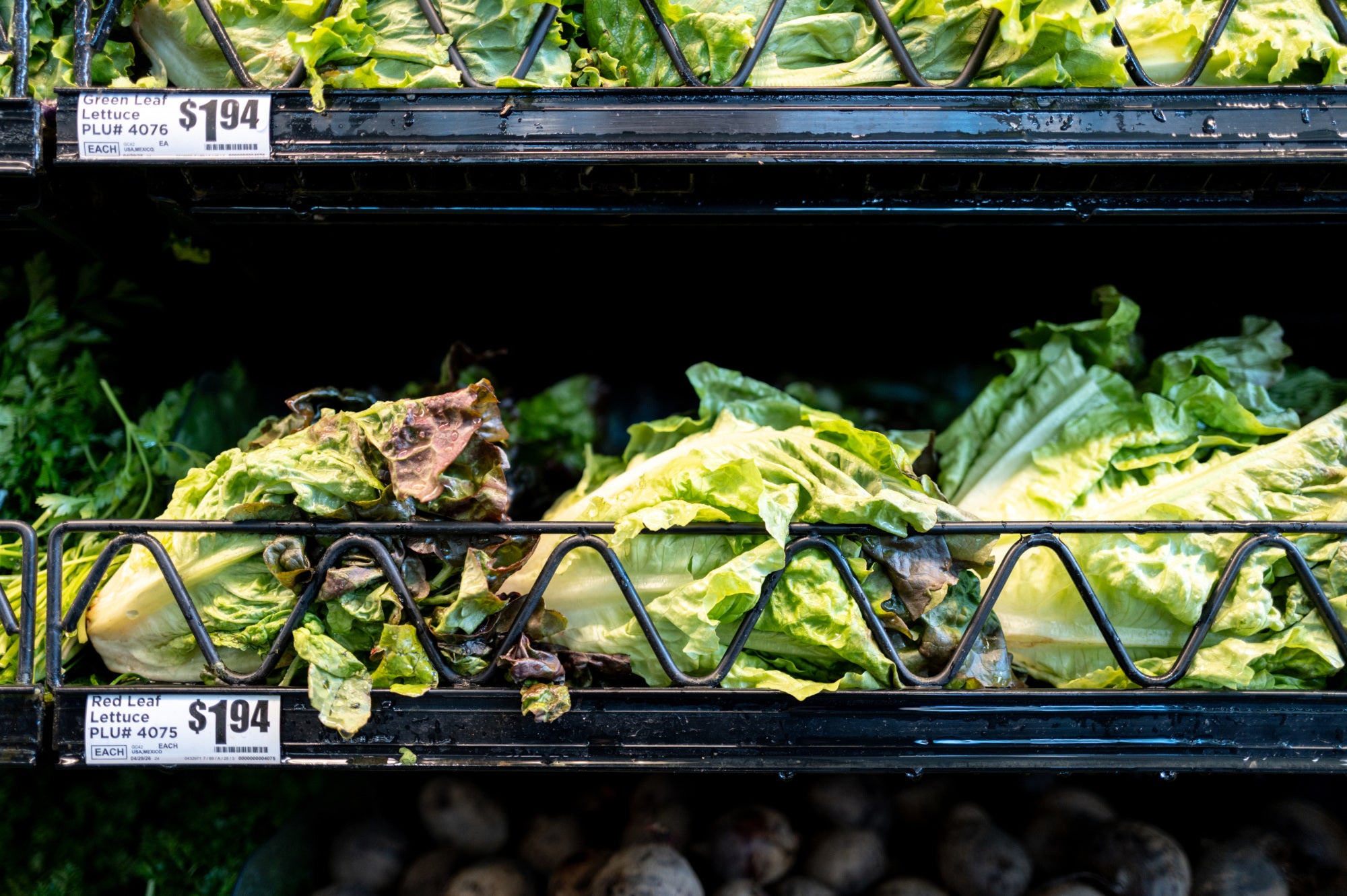
Now, that has with it a challenge because some food items, like lettuce, are eaten by a lot of people. If you are interviewing ten people and seven of them say they ate lettuce, that might seem like a lot, but in fact, that’s about the rate at which we generally consume lettuce. As we investigate, we have to be able to compare what those exposures mean.
We do that a couple of ways. One is, we try to break down the exposure, the lettuce. Was it from a restaurant? Was it from a grocery store? Was it a particular variety? We try to get more details about the commodity. And then, we try to put that into context. We compare that to either some type of a population background rate that we know about or we interview people who didn’t get sick, healthy controls, and compare the differences between the individual cases and the controls. It’s a lot of very detailed, somewhat tedious work talking to people to assemble data that we can analyze.
How do local, state, CDC, and FDA officials work together during a foodborne outbreak investigation?
ELENA RENKEN: Does sound like a very detailed process. And then, how do local, state, CDC and FDA officials work together during an investigation like this current cyclospora outbreak?
CRAIG HEDBERG: In the United States, all of our disease reporting rules work at the state level. We have a national system which is really a combination of individual state systems. So people get sick. That information gets reported to a local health department or the state health department, and usually, they’re the first point of contact. They’ll interview the person, they’ll start collecting the information.
When it’s clear that we’re dealing with a bigger outbreak, maybe a multi-state outbreak, then CDC typically will get involved to help coordinate the investigation across states and begin to share information about suspected food items with FDA. FDA comes in with a responsibility to try to identify where the source of those foods might be and interact with the companies that are producing the foods and distributing the foods along the way.
How do FDA trace-back investigations work, and why is identifying the exact source so difficult?
ELENA RENKEN: Very good to know. How do FDA trace-back investigations work, and why is identifying the exact source often so difficult?
CRAIG HEDBERG: Sure. The trace-backs always start with the individual information we’re getting from the cases. They’re starting with a point of service, a restaurant or a grocery store where the case got a food item from, and they will try to document who the distributor to that establishment was.
Then, as they go back through the distribution system, they will look at every time that product changed hands and try to identify, where did it come from before that and ultimately work back through processors, to the growers, to the people who are actually growing the farm.
This can be very complicated with a lot of our food systems. The other thing that makes it complicated is that, frequently, a distributor might have product from two or three different processors, and it’s not always clear which of those products would have gone to the distributor at the next level or to the point of service where the person actually ate the food.
There’s uncertainty in most of our trace-backs, and managing that uncertainty gets to be a challenge when you’re dealing with just a few pieces of cases that we’re tracing back. Unfortunately, the more cases that occur, the better our ability to work through those systems and find some of those common threads.
The other issue is that, frequently, at a restaurant, you might have eaten, say, a salad or a salsa that could combine two or three different ingredients. If we can’t, on the front end, in talking to people, figure out which of those ingredients might have been the source, FDA might wind up tracing two or three different food items to see which of those best matches the distribution of illnesses. It’s a very time-consuming process of collecting and sorting data to see where the threads actually lead.
Beyond trace-back data, what other evidence goes into identifying a contaminated product?
ELENA RENKEN: You’ve mentioned this trace-back information that you gather painstakingly. What other evidence goes into identifying the contaminated product?
CRAIG HEDBERG: Well, it starts with the interview, the epidemiology, and the picture that we’re getting from the cases to identify a suspect or a group of suspect illnesses. We’re also looking at the time frame, so we’re putting all the pieces of the puzzle together. So you’ve got the trace-back information, you’ve got the case information.
With Cyclospora, we have limited ability to look at the characteristics of the organism with. Things like salmonella or E. coli, we have sequencing, whole genome sequencing, that we use to organize our case information more effectively and can incorporate that. But it’s really the combination of the epidemiologic data and the trace-back data that really point towards the common source.
Can you explain a bit more about what you mentioned, why it’s hard to use data about cyclospora, specifically, compared to other parasites? Well, it could turn to other bacterial pathogens, partly because the organism can’t be grown in culture. You know, we don’t have a lot of the organism around to work with, either in the clinical laboratory or in some of the other laboratories, so the process of trying to extract genetic material out of the organism that can then be used to sequence and genotype the organism is just not as readily available and we don’t have as many laboratories who are trained and have the resources to do that as we do with some of our bacterial pathogens.
Unfortunately, with cyclospora, as we’re investigating these outbreaks in real-time, we just don’t have the ability to say that this group of five cyclospora cases are all related, and they’re different from this group of ten cyclospora cases. We’re doing that just based on differences in the time frame, the geographic distribution, and some of the exposures that people are relating to us as we do these investigations.
Why do these outbreak investigations often take weeks or months to identify the likely source?
ELENA RENKEN: Got it. And why do these outbreak investigations often take weeks or even months to identify likely source?
CRAIG HEDBERG: It’s a function of how much time it takes to get information through the system. Again, people are being exposed, they get sick as much as two weeks after the food item that they ate, that was contaminated. It may be another two weeks before the public health officials learn about that, so we’re always starting quite behind the game in terms of collecting the information and then assembling that and looking for patterns and then identifying suspects that then can be traced back. It takes time.
The process of getting data at the state level, moving it to CDC, having CDC organize that so that they can update their websites, again, takes time. And unfortunately, one of the things that’s really working against us with this outbreak is just the sheer volume. If you have 1,000 illnesses that you’re trying to interview, from a state health department level in Michigan, you don’t have 1,000 people doing those interviews. And so just the volume of work that goes into tracking those people down, getting a hold of them, doing the interview, and then assembling all that data is just a time consuming thing.
How have surveillance systems and trace-back investigations improved over the past decades?
ELENA RENKEN: How have surveillance systems and trace-back investigations improved over the past decades? Have they changed?
CRAIG HEDBERG: Sure. We have a lot of new laboratory techniques that have become available to us. One of the big things, actually, with cyclospora, is on the clinical laboratory side. Cyclospora is a parasite we talk about, you can’t grow it in the laboratory. Twenty years ago, the only way we could have identified cyclospora was to actually do a microscopic examination of preparation from stool to look for the presence of the parasite in the microscope. Now we have PCR-based techniques that are used in clinical laboratories and we have these syndromic panels that have been developed that might allow a laboratory to test for 20 or 22 different pathogens at the same time. These have become widely used in the clinical laboratory world over the past ten years or so.
That’s greatly increased our ability to detect these illnesses in the community because now they’re routinely being diagnosed and reported to state health departments. We also have better information systems. Many food companies have very automated systems for tracking the products they’re producing, and shipping, and ingredients. The traceability piece has improved, greatly, particularly with some of the larger, more better resourced companies that have really integrated information systems. On the public health side, we have a lot of laboratory-based reporting from clinical labs into the public health system. Sharing information has actually improved in a lot of ways all across the system.
How could changes in public health funding or surveillance capacity affect future outbreak detection and response?
ELENA RENKEN: How could changes in public health funding or surveillance capacity affect future outbreak detection and response?
CRAIG HEDBERG: Sure. Well, I think because we’ve described a lot of the effort here involving people doing interviews, the workforce that we have available to us is frequently a limiting factor in this. There have been cuts at state level and at the federal level for the amount of funds that go into support this type of activity.
That puts pressure on the staff that remain behind. If we really want to invest in our ability to improve our capability, responding, a lot of it is going to be to invest in the workforce, the people at the state and local level, who are doing this work on a daily basis. We have to also make sure that our public health laboratories are adequately resourced.
CDC has taken a lot of cuts in the past year. They’ve lost capacity within their laboratory system to support the work going on in the states. We need investments in our laboratory systems and in our people who are working on the front lines of public health to really be more effective at surveillance and control of these outbreaks. Really, outbreak investigations, you know, as Dr. Kniel said, are a key for understanding the safety of our food safety systems.
We identify new food hazards. Food companies are doing a lot to make food as safe as they can, but if there’s something they’re not aware of, you know, you can’t really prevent something you don’t understand. And sometimes it takes an outbreak for us to be able to understand that and to give them the tools, really, to do a better job of making food safe.
What should journalists understand about recalls and why public health recommendations often change as investigations evolve?
ELENA RENKEN: What should journalists understand about recalls and why public health recommendations often change as these investigations evolve?
CRAIG HEDBERG: Sure. Well, this outbreak of Cyclospora is a good case in point that, in some instances, the outbreak investigation will identify, initially, a potential source of exposure. In this particular setting, early on, there were a lot of cases associated with Taco Bell, and lettuce and Taco Bell, and that was really what drove the recall from the Taylor Farms lettuce.
As cases continue to occur, it’s really clear that that that Taco Bell associated product wasn’t the whole cause of this outbreak. And so as the investigation goes on, you know, more understanding of whether this is really one big outbreak or whether there might be multiple sources that are contributing to the occurrence of the outbreak, are going to be developed. As the outbreak investigation matures, we’re beginning to have better ways to look at the foods that were in distribution to see how complex this outbreak actually has become.
When a foodborne outbreak or recall is announced, what scientific context is most important to include in news coverage?
ELENA RENKEN: Thank you both. Reporters, please submit your questions using the Q&A box found at the bottom of your Zoom screen. I will start taking audience questions shortly, but first, I have a question for our panelists. When a food recall is announced, or a food borne illness outbreak is identified, what scientific context do you think is most important to include in news coverage? Dr. Kniel?
KALMIA KNIEL: I think it’s important to share with consumers that this investigation is ongoing. There isn’t often a very fast conclusion. And I think that we need to help people to understand that information is likely to change quickly and continue for a while, maybe shorter than what we’re seeing now, but I think that that’s really important to convey. Outbreak investigations are dynamic in nature, and depending on the cause, we should encourage people to seek clinical care. I commend a lot of the journalists in this case, in particular, share information on the basic science of what we know about the organism that’s causing the outbreak, depending on the cause, and talk about who’s most at risk.
Not necessarily with cyclospora. I think people have been doing a good job, but I think, often, we’re too concerned, or worried, and we don’t call out to people who are really at risk. We need to be able to say, if it’s an outbreak with listeria monocytogenes, for example, pregnant women, older individuals are more at risk. For cyclospora, I think people have been doing a really good job communicating that everyone is at risk for illness with this organism.
ELENA RENKEN: Dr. Hedberg?
CRAIG HEDBERG: I think this outbreak, in particular, really emphasizes that we can sometimes get really focused on what we’re identifying as the source of this and lose context of how much food actually moves through our food system. I know there’s been a lot of discussion of lettuce and people talking about not eating lettuce and fresh produce, but even though this is a big outbreak, the vast majority of food moving through our system, of produce moving through our markets is not part of this outbreak.
We risk driving people away from one of the healthier parts of a balanced diet by talking about the outbreak and the potential vehicle without providing some context about how important it is to remain having a balanced diet throughout this. Having a healthy diet and general status of health is one of the things that reduces our risk of foodborne illness, overall.
What more needs to be done to prevent recurring outbreaks of Listeria, E. coli, and Cyclospora?
ELENA RENKEN: Thank you. I have a first question here from CNN News Source. It seems like every year we talk about some kind of food contamination, whether it’s listeria, E. coli, or cyclospora. What more needs to be done in order to prevent these things from happening? Would either of you be able to take a stab at that?
CRAIG HEDBERG: I’ll be happy to jump in and say that we’re never going to prevent all the foodborne illness that occurs out there. We talk about, many of our foodborne illnesses are preventable from many perspectives, but our food system is big and complex. We’re growing a lot of food out in nature. You know, there are lots of opportunities for contamination to occur, and preventing all of those is not going to be practical or really feasible. And so we have to do what we can to handle food safely and responsibly, but again, not overly dwell on the events that happen and keep a healthy attitude about food in general.
KALMIA KNIEL: I would agree with everything that Dr. Hedberg just said, and also add that, as a consumer, we have a role, as well, so make sure that you’re doing what you can in your own household to contribute to good food safety practices in your own kitchen.
How was Cyclospora monitored in previous years, and has the decrease in monitoring Cyclospora contributed to the current outbreak?
ELENA RENKEN: A question here from WTVM, ABC 9, in Georgia. In previous years, how was Cyclospora monitored? Has the decrease in monitoring Cyclospora played a role in what we see today?
CRAIG HEDBERG: I’ll jump into this. Cyclospora, like all of our reportable diseases in the United States, are reportable at the state and local level. Cyclospora is reportable in 47 states. Outbreaks of Cyclospora would be reportable everywhere. As I said, we have a system of state laws that require reporting of disease, and that’s the basis of our surveillance system.
Now, one of the things that’s been talked about a lot in the context of this outbreak is, FoodNet, FoodNet was an active surveillance system developed by CDC that is tracking the occurrence. They’ve been tracking the occurrence of nine different bacteria and parasitic pathogens going back to 1996. It was really set up to give us a long term tracking system, not an outbreak investigation system.
CDC, because of reductions in some of the resources available to them, made a decision within FoodNet to scale back the number of pathogens that they’re going to continue to track long-term, and that has generated a lot of headlines and discussion, but it hasn’t really had any effect on our ability to identify or investigate outbreaks of any type.
How do you assess the U.S. government’s handling of the current outbreak, and is it being brought under control?
ELENA RENKEN: Good to know. Thank you. In a related vein, we have a question from the international broadcast agency Feature Story News. I’m wondering if either of you can add any context around this. Do you have any confidence that this outbreak is being brought under control, and how do you assess the U.S. government’s handling of the outbreak, given the contradictory claims about Taylor Farms, and about lettuce, that may or may not have been sourced overseas?
KALMIA KNIEL: I could start with that one. The first thing we want to think about is that there are numerous outbreaks that are occurring. There’s more than one. Pretty early on, there were signals that were communicated from the FDA groups that are investigating this. There are likely multiple contaminated products, or potentially, as was mentioned earlier, this confliction that happens when you’re eating a product that has multiple ingredients.
Trying to identify, now, which ingredient that is, is the tricky part. So there have been those signals that indicated the shredded lettuce, and there was trace-back to farms for that. Those products have been recalled. Whether or not there’s other products still out there, it’s possible.
CRAIG HEDBERG: One thing to consider is that produce has a relatively short shelf-life, so a lot of the products that started causing illness in May, May 1st, I think, is when we first started tracking this outbreak, they’ve been consumed. We think about that. I think, the information that’s been shared, the information on the testing that happened, doesn’t impact this outbreak.
KALMIA KNIEL: There was a product that was tested. The test was a false-positive, meaning that it was either misinterpreted or the testing is actually pretty tricky in itself. There could have been interference that occurred in the molecular test, but that doesn’t change the outbreak. I think that is something that we really want to make sure is clear, that there was still looking at the epidemiological evidence, looking at the signals that were associated with what people were eating, what they remembered eating.
With the first part of that question, yes, I think the outbreak is getting under control. I think communication has been good, product has been removed, but there’s more to do. And if there are continuing cases where we’re continuing to discuss it and people are continuing to get tested and find out that they’re sick, then the FDA will be able to watch those other signals as they pop up.
CRAIG HEDBERG: Yeah. The one area where I think we haven’t really had as timely updates from CDC, on case counts, and what those case counts represents as we would like to see. Just this past week, CDC did post the first epi-curve, a distribution of cases by onset of illness that’s really useful, and we can use those to help guide where we are in the course of an outbreak.
When we keep getting reports of thousands of new cases being reported every day, the thing that’s not really clear, at all, is whether those are really new infections or whether those were people who got sick several weeks ago and just now are getting test results processed and reported into the system. And making those distinctions has a big impact on how we view whether this is really an ongoing outbreak or whether we’re just filling in the gaps in the cases being reported.
With the CDC and other agencies reporting different case counts, what is the most reliable source for up-to-date outbreak numbers?
ELENA RENKEN: I have a couple of questions here about resources or finding information. One is from Agri-Pulse. How can we find the best overall number for cases? Since the CDC has numbers, and then, DSS has numbers, what’s the best reliable source for that type of up-to-date information?
CRAIG HEDBERG: Well, I mean, I think, at some level, CDC is our national public health agency, and you have to look to them for some numbers. Their numbers vary from what the states are reporting for a variety of reasons, and ultimately, there’ll be some reconciliation of the data. I think we have to be able to rely, at some level, on the updates coming out of CDC, because that’s really their primary responsibility. Reporters have to be able to track down the information where it is. And so if it resides within every state health department, then that might be what you really need to do to stay on top of this.
KALMIA KNIEL: I could add, there, if they wanted something specific, genomicepi.com has an outbreak tracer, and you can link to some of these state health departments that were just mentioned, through that site, and they were giving pretty up to the moment increase in cases. Now, whether those are a delay, we do not know, but they were providing a lot of good information.
Where can individuals find reliable information about outbreak severity in their specific county or local area?
ELENA RENKEN: And on that same topic, a question from a freelancer based in Ohio. To try and stay safe, is there a single website or other resource where individuals can find information on the severity of their outbreak, in their own specific county or local area? Any resources you’d point people toward, there?
CRAIG HEDBERG: I’m not aware of a single one, no.
KALMIA KNIEL: No. I think the CDC and FDA still have good consumer health information, basic consumer health, and I, again, suggest looking at your specific state. That genomicepi.com, I’m certainly not totally trying to endorse them, but they do have a beautiful website, and they do link to specific states, so if you are looking for information in your specific state, it’ll take you to the county level, which many states have been doing, like Michigan, with their high number of cases, have really been doing an excellent job in providing that information.
What is the biggest misconception growers have about Cyclospora contamination, and what should they understand to reduce on-farm risk?
ELENA RENKEN: Thank you. A question here from Southeast AgNet. From a microbial food safety perspective, what do you think is the biggest misconception growers have about Cyclospora contamination, and what should they understand that could help reduce risk on the farm?
KALMIA KNIEL: Yeah, so I can start with that one. Specifically, for Cyclospora, I think a lot of people don’t realize the differences between bacteria and maybe a parasite. It also doesn’t have maybe the die-off, because this question was specifically for growers. A lot of time growers will think about how bacteria may die off in a field because of desiccation or because of UV light, those types of things. This one may not act that way.
Desiccation isn’t good for parasites. That we can use to our advantage. Drying out can kill these, but how much drying out? We don’t know for sure. I think there are some misconceptions that way. Also, thinking about how it’s transmitted, it can be carried through soil, carried through water, carried through people’s hands or contaminated equipment.
I think we need to remember all of those basic practices. We’re so careful about animal intrusion and thinking about manure from animals, but we really need to think about where are inputs coming from humans? And so that’s something I think this outbreak has reminded us, on the farm, to make sure we’re being very thoughtful in our approaches to equipment and harvesting and water and soil movement and all of those things.
How important is water in Cyclospora transmission, and can it spread through irrigation water or persist in soil?
ELENA RENKEN: In that vein, we actually have a couple of related questions about water. One is from a freelancer in Philadelphia and another is from Southeast AgNet. How important is water in the transmission of cyclospora and what should produce growers be paying the closest attention to? Specifically, can cyclospora be transmitted if contaminated water is used to irrigate a field, and how long does it remain in soil?
KALMIA KNIEL: Yes, so water is really important. We’ve seen in many outbreaks associated with fresh produce contamination, that water is critical, and it’s likely that you, through water, get these higher numbers of cases. You can spread the contamination pretty easily. So one thing about Cyclospora that’s different from bacteria is that it’s big. It’s bigger than bacteria. It’s about eight to ten microns, which is about maybe eight to ten times the size of a bacterium, so you can use a filter. I have encouraged growers to use filtration. I know some producers and growers who have had questionable water or have had potential microbial risks or even those who have had outbreaks associated with Cyclospora before. They’ve added filters to municipal water treatment and to other types of water, like well water or groundwater, that they’re using.
That is something that you can use. That’s definitely a great mitigation step. When we’re thinking about movement, yes, they can survive in soil for at least six months. My group recently did some research on that, to show that using the cousins, the related organisms to cyclospora, that we’re able to culture in the lab. Other studies suggest it may survive for longer than that, maybe even a year or more. It can survive in soil. It can be out there in the environment. That’s why we need to have more information so we can provide better guidance for people relying on good agricultural practices to reduce the risk.
Given past outbreaks linked to produce beyond iceberg lettuce, how should parents think about risk and talk to their children about eating fresh fruits and vegetables?
ELENA RENKEN: Question here from The 19th. We don’t know the cause of many of the cases, but we do know the source of previous outbreaks over the years, and that has shaped some news reporting about concerns and precautions around produce, beyond iceberg lettuce, including berries, like raspberries and blackberries. How should parents think about the outbreak through this lens of risk? Should they stop buying certain fruits or vegetables? I assume the answer is no, but how can we better explain that to our readers?
CRAIG HEDBERG: The answer for me is, no, certainly. I think whenever we have outbreaks occurring, we will frequently look at what previous food items were associated with previous outbreaks because that’s one of the hypotheses that will then be tested as we’re interviewing people. When all of these thousands of people who are currently getting sick are being interviewed, they’re being asked about all the different food items that have been previously shown to be causing outbreaks of cyclospora.
Today, the only one that’s come up has been the lettuce, although there are suggestions of some fresh herbs in the Southeastern United States, as well. Until we identify a food item, and say, this is the pathway that this food item was contaminated, and begin to pull it from the marketplace, I would not assume that, because berries have been previously associated with other outbreaks of cyclospora, there’s any concern about berries, today, that are available in the marketplace. I would try to follow the best recommendations coming out of public health, but until something gets identified, I wouldn’t be concerned about it.
KALMIA KNIEL: Yeah, I would just add that, if you are a consumer that’s very concerned, if your child is immunocompromised, don’t take away the fruits and vegetables, but you can cook them. Cooking will kill this organism, will kill cyclospora. If you were very concerned about your berries, you could cook them, heat them up, make a jelly or jam or something like that, if you really felt it, but again, I totally echo what Dr. Hedberg just said.
We saw raspberries contaminated in the 1990s, and they’re still on that list of foods, but we haven’t seen any issues associated with cyclospora since then. The industry is working really hard to produce them in a safe manner, and I don’t see any reason to avoid them during this outbreak.
As more Americans adopt plant-based diets, what practices reduce the risk of foodborne illness while preserving the benefits of fresh produce?
ELENA RENKEN: To continue on this threat of personally reducing your risk, we have a question from a freelance health reporter. As more Americans adopt plant- based diets, what evidence-based practices do you recommend to reduce the risk of food borne illness while still enjoying the health benefits of fresh produce?
KALMIA KNIEL: Heat treatment is the best risk-reduction strategy. Other than that, reducing cross-contamination in your home, that’s also a great practice. I would never tell people not to wash their hands. That’s always something that we should encourage, and appropriate cleaning of your cutting boards and things like that at home.
One thing that has come up quite often during the last month or so has been the discussion of eating fresh produce, so why not go to your local farmers market where you can get something right from the farmer, and you have less distribution, less opportunities there, in general, for contamination, doesn’t mean it’s guaranteed safe by any means, but we often think about it having a little bit of a lower risk when it has less movement, potentially, through the supply chain. I know that sometimes that brings people comfort, and they can continue to eat fresh produce.
CRAIG HEDBERG: Yeah, I think, general food safety considerations should apply here. Particularly during the summertime, one of the things that can happen, not so much with cyclospora, but with bacterial pathogens, you might bring produce into your household that has really low levels of contamination on it. If that isn’t handled properly and is left to sit out, that bacteria can grow.
We see things, even with tomatoes, or melons, if you slice things up, and then they sit out, you can amplify the source of contamination. So what might not start out as being a meaningful level of contamination after several hours of being out on your counter, could grow to the point that it does present a risk of illness.
What should people know if they have Taylor Farms products at home, and how can they find out if those products are safe?
ELENA RENKEN: A question here from KDKA CBS 2 in Pittsburgh. There are still products from Taylor Farms being bought and sold. What should people know if they have any of these in their refrigerators, and how can people find out how safe they are?
KALMIA KNIEL: Yeah, so Taylor Farms produces a lot of different products. I think, on the website, that lists the specific products that have been recalled. You can go specifically and see that list, and there are many other products that are produced by Taylor Farms that are not associated with that recall, and they haven’t been traced to any illnesses. Those are going to continue to be on the market. Those have been shown, so far, not to be involved in this. I urge consumers to go look at the lists of recalls that are there.
CRAIG HEDBERG: One of the nice things, actually, about when you buy produce in a bag, it has a lot of information on the back of the package, with code information, that tells you a lot about where it came from and when it was produced, that you can check against an FDA website, to reassure yourself of whether it’s part of the outbreak or not.
What is the distinction between human and animal manure in the context of agricultural field applications?
ELENA RENKEN: I have a question here from a freelancer based in New York, asking about the distinction between human and animal manure. I know that septic services have spread permits, pumping human sewage from septic tanks and putting it on agricultural fields. Is that an invitation for trouble? Is either of you able to give any context there?
KALMIA KNIEL: Yeah. There is something called the produce safety rule that doesn’t allow for human manure or Class II biosolids to be spread where raw agricultural commodities are grown, so we’re not seeing that typically used for growing fresh produce in the United States. It can be a good soil amendment, in terms of water holding capacity and other benefits to the soil.
It’s almost always really well treated and treated by a specific means that is dictated by EPA, and so it’s not going to have any pathogen growth in there. Animal manure also has to be composted, which generates a lot of heat, and that all has to be treated in a certain way before it’s applied, or it’s applied at a specific time point prior to harvest.
About 120 days is what the National Organic Program says, so that you apply it to the soil, work in all of those great nutrients for the soil that the crops are able to use, the plants grow, and then products are harvested following that, at least 120 days. Science has shown that that is a good time period to reduce the potential chance for risk of contamination of those crops, so there are specific laws in place for individuals who are growing fresh produce, that have to follow those in terms of all different types of soil amendments.
How does food distribution work for large companies, and how can a single contaminated batch spread so widely?
ELENA RENKEN: And a question from USA Today that zooms out a bit. Can you explain how food distribution, especially for large companies, works in this country, in general, for example, the many different places that one batch of food could end up or how tainted food could spread so far?
CRAIG HEDBERG: Well, food food distribution channels can be very complex and so it depends partly on the type of product and where it makes sense to distribute the products. Some products are distributed in a very local manner, and seasonally, we have a lot of very regional production of fresh produce, even in Minnesota where I am.
All summer long, there’s a lot of local producers who are really just distributing locally, and we have big growing regions for tomatoes that are in the Southwest and in the Southeast, so we don’t see as much transcontinental shipment of some produce items as we do with other produce items. Lettuce is one that typically does move across the country because of where the best growing regions are, but we have created a consumer market in which we want everything to be in season all the time. The demands of meeting that mean that we have very long and complex distribution channels for a lot of produce items.
KALMIA KNIEL: Yeah, and I will just add, actually, Dr. Hedberg mentioned it previously, but those QR codes, RFID tags, all the information on the back of products or even on the little sticker that’s on your tomato, there is so much data that goes behind that, so I think when we are describing these pretty complicated distribution change for some products, there’s data that goes with each step, and that is something that’s been really important for growers to work with and help them to make their process more effective and more efficient. And that also can be used when there’s an outbreak like this one.
How do we restore public trust in food safety after an outbreak like this?
ELENA RENKEN: A question here from CNN News Source. This outbreak has eroded the public’s faith in food safety. How do we restore that?
KALMIA KNIEL: I hope it hasn’t eroded completely. Again, Dr. Hedberg mentioned this earlier, too. We have a plethora of food that’s being produced all the time in the United States, and the majority of it is not associated, ever, with any instance of illness. I think we have dedicated food safety professionals at all levels, and this outbreak is a bit unusual, but we are learning from it, and we will make improvements as needed. I really hope that there remains the trust in the food supply because there are people who are involved that are trying to do their very best.
CRAIG HEDBERG: I think, ultimately, being as forthcoming as we can about how the outbreak happened, how it was investigated, in the end, communicating what we learned from that process is the most effective thing we can do. If it looks like the government or companies are ever trying to hide things, that’s when things really blow up and become difficult to work with. I think everybody working in a spirit of good faith, that food companies generally do, and the government agencies generally do, but the more forthcoming we are at the end of the process, the better it’ll be for everybody.
What is one take-home message you have for reporters?
ELENA RENKEN: Now, we have one final question to gather some last messages from our panelists. For reporters, I want to note, first, that you’re going to get a quick email survey after you sign up from this call. It’s very fast, and your insights would really help us design our services so that they’re useful to you. Now, our last question. In about 30 seconds, what is one take-home message for the reporters here? Dr. Kniel?
KALMIA KNIEL: Well, I’ll start by saying that we need investments in science and research. We need to better understand organisms like Cyclospora, or potentially, other microbial threats to our food supply chain and our food system. We need good capacity-building, through education and training, to support the systems. We need to be able to better identify and follow through with trace-back. One thing I want us to remember, that hasn’t necessarily been something we’ve talked a lot about today, we have sanitation and water treatment systems in the United States that we shouldn’t forget about. They are really important when it comes to our everyday living. They’re also important when it comes to food production and food supply chain. We need to think about how these systems interplay, the aging infrastructure, really, and then, end with good transparency in communication that needs to remain, the first thing that we think about.
CRAIG HEDBERG: I’ll just add that, we have a global food system. We are part of a global network of food producers and consumers. Actually, I would add on that, all those investments in our infrastructure in the United States, we have to support that in the countries that are developing the food and sending it over here, as well. The investment in safe water and sanitary sewage disposal that we want to make here, it’s important that we support those in the countries outside of our United States that are also producing food from us. What happens in Mexico or Guatemala matters to us, here, and we should be concerned about that.
ELENA RENKEN: Thank you both so much for all your expertise, for the journalists covering this current Cyclospora outbreak, and all kinds of food contamination risks as they come up. And reporters, we appreciate you collecting more evidence for your ongoing coverage so you can get your audiences the best information there is. I hope to see you all at SciLine’s next briefing. Thank you.
From Dr. Kalmia Kniel: