
SciLine interviews experts and then makes the video and other resources rapidly available for TV newsrooms to use on air.
What is Experts on Camera?
Water systems across the U.S. are aging, and communities in rural areas with shrinking populations are struggling to fund and maintain their drinking water infrastructure. In many regions, water systems that need repairs also face climate change-related impacts from flooding, wildfires, and droughts. On June 16, 2026, SciLine interviewed Dr. Zia Lyle, a postdoctoral researcher at the at the Institute for Risk Management and Insurance Innovation at the University of North Carolina at Chapel Hill.
These resources are free to use. No attribution to SciLine is required.
High definition (mp4, 1280x720)
ANCHOR
DRINKING WATER SYSTEMS ACROSS THE UNITED STATES ARE AGING… AND NEED REPAIRS ESTIMATED TO COST TRILLIONS OF DOLLARS.
AT THE SAME TIME…CLIMATE CHANGE AND EXTREME WEATHER ARE STRAINING WATER SYSTEMS MORE THAN EVER.
VO
BEFORE WATER COMES OUT OF YOUR TAP…IT TRAVELS FROM A RIVER…THROUGH PIPES… AND A PURIFICATION PLANT.
THIS SYSTEM CLEANS THE DRINKING WATER IN YOUR HOME.
DOCTOR ZIA LYLE IS A POSTDOCTORAL RESEARCHER AT THE UNIVERSITY OF NORTH CAROLINA AT CHAPEL HILL.
HER WORK SHOWS THAT ALL TYPES OF WATER SYSTEMS FACE CLIMATE RISKS… NO MATTER WHERE OR HOW BIG THEY ARE.
SOT
Duration: 0:29
Super: Dr. Zia Lyle, Postdoctoral researcher at UNC Chapel Hill
“It’ll be an issue for large systems, small systems, rural, urban, in the West and the Northeast. It’s really about identifying kind of the specific hazards a system’s exposed to and then its ability to respond and prepare for those. So that’s one issue that more rural smaller systems face is just having less resources, less personnel, less kind of ability to respond to changes and make kind of the needed investments in the system to become more resilient.”
VO
DOCTOR LYLE SAYS THAT FLOODS CAN OVERWHELM SYSTEMS WITH TOO MUCH WATER…MAKING PURIFICATION DIFFICULT…AND THAT WILDFIRES CAN DESTROY INFRASTRUCTURE AND LEAVE HARMFUL DEBRIS BEHIND.
SHE SAYS EDUCATING UTILITY WORKERS … AND INVESTING TO IMPROVE LOCAL WATER TREATMENT SYSTEMS WHEREVER POSSIBLE…IS KEY TO ENSURING SAFE WATER FOR DECADES TO COME.
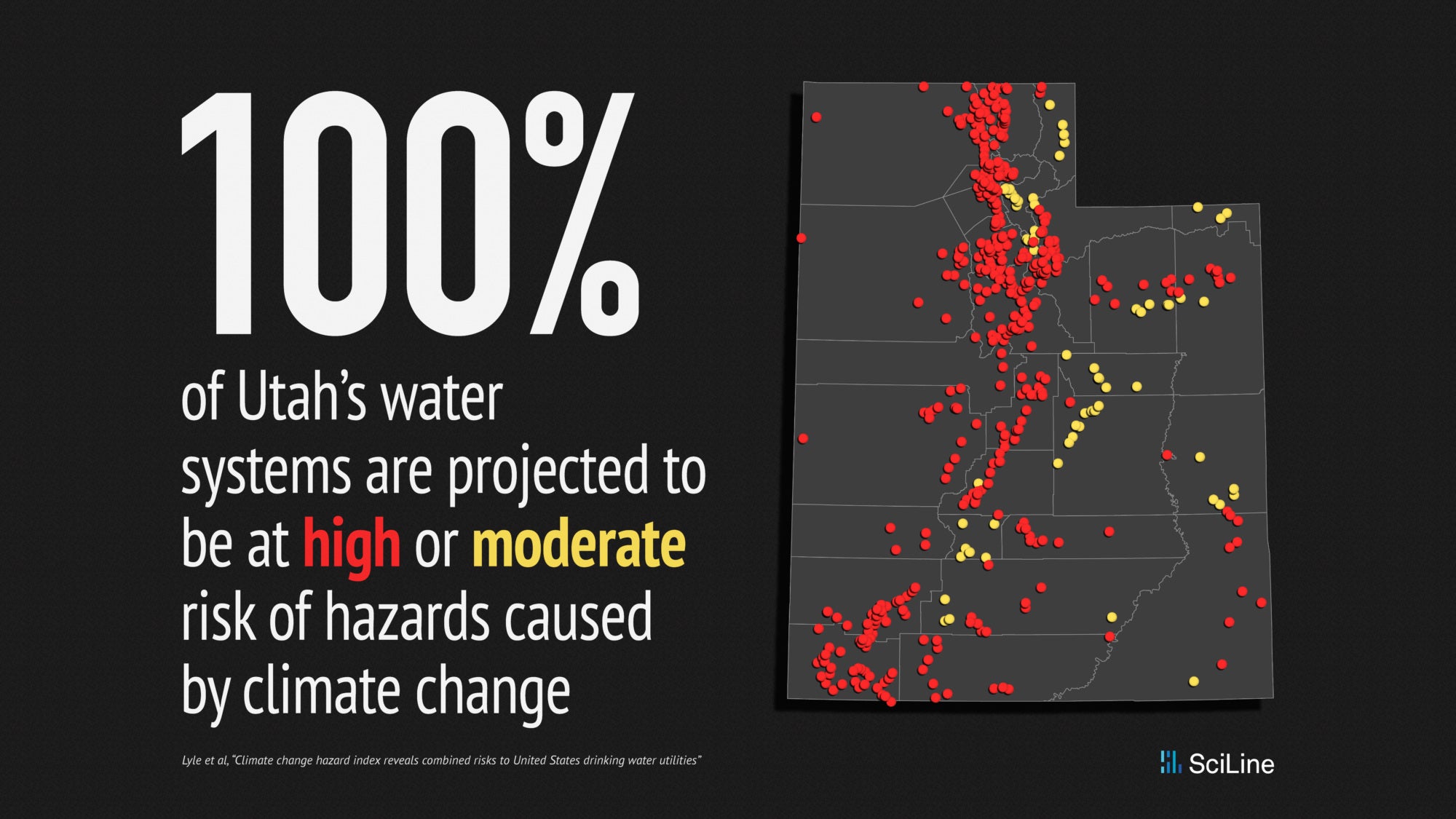
Download a graphic showing the drinking water systems in your state that are at risk from climate-related hazards.
.ZIP file contains high-res graphic in multiple formats.
Raw, full-length interview covers: