Introduction
[0:00:19]
DANIEL STURMER: I’m Daniel Sturmer, but I usually go by Dan. I’m an associate professor in the department of geosciences at the University of Cincinnati. And I think, fundamentally, I’m interested in the evolution of western North America, particularly the kind of western continental U.S., and in that I work on large-scale landslides. I work some on seismic hazards, and I use techniques that are rooted in structural geology and sedimentology, and stratigraphy to understand the longer-term history and evolution of the Western U.S.
Interview with SciLine
What are landslides and why do they happen?
[0:01:07]
DANIEL STURMER: Landslides are basically movement of material on the Earth’s surface, down slope. So—and that material can be rock, it can be soil, it can be a mud, unconsolidated sediment, or kind of a combination of all of those things. And really, the landslides will occur because generally from some trigger. So, there are really common ones, like really heavy rainfall events, or rapid snow melt, or earthquakes. Something that gives either kind of added mass or added energy to material on the Earth’s surface that’s unstable, that then lets gravity kind of take over and pull that material down slope.
How much does the U.S. spend to repair landslide damage in an average year?
[0:02:06]
DANIEL STURMER: So, that is a really good question with a kind of complicated answer. The latest numbers I’ve seen are a range between $2 billion and $4 billion per year across the country. I say it’s kind of a complicated answer, because unlike, you know, when we think of things like hurricanes or earthquakes—where it’s really affecting one specific area—landslides happen basically across the entire U.S. So, and they’re not all tracked by the same agencies. So it’s—in that sense, it’s kind of difficult to come up with a specific number, but that $2 to $4 billion amount is the most recent kind of estimate.
Are certain geographical features prone to landslides?
[0:02:59]
DANIEL STURMER: Basically, anywhere where there’s a slope, you can have landslides. And that doesn’t necessarily mean mountains. It can be slopes as gentle as just a couple of degrees, or like the slope on a driveway. Now, where you have steeper slopes, you tend to get kind of larger mass movements that move more rapidly—that the steepness of the slopes get kind of gives you that energy that you’re going to need to move that material really rapidly. But even on really low slopes, you can still get material moving if you have a basically a feature that allows material to move on top of it. And so it’s really important, if you’re not, you know—we’re not just talking about places like the Rocky Mountains or the Sierra Nevada, where you have really steep slopes and high mountains—anywhere where you have a slope. So, for example, where I live in Cincinnati, or places like Pittsburgh or kind of any of the cities in the Midwest or the Appalachians that might have hill, what you’d call hills, those are all potentially prone to landslides. And you don’t need a really tall hill. It can be, you know, slopes that are 10, 20, 30 feet high. And those can—you can get mass movement on those.
Are landslide risks different in different parts of the U.S.?
[0:04:27]
DANIEL STURMER: There are a wide kind of variety of risks, and a lot of that has to do with both the geography of the area—so, you know, how mountainous is your area? What kind of material the ground surface is made of in your area? Is it rock? Do you have, you know, really thick soils? Do you have a bunch of unconsolidated sand in your area? And then the weather, because things like extreme rain events or extreme snow melting events are common triggers to landslides. So, if you live in an area where you have events like that, you may be more prone to have landslides associated with that. In addition to that, things like wildfire risk—if you’re in an area that’s prone to wildfires—after those wildfires move through, any slopes would be prone to landsliding. If you’re in an area that’s either seismically active or has active volcanism, those areas are also prone to landslides related to those other hazards.
Is there a time of year when landslides are more likely?
[0:05:42]
DANIEL STURMER: The short answer is yes, and the long answer is, it depends on where you live. So, landslides are frequently triggered by extreme rain events or extreme—and it doesn’t necessarily need to be one big rain event, but it could be prolonged periods of, you know, moderate to heavy rai—or snow melt events. And when those things happen will vary depending on where you live in the country, right? So, in some places—like I grew up in Southern California, and our wet, rainy season was kind of December to January, to about March or April. So we’d expect to see landslides during that period of time. Whereas in other parts of the country, you know, you may think about, you know, places like the southeast, where they get hurricanes. You know, those are happening in late summer, early fall, in general. So, you’d expect to see landslides associated with, you know, potentially associated with that time. And then there’s other—so in addition to those kind of weather-generated events—there’s also landsliding that’s associated with things like earthquakes or volcanic eruptions, which can happen at any time of year. And then finally, there’s the, you know—I talk a lot about natural causes of landslides, but land use is a big driver in generating landslides. So, depending on how slopes are cut or modification related to construction or mining or things like that. You can have landslides that are not necessarily associated with climate, but just are associated with how the land is being used and modified.
How does climate change impact landslide risks?
[0:07:40]
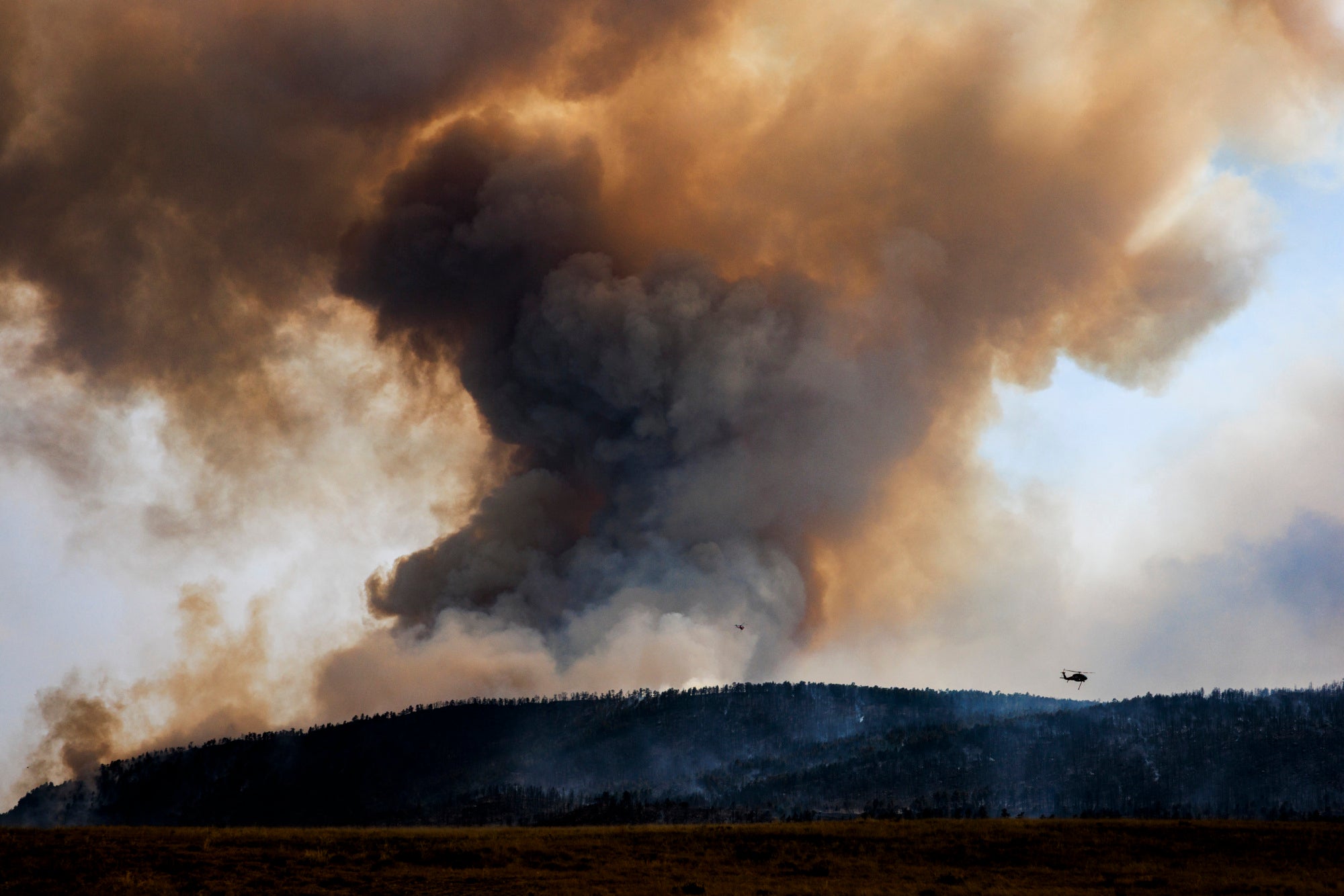
DANIEL STURMER: If we can kind of make the assumption that we’re going to see more kind of extreme weather, extreme rain events, extreme, you know, more extreme and rapid intensification of hurricanes, and potentially more hurricanes, those would all lead to more—potentially lead to more landslides. In addition to that, we’ve seen a real increase and spread in wildfire risk. So, we’ve gone from kind of having a wildfire season at the end of summer to, in some places, having wildfire season all year round. And wildfires, they remove most or all of the vegetation from hillsides, and that vegetation acts to really stabilize hillsides. So, if you are removing all of that vegetation, that makes it a lot easier for the next time it rains for that loose soil and loose material to move downhill. So, we really see—I mean, if you ever look at the NOAA website when there are rain events over areas that have burned in the last couple of years, you’ll see they always have a flash flood warning or watch over them whenever there’s rain events, because it’s so easy for that material to move downhill after a wildfire.
How can people assess landslide risks to their homes or businesses?
[0:09:06]
DANIEL STURMER: That’s a really good question, and I think the key is education. So: learn what kind of some of the warning signs around your property are. So, those could be things like: if you have a fence or power poles or something like that, and you start to see them all tilting one direction, especially if they’re tilting like downhill if you live on a slope, even if it’s not a really steep slope—that’s an indicator. If you see cracks opening up that are kind of uphill of where your house is—that’s an indicator. If you see springs, so you start to see water coming out of the ground in places that you don’t normally see it come out of the ground—that’s another potential indicator. When you see those, the next step is really to call an expert. So, that would be a geotechnical engineer or a civil engineer to come out and assess the property. You want to be really careful not to just try and mitigate it on your own. So, for example, if you see like a block wall, a retaining wall, that is tilting over to the side, the last thing you want to do is remove that retaining wall without shoring it up, because that might trigger a mass movement. So at that point, it’s really important to call on a professional who can assess the situation and give you ways that you can remediate it for your property.
What can local governments and safety organizations do to prevent landslides?
[0:10:39]
DANIEL STURMER: So, I think awareness of what the potential hazards are, and then once you’re aware of the hazards and where landslides might occur, you can really do a good job mitigating them and preventing landslides from happening by doing things like dewatering surface or shoring up hillsides or using things like rock bolts to bolt in unstable rocky slopes, or fencing. And I think the other thing that is kind of more on the regulatory side for new construction—for building new roads—really make sure that there’s an awareness and inspection that those roads are not going, or new building—is not going to add to the potential landslide hazard in the area.