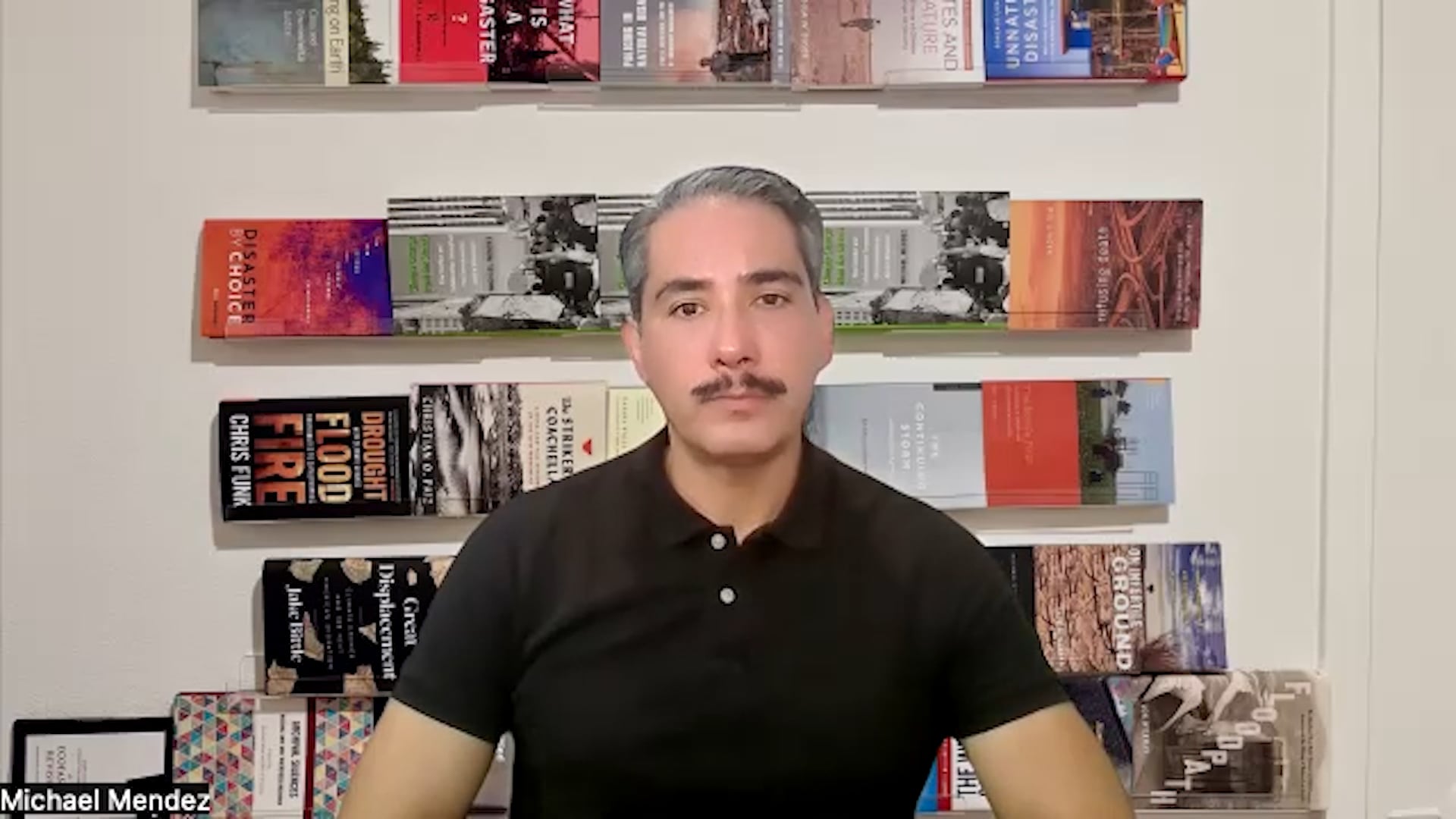
Every year, fisheries support more than 1.7 million jobs and generate more than $250 billion for the U.S. economy. But climate change is making rivers and oceans warmer, putting the industry at risk. On September 3, 2025, SciLine interviewed Dr. Martin Smith, a professor of environmental economics at Duke University.
TV bundle includes:
Soundbite (SOT)
VOSOT script (can be used as-is or modified)
Raw, full-length interview video & log with timecodes (upon request via form below)
Localizable data
These resources are free to use. No attribution to SciLine is required.
Click for VOSOT script (can be used as-is or modified)
ANCHOR AS OCEAN TEMPERATURES CONTINUE TO RISE… THE SEAFOOD INDUSTRY IS FEELING THE IMPACT FROM COAST TO COAST.
VO DOCTOR MARTIN SMITH… A PROFESSOR OF ENVIRONMENTAL ECONOMICS AT DUKE UNIVERSITY… SAYS CLIMATE CHANGE IS WARMING OUR WATERS… SHIFTING WHERE FISH LIVE AND HOW MANY CAN SURVIVE.
HE SAYS THOSE CHANGES THREATEN THE ECONOMY… OUR FOOD SYSTEM… AND PEOPLE’S HEALTH… AS SEAFOOD BECOMES HARDER TO FIND.
SOT Duration: 0:42 Super: Dr. Martin Smith – Professor, Duke University
“Most Americans actually don’t consume as much seafood as the USDA recommends. So about 90% of Americans under-consume seafood, the recommended weekly allowance of eight ounces of seafood per week. And the reason that recommendation is at that level is primarily because seafood contains omega-3 fatty acids, which are extraordinarily healthy in terms of cardiovascular health and also contribute to neurodevelopment. So that under consumption of seafood is in the current situation. And so you imagine taking seafood supplies away and it could make that problem even worse.”
VO DOCTOR SMITH SAYS CLIMATE CHANGE IS ALSO CAUSING HARMFUL ALGAL BLOOMS… MAKING SOME FISH UNSAFE TO EAT.
AND IT’S LOWERING OXYGEN LEVELS IN THE WATER… MAKING IT MORE DIFFICULT FOR FISH TO SURVIVE.
DOCTOR SMITH SAYS ONE WAY TO ADAPT IS BY EATING A WIDER VARIETY OF SEAFOOD… INCLUDING LESS COMMONLY EATEN SPECIES.
Raw, full-length interview covers:
How warmer ocean temperatures affect fish populations and lead to ecological changes like oxygen-depleted waters and harmful algal blooms;
How climate change creates new challenges for managing fisheries;
What climate change means for the seafood economy, including commercial and recreational fisheries, and fish farming;
Why the seafood industry is important for food and nutritional security in the U.S.; and
How fisheries, fish farming operations, and coastal communities can adapt to climate risks and related economic challenges.