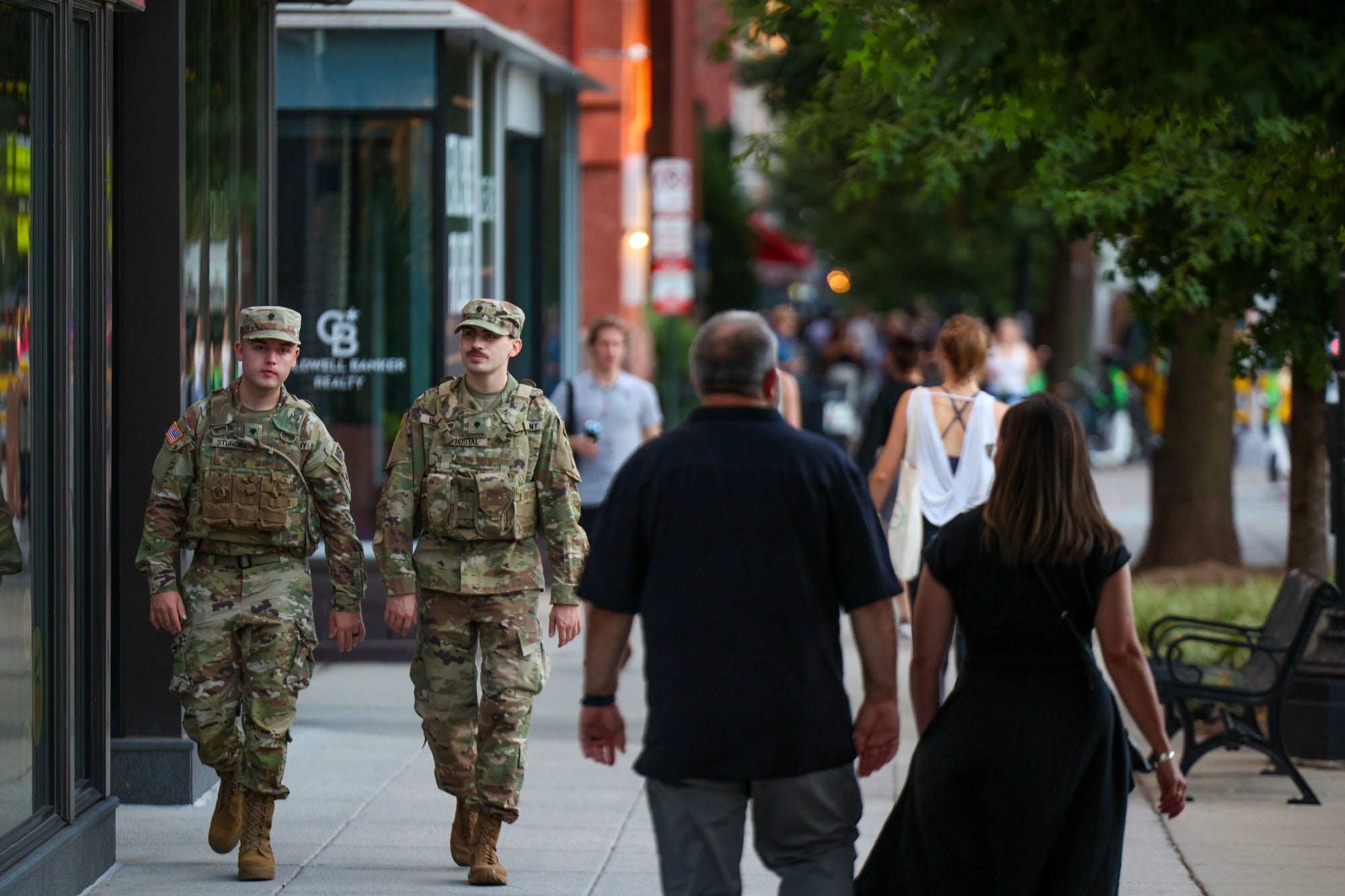
With members of the National Guard deployed to Los Angeles and Washington, D.C., this summer, and President Trump suggesting he may deploy National Guard officers in other cities, communities and politicians are responding. To put breaking news, personal stories, and politicians’ claims in context, reporters can reach for scientific evidence such as crime data and social science research on factors that shape police interactions and community attitudes.
Resources:
- The Federal Bureau of Investigation’s Crime Data Explorer provides access to data from the National Incident-Based Reporting System (NIBRS), which aggregates crime data submitted by law enforcement agencies around the country. Please note that not all law enforcement agencies submit data to NIBRS.
- The Justice Department’s Bureau of Justice Statistics conducts an annual survey of people age 12 and older to ask if they’ve been victims of a crime—even if the crime was not reported to the police. The 2023 report covers a period from July 2022 to November 2023 and includes 142,028 household interviews. The Department details its methods.
- The NIBRS data misses crime that isn’t reported, and the victimization survey “gives you a way to get at that, what we call the dark figure of crime that’s missing from the arrest data,” says Alexis Piquero, former director of the Bureau of Justice Statistics. Piquero and other experts briefly summarize more strengths and weaknesses of the data in SciLine’s Quotes from Experts on trends in U.S. crime.
- The Cline Center for Advanced Social Research at the University of Illinois tracks incidents when the police use firearms in its SPOTLITE database. This database includes incidents that don’t result in death. The Washington Post maintained a database of police shootings that occurred from 2015-2024, with the raw data available via GitHub.
- SciLine’s media briefing on crime, safety, and policing boils down complex trends in U.S. crime and research on how communities interact with police. Dr. Charis Kubrin of the University of California, Irvine, suggests comparing quarterly FBI crime data to the national average, shows how dramatically perceptions of crime diverge from documented rates of crime, and notes that many researchers collect crime data from individual police departments to get a more complete picture than government data offers—a resource that could be useful to local reporters.
- Gallup has tracked confidence in the police year over year since the 90s, and this year found that 45% of Americans reported “a great deal” or “quite a lot” of confidence in the police. That’s down from last year by 6 percentage points. There were large divides between Republicans (80%) and Democrats (29%), and between white adults (52%) and Black adults (24%).
- Factcheck.org collects expert perspectives and data around President Trump’s claims about high crime rates and crime data unreliability in DC.
Story angles: