Expert on Camera
The allergy season has gotten longer in 87% of U.S. cities—an unwelcome development for the 81 million Americans with seasonal allergies.
On April 25, 2025, SciLine interviewed Dr. Mary Johnson, a principal research scientist at the Harvard T.H. Chan School of Public Health. See the footage and transcript from the interview below, or select ‘Contents’ on the left to skip to specific questions.
Introduction
[00:19]
MARY JOHNSON: My name is Mary Johnson. I am a principal research scientist at the Harvard School of Public Health, and my research looks at the immune system and how environmental exposures, especially in the context of climate change, impacts our health.
Interview with SciLine
What is causing allergy seasons to become longer and more intense?
[00:41]
MARY JOHNSON: One of the biggest factors is actually climate change, which is causing the allergy season to be about three weeks longer than it was years ago. It tends to now start earlier, end later, and part of that is simply the increase in temperature. So you have—the ground is thawing earlier and freezing later. In addition, the carbon dioxide in the air contributes to changes in the production of pollen and how allergenistic it is to a person. So there’s a bunch of different factors that kind of feed into the fact that the allergy season is getting worse.
What do researchers predict about the future of seasonal allergies?
[01:40]
MARY JOHNSON: Unless the impacts of climate change take a different course, slow down, reverse, it can be expected that the allergy season is going to get worse as the world gets warmer and the levels of pollution increase.
Do you have any advice on how to minimize the effects of seasonal allergies?
[02:10]
MARY JOHNSON: Behaviorally, one thing you can do is check the pollen counts. There are websites that can give the pollen counts every day. If you happen to know what you’re allergic to, on those days, if you’re going to be outside, it might be a good idea to wear a mask. It might be a good idea to close your windows, run your air conditioner, or run in an air purifier to try to get the pollen out of your home. If you’re outside and come in, you might want to take a shower, get that pollen out of your hair and off your clothes, change your clothes. So those types of behavioral things can certainly help. And then in addition there’s over-the-counter, and you can see your physician about prescription medication to help alleviate the the impacts of the seasonal allergies.
Can you tell us about your other research, including how air pollution and wildfire smoke affect human health?
[02:58]
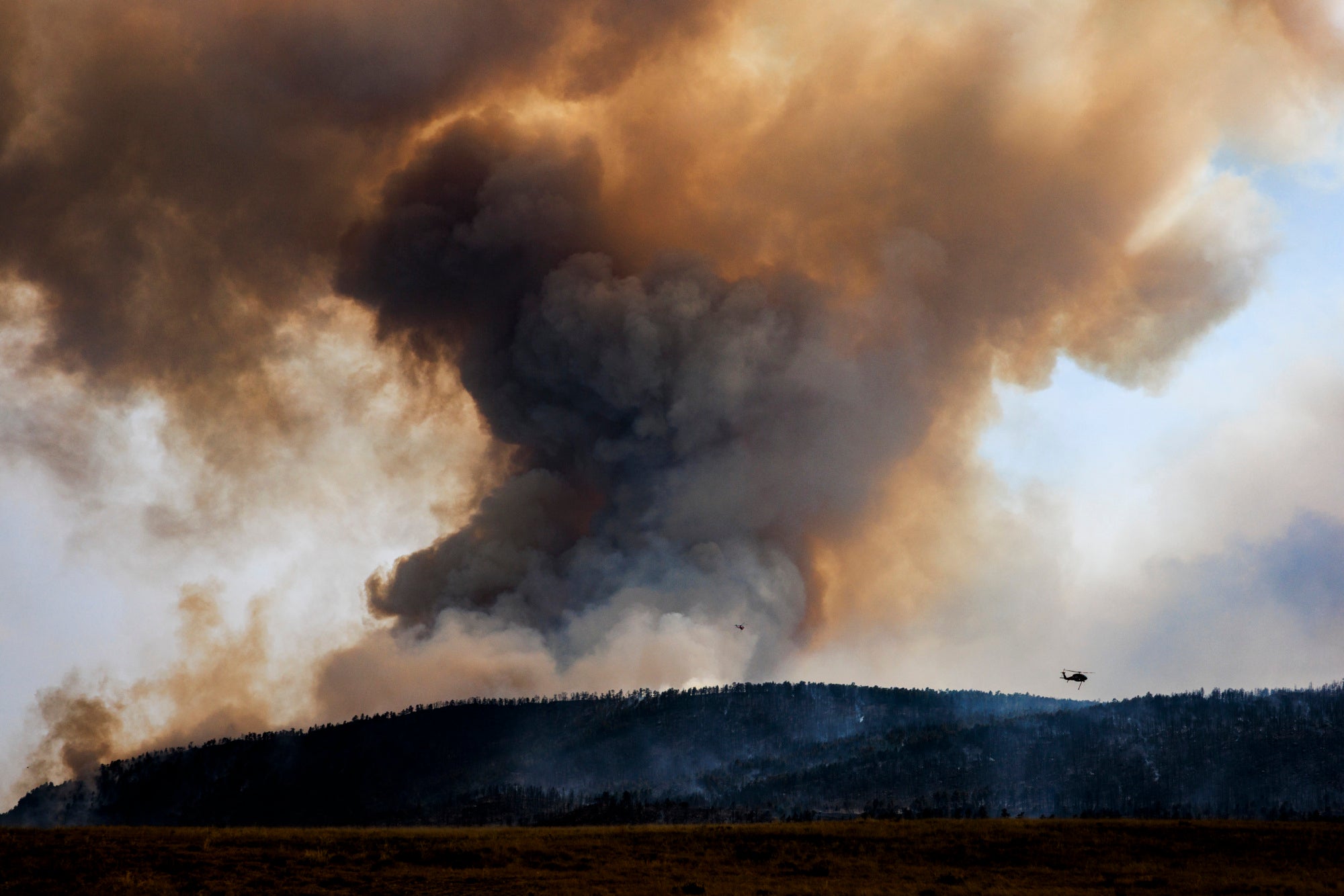
MARY JOHNSON: We spend a lot of time researching how air pollution, and especially wildfire smoke, impacts our immune system. And there’s a lot of research on air pollution in general and how it causes immune dysregulation. There’s less information on wildfire smoke, especially in the general population, but we are studying both firefighters and people exposed to fires, and so far finding that the smoke does similar things to your immune system as air pollution, but since the concentrations can be much higher, the immune dysregulation may also be worse.
What is immune dysregulation?
[04:00]
MARY JOHNSON: Our immune system is really connected to probably every chronic disease that we have. Your body produces inflammatory responses through the immune system. And a lot of chronic disease is related to some type of inflammation process. And so in general, we know that when you’re exposed to things like air pollution, you get a down regulation in the production of healthy immune cells, and that’s not good. And you also get other types of immune cells kind of looking differently, kind of having a different immune signature. And we also know that allergies tend to kind of cluster together. So someone with allergic rhinitis is more likely to have other types of allergies. Food allergies are on the rise and other types of of allergies, and they they kind of tend to go together.
Can you expand on why immune dysregulation is a problem for our health?
[05:23]
MARY JOHNSON: We definitely want our ability to produce inflammation, because there are times that that’s a good thing. However, sustained inflammation in the body potentially is not a good thing. And when we’re exposed to these different environmental exposures, such as the air pollution, the smoke, other toxins, it causes our immune system to not function as well as it should. And there’s been plenty of populational studies showing that, for example, if the community is exposed to wildfire smoke that—like in the summer that fall, more people are going to be getting like influenza. So it makes you more susceptible to other viruses, pathogens. And that’s also true—there were, during the COVID pandemic, areas that had poor air quality had higher rates of COVID infection and mortality.