Expert on Camera
Breast Cancer Awareness Month, which lasts until Oct. 31, is an opportunity to call attention to the significantly higher risks faced by Black women, and what can be done to reduce these disparities.
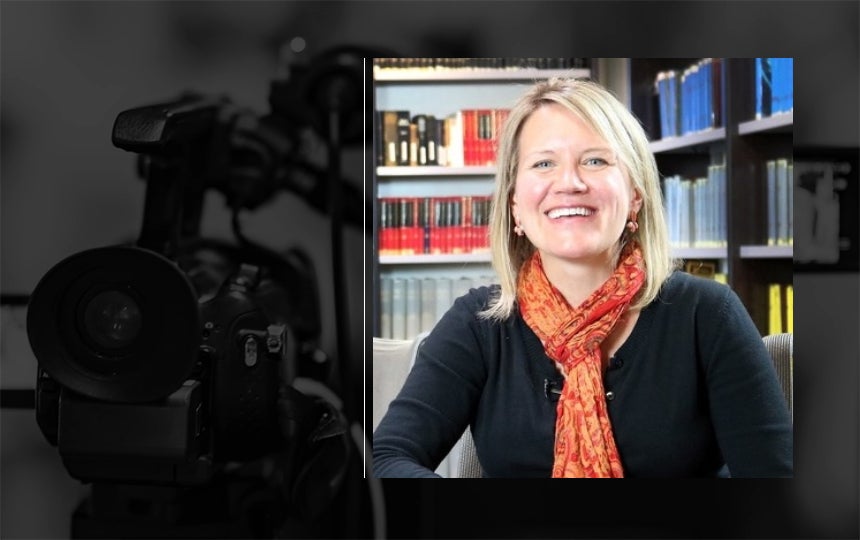
On October 29, 2024, SciLine interviewed: Dr. Kathie-Ann Joseph, a professor of surgery and population health at New York University. See the footage and transcript from the interview below, or select ‘Contents’ on the left to skip to specific questions.
Introduction
[0:00:19]
KATHIE-ANN JOSEPH: My name is Dr. Kathie-Ann Joseph, I am professor of surgery and population health at NYU Langone Health, and I study racial disparities in breast cancer.
Interview with SciLine
Could you provide an overview of racial inequities in breast cancer, including findings from your research?
[0:00:39]
KATHIE-ANN JOSEPH: A couple things. One is, we’ve made great strides in the treatment of breast cancer. There’s no question about that, hormonal therapy, and now we’re looking at immunotherapy and other targeted therapies for breast cancer. But the fact remains that although the incidence of breast cancer in Black women is less than in White women, the mortality is higher, and overall it’s 42% or 43% higher. And then when we look at women under the age of 50, it’s twice as high, and so the impact of breast cancer on Black women is disproportionate compared to any other group. And secondly, when we’re talking about breast cancer in general, Black women just tend to get breast cancer at a younger age. It’s 58 on average compared to 62.
What do researchers know about the causes of poorer outcomes for Black women?
[0:01:43]
KATHIE-ANN JOSEPH: Black women tend to get breast cancer at a younger age. So that, in and of itself, is an issue in the fact that we tend to—Black women tend to get breast cancer at a younger age. And then we know that Black women tend to not get screened at the rates that White women are getting screened. And so, access is an issue if you don’t have insurance, or you’re not—don’t have a regular primary care provider to remind you need to get your mammogram. That is also going to contribute to those issues. So, there are socioeconomic problems that play a role in this, but there are other factors. There are biological factors as well. We know that black women are more likely to get triple-negative breast cancer—that’s a subtype of breast cancer that tends to be more aggressive. But in the younger population, Black women actually tend to get also what’s called—get hormone receptor positive breast cancer, and that actually is what is driving a lot of the mortality in breast cancer, because breast cancer in younger women just tends to be more aggressive.
Current guidelines recommend that women receive optional screening mammograms every two years starting at age 40. Why might this not be appropriate?
[0:03:07]
KATHIE-ANN JOSEPH: We’re glad that the guidelines shifted back to 40 from 50, because of the age that Black women tend to get diagnosed at the younger age, but we still think that Black women—and actually all women—should get screened every year. And that is because of the aggressiveness of breast cancer when young women get diagnosed, particularly in Black women. So, you skip a year, you can miss a cancer easily. And you know, I just saw a woman yesterday with a breast cancer, actually a locally advanced breast cancer. And by locally advanced, I mean that it’s in the breast and it’s also in the lymph nodes. And she had, she had normal mammogram just last year, early last year, so if you follow the guidelines, she didn’t need to get a mammogram this year. And we’re in October, so the year is almost over.
What conversations should women have with their doctors about breast cancer risk assessment and the possibility of earlier or more frequent screenings than the current guidelines recommend?
[0:04:10]
KATHIE-ANN JOSEPH: Women in their 20s should have a really in-depth conversation about their family history, about any cancers that they may have in their family on either side, mother, maternal, or paternal and not just breast cancer, any cancer. And they should also go over their personal history of maybe if they had radiation as a child. We’re specifically interested really in what’s called mantle radiation—radiation to the chest wall that would affect the breast tissue. And any personal history of breast biopsies that may have been abnormal—not cancer, but abnormal. These are all things that would increase a woman’s risk of developing breast cancer and put them at a higher risk category. So that means that when we say the that women should get screened at 40, we’re talking about what we call average-risk women. But we need to do—women need to have what’s called a risk stratification. And what we mean by risk stratification is there are women that are at higher risk, and women who are at higher risk may need to get a mammogram earlier than 40.
What should women know about seeking genetic testing for breast cancer-related variants?
[0:05:35]
KATHIE-ANN JOSEPH: So, using that same example of a woman who has multiple family members with breast cancer, that’s a red flag. Also to recommend that that woman for genetic testing if someone in that family had not already been tested, because that would be a red flag to me to say, “Hey, you may have a genetic predisposition to developing breast cancer,” and so we want to make sure that that person knows all their options. So, in addition to getting to getting screened earlier, and also, by the way, they may need to get additional screening with other tests besides a mammogram—we need an MRI. We want to make sure that there aren’t genes that are involved in developing in increasing your risk for developing breast cancer. And the most common genetic mutations that most people are familiar with are BRCA1 and BRCA2, but there are many other genes that are out there that can increase your risk.
How are vulnerable, underserved populations being served regarding screening and breast cancer treatment?
[0:06:48]
KATHIE-ANN JOSEPH: Most states have some form of a program just like we have—I’m in New York—that provides some funding for women who are uninsured for screening. In New York, we call it the New York State Cancer Services Program, and there are places throughout New York State that will provide screening if you are under a certain income level or just uninsured. And our medical center provides or cooperates with that, and we will, we participate in that. It really is getting the message out. I think many women just assume I don’t have insurance. I cannot get a mammogram, and it’s partially funded by the state and also funded by the CDC. So, I would check. And I, and so, I do think it’s important that we partner with community-based organizations to help get the word out. We work with churches, mosques, beauty salons, anything we can do. I mean, October is the Breast Cancer Awareness Month, but this should be all year.
What advice would you give women about breast cancer awareness?
[0:08:10]
KATHIE-ANN JOSEPH: It’s so important for women to couple things. One, know your body. I recommend doing a self breast exam every month so that you know what’s normal for you. I can’t tell you how many times there are some women who’ve never examined their bodies, and they do for the first time, and they realize I have lumpy breasts. I’m like, yeah—you know it, that might be that’s normal for you. So, know what’s your normal so you don’t freak out the first time you do it at age 60. And be your own advocate. You are your best advocate. If you’re not getting—if something is bothering you. If you feel something or you just know something’s not right, and you don’t get the right answer. You’re not thinking—you think you’re not getting the answers that you need. Try going somewhere else to get them.