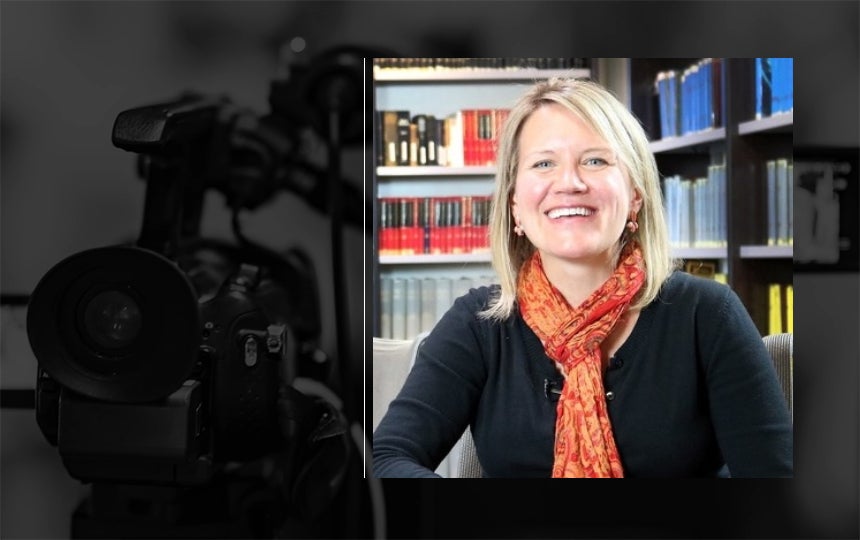
Expert on Camera:
While the overall U.S. gun violence rate subsided after spiking during the pandemic, many cities are now seeing an uptick in fatal shootings, occurring over wider geographic areas.
On Tuesday, July 2, 2024, SciLine interviewed: Dr. Joseph Richardson is a professor of African-American studies, medical anthropology, and epidemiology at the University of Maryland. See the footage and transcript from the interview below, or select ‘Contents’ on the left to skip to specific questions.
Introduction
[0:00:19]
JOSEPH RICHARDSON: My name is Joseph Richardson. I am a professor in the Department of African American Studies and in the Department of Anthropology at the University of Maryland, College Park. I’m also the co-director of the University of Maryland PROGRESS initiative, which progress stands for Prevent Gun Violence: Research, Empowerment, Strategies & Solutions, which is a multidisciplinary gun violence research initiative which covers all the schools at the University of Maryland. And we also focus on community-engaged research as one of our priority areas. My research primarily focuses on gun violence, specifically on firearm injury and trauma among black boys and young black men. And I also focus on the effectiveness of community violence intervention programs, specifically street outreach programs and hospital violence intervention programs.
Interview with SciLine
Why does gun violence increase during the summer?
[0:01:24]
JOSEPH RICHARDSON: So, several of the reasons why we may see increases in gun violence during the summer months—one, many people are outside more in the summer months, which leads to more social interaction. And particularly in neighborhoods where we have low-income residents and their issues and challenges regarding energy efficiency and cost. You may find more people who may not have air conditioning who may be forced to be outside because they lack the resources in order to pay for air conditioning to stay inside. So, that may also push more people outside. And, as we know, in the summertime, because people may be a little bit more agitated, may have less tolerance in terms of patience regarding conflict that more people are outside, which increases the likelihood of social interaction, which increases the likelihood of conflict. And so add that with the number of children and young people who are not in school and may not be engaged in summer youth employment programs, which are necessary also to keep a lid on gun violence during the summer months. And you have this concoction, which is tailor-made for the increases in gun violence during those months.
How does gun violence affect people living in the communities where it occurs?
[0:03:08]
JOSEPH RICHARDSON: There have been a number of studies that have been done on the effects of community violence on children. And there was a study done at Penn, which found that even when kids are indirectly impacted by gun violence, for example, there may have been a shooting that occurred within a four or five block radius of where they live. But if they were made aware of that shooting, they’re more likely to show up to a pediatric emergency room for mental health conditions related to traumatic stress. So, we see that in the work that we’re doing, chronic exposure to violence also raises the level of traumatic stress. Living in a community where there are high rates of gun violence—whether you’re directly or indirectly exposed to those forms of gun violence—will raise your level of traumatic stress. And then we also have people who may be even self-medicating because they’re in situations where they don’t have access to adequate medical or mental health care. And so, they begin to self-medicate. And so, that’s also one of the things that we see in terms of dealing and coping with traumatic stress is substance abuse. And so these neighborhoods, which in many respects suffer from high rates of structural violence, and the continuum of traumatic stress over the life course. And so, one can imagine if you’re experiencing these adverse childhood experiences through indirect or direct exposure to violence over the life course as you move to adulthood, what impact that will have, even physiologically, on your body, which we know ultimately, if that is not addressed through mental health treatment, then it begins to take a toll on one’s body and then shortens your life expectancy. And that process is called weathering. And so, we need to think about the cumulative effects of traumatic stress over the life course for communities and individuals who live in those communities, who may not have any other alternatives to move and may not have adequate access, again, to mental health resources, which are often in short supply in low-income communities of color.
What is known about the root causes of gun violence?
[0:05:30]
JOSEPH RICHARDSON: Poverty, disinvestment, mass incarceration, as well as other forms of structural violence, for example, redlining. There have been studies done—particularly one by my colleague, Dr. Mudia Uzzi, who is at Johns Hopkins—did a really insightful study on the relationship between redlining and Baltimore and neighborhoods that were impacted by gun violence. And so we see that these are all real structural issues. And just in terms of addressing the root causes, we need to be moving further upstream.
Can you elaborate on how mass incarceration contributes to increases in gun violence?
[0:06:12]
JOSEPH RICHARDSON: Removing many valuable forms of social capital—for example, role models, fathers, coaches—from those communities and placing them into the criminal justice system. And particularly, for example, in Washington, D.C., where we have a justice system where if you’re incarcerated, you can be placed in a federal prison anywhere in the country. And so, Washington, D.C. was disproportionately impacted by mass incarceration because many of those valuable forms of social capital were extracted from the community, which then destabilize the community. And so, hyper-policing of communities—which leads to mass incarceration—also impacts gun violence, because once the community becomes destabilized, there are no forms of informal social control that can be used to regulate those communities, which is why we’re here now. And the work that we’re doing in many communities across Washington, D.C., as well as Baltimore, that there are no rules or code of the streets which govern how violence plays out in those communities. And that often comes from those informal resources of social control, typically men and women who are embedded in those communities who can create a culture where there’s a structure for how people should engage in their everyday lives and behaviors.
What is the overall trend in gun violence rates in U.S. cities in recent years?
[0:07:47]
JOSEPH RICHARDSON: We’ve seen a significant increase in gun violence during the COVID epidemic, and we’ve experienced an increase between 2019 and 2021, an increase of almost 45% in some major cities across the country. But fortunately, between 2022 and 2023, we’ve seen a significant drop in gun violence.
Are there exceptions to the current national trend of declining gun violence?
[0:08:20]
JOSEPH RICHARDSON: The city where I work, Washington, D.C., we were one of a few cities—a handful of cities—that experienced significant increases in gun violence. And just to give you kind of a backdrop on what that looked like in Washington, D.C., in 2022, we had 203 homicides. And by 2023, the end of 2023, we had 274. And so we’re one of a handful of cities where we’ve seen significant increases in gun violence while other cities were trending down. But fortunately, in 2024 we’re also trending down.
Is there an example of a city that is currently experiencing little gun violence?
[0:09:09]
JOSEPH RICHARDSON: In Boston, thus far this year, they’ve only had four homicides. And you know, this is a city that’s comparable to a city the size of Las Vegas or Atlanta, where there’s significantly more homicides in those cities. And so, you know, I have to give a great deal of credit to the work that they’ve been doing in cities like Boston and even the other city where I do my work, Baltimore. We’re expected to be based on the projections where we are today. We’re expected to be below 200 homicides by the end of this year, which a Baltimore hasn’t seen that level of low level of homicide since 1970.