Expert on Camera
Dr. Maldonado also conducted an interview on this topic in Spanish.
As of March 6, 222 cases of measles have been reported this year, mostly as part of an outbreak in west Texas and New Mexico—but also in 10 other states. Most cases have been among children and teens, including the first child in the U.S. to die of measles in more than 20 years.
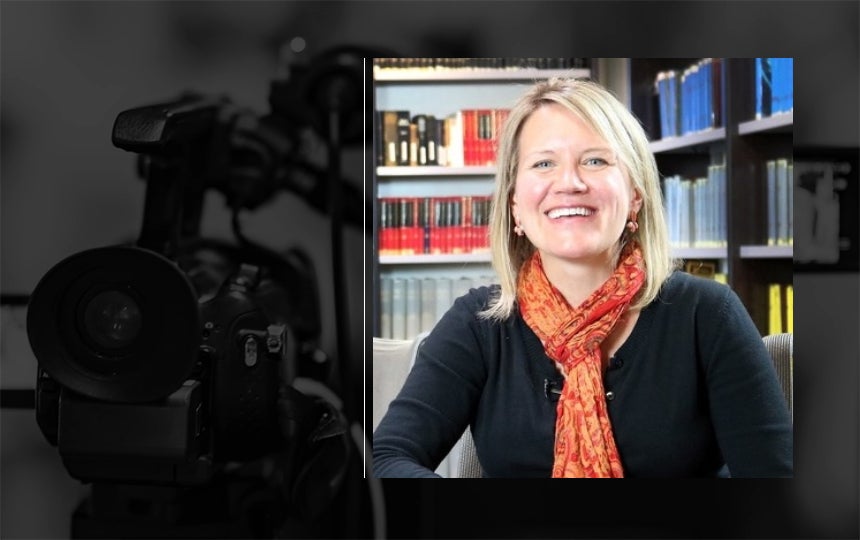
On March 13, 2025, SciLine interviewed: Dr. Yvonne Maldonado, chief of the pediatric infectious diseases department at the Stanford University School of Medicine. See the footage and transcript from the interview below, or select ‘Contents’ on the left to skip to specific questions.
Introduction
[0:00:19]
YVONNE MALDONADO: My name is Yvonne Maldonado, and I’m a professor of global health and infectious diseases at Stanford University School of Medicine. I’m a pediatric infectious disease epidemiologist, and I do vaccine research, especially in developing settings of the world.
Interview with SciLine
Can you give us some basic information about measles?
[0:00:41]
YVONNE MALDONADO: Well, measles used to be known as one of the five rash illnesses of childhood. It’s a very contagious viral infection. We know that children get lots of viral illnesses and a lot of rash illnesses, but measles is one of the most deadly of these in kids, and it is also one with a lot—can have a lot of complications. So, it’s one of the most infectious viruses we know in humans so that virtually all people who are exposed—if they don’t have prior immunity—could get infected. Up to 90% or more people who are exposed will get infected, and the person who is infectious doesn’t even have to be in the room, they can have been in a same room within two hours of a susceptible person coming in to be exposed. So that’s why it’s very hard to prevent measles outbreaks unless you vaccinate people or if they have prior immunity from either prior vaccination or from actual natural infection.
What are the symptoms of measles?
[0:01:51]
YVONNE MALDONADO: The symptoms are high fever followed by a cough and a really more than a cold. It’s almost like a flu like illness that can be quite debilitating then and pretty rapid development of a rash that characteristically starts at the head, face and head, and works its way down to the arms and the chest, and then works all its way down. The person can be quite sick for several days, and the complications include ear infections, which are very common. About 20% or one in five kids in particular, who get measles will have pneumonia, so they will have respiratory symptoms, and some of these may require hospitalization. And about one in 1000 people with measles can develop brain infection or encephalitis. Some of these can lead to long-term complications. And of course, the death rate is not very high, fortunately, but it is highest in children under one in particular. And the death rate there is somewhere between one and three children per 1000 who get infected, especially those under one year of age.
What is going on with measles in the U.S.?
[0:03:11]
YVONNE MALDONADO: Well, measles was declared eliminated from the United States in the year 2000, and that was based on lack of local transmission of measles disease in the U.S. Given that there are still cases around the world, people who would travel and were susceptible to measles could come back home and develop active, infectious measles here at home, but they had caught it elsewhere. Those cases had really dwindled, and the cases that came in from other countries, of travelers, for example, would really not lead to outbreaks and that’s defined as three or more people who get infected from that individual. And we were not seeing that because of the high vaccination rates, but more recently, we’ve started to see more outbreaks, because of lower rates of vaccination. So, we had—we’ve had two outbreaks with larger numbers of cases in the last 10 years or so, 2014 to 2015, and then 2019, we had 1200 cases in the U.S. And this year, we’ve had a little over 200 cases now in 14 states around the U.S., but the big outbreak is in Texas that’s now spread to New Mexico because they’re next door to each other, primarily in a highly unvaccinated community, and that has led to one child dying, which is the first time we’ve seen a child in the U.S. die from measles in the last 10 years. And also assuming—we’ve assumed there’s another death in an adult who had measles. We don’t know if the death was from measles or not, but that person was found to have measles postmortem. And so, we are seeing another resurgence now. Remember, it’s only March, so we’re hoping that the numbers will start to drop back down, but we are now starting to see local transmission of measles because of under vaccination.
How safe and effective is the MMR (measles, mumps, and rubella) vaccine at preventing measles?
[0:05:20]
YVONNE MALDONADO: So, measles vaccines have been used for over 60 years now, and they have been highly effective and very safe. There have been hundreds of studies documenting the safety of measles vaccines. We know that one dose of measles vaccine will probably result in potentially lifelong—I mean, we think it’s lifelong immunity at this point—in about 95% of individuals who get the vaccine. And for those 5% who don’t get a good immune response, if you vaccinate with a second dose, you actually increase coverage to about 97%. So, about half of the people who don’t respond to the first dose will respond to the second dose. And so that’s why, around the world, since about 1989, there’s been an effort to give two doses of vaccine, not because everybody needs two doses, but because about 5% of people will not respond to the first dose, and it’s easier and safer to just give that second dose and to try to get a blood test and see if people were immune to that first dose. And so giving a two-dose schedule has really resulted in much higher levels of protection. And because measles is so infectious, you need about a 95% rate of population immunity in order to prevent continued community spread of measles, because it’s so infectious.
Do you have any advice for people who have been exposed to measles or think they may have it?
[0:06:53]
YVONNE MALDONADO: We now rarely see measles. Fortunately, most people have not seen measles, and most doctors haven’t seen measles because it was really not a very—it’s now not commonly seen in the U.S. But if somebody around you has a high fever and a rash illness in young kids, that’s usually not measles. It’s usually some other viral illness that may not be harmful to most people, but if that person has been traveling out of the country or has been exposed to a traveler who’s been out of the country, then I would be more concerned that that could be a potential importation of a measles case, that then either that the person who got infected either themselves traveled or got it from somebody who traveled. Then I would be really inclined to let my provider know that I might have been exposed to measles. And the reason there is to just monitor your health and make sure that you don’t need supportive care and also that you can isolate yourself from other people so that you don’t spread it to others if you’re actively infectious.
If parents are particularly worried about measles, should they get MMR vaccines doses for their children earlier than the recommended ages?
[0:08:13]
YVONNE MALDONADO: So, I studied measles vaccine in children for over 15 years—that is how well does the vaccine work in young babies. And as it turns out, the vaccine does—it’s a live virus vaccine—it’s a form, a very weakened form of measles that does not cause serious illness. And so, it requires a really good immune response in order for the person to develop lifelong immunity. And as it turns out, if you give the vaccine before 12 months of age, the baby’s immune system, the infant immune system, is really not ready, in some cases, to mount a full immune response to that vaccine. So, if—there are specific times when some, a young child under 12 months of age could get a dose of measles vaccine. And there are lists of those exceptions. Some of them include children under 12 months of age who are living in an outbreak situation like the ones we’re seeing, for example, in Texas and maybe New Mexico. And also, if somebody is going to travel outside of the country to a place where there might be measles disease active, that child can—if they’re as young as six months of age to 12 months of age—get a dose of measles vaccine just to protect them while they’re traveling or if they’re in an outbreak situation abroad or in the U.S. So, there are times when a child as young as six months of age can get measles vaccine. It is not recommended to be given for children under six months of age because it really will highly unlikely to work well in that under six month of a child, the immune system just won’t respond well to the vaccine, meaning they won’t get a good immune response. Now, the normal dosing is a two-dose schedule given at 12 months of age, 12 to 15 months of age, and then around somewhere before kindergarten, around four to five years of age, and generally, if you give a dose of vaccine between six and 12 months of age, for those exceptions, such as travel or outbreak settings, that dose does not count to the two-dose recommendations, so those children would wind up getting three doses of vaccine, but again, no harmful effects have been shown from giving those extra doses.
Should any adults consider getting a measles vaccine now?
[0:10:55]
YVONNE MALDONADO: Well, normally, we would really say no, but during these situations, there are some exceptions. So, there’s a few things. First of all, anybody born before 1957, before vaccines were available—these measles vaccines were available—would most likely have already actually had measles disease, because measles was so widespread in those days. And then vaccines were used—the type of vaccine that was used between 1963 and 1968 was actually a killed vaccine that actually didn’t work well, and so people who got that vaccine probably don’t have complete immunity. So, if somebody was given a measles vaccine between 1963 and 1968 so those would be people who are in their late 50s to early 60s. Those people might want to consider getting a dose of vaccine. And anybody who was vaccinated in 1968 or later got the fully effective vaccine. But anybody born before 1989 probably didn’t get two doses of measles vaccine. So, someone could consider getting the second dose in case they’re one of those 5% of people who didn’t respond to the first dose. So those are some exceptions, and those are important to consider, but the major place that we really have to focus our efforts is in making sure that young children get their two doses of measles vaccine, because that is the biggest population at risk for severe complications and for opportunities to spread the infection in the community.